. 2017 Mar 20;36(1):44.
doi: 10.1186/s13046-017-0514-4.

Chrysin inhibited tumor glycolysis and induced apoptosis in hepatocellular carcinoma by targeting hexokinase-2

Affiliations

Chrysin inhibited tumor glycolysis and induced apoptosis in hepatocellular carcinoma by targeting hexokinase-2

Dong Xu et al. J Exp Clin Cancer Res. .

Abstract

Background: Hexokinase-2(HK-2) plays dual roles in glucose metabolism and mediation of cell apoptosis, making it an attractive target for cancer therapy. Chrysin is a natural flavone found in plant extracts which are widely used as herb medicine in China. In the present study, we investigated the antitumor activity of chrysin against hepatocellular carcinoma (HCC) and the role of HK-2 played for chrysin to exert its function.

Methods: The expression of HK-2 in HCC cell line and tumor tissue was examined by western blotting and immunohistochemistry staining. The activities of chrysin against HCC cell proliferation and tumor glycolysis were investigated. Chrysin-induced apoptosis was analyzed by flow cytometry. The effect of chrysin on HK-2 expression and the underlying mechanisms by which induced HCC cell apoptosis were studied. In HK-2 exogenous overexpression cell, the changes of chrysin-induced cell apoptosis and glycolysis suppression were investigated. HCC cell xenograft model was used to confirm the antitumor activity of chrysin in vivo and the effect on HK-2 was tested in chrysin-treated tumor tissue.

Results: In contrast with normal cell lines and tissue, HK-2 expression was substantially elevated in the majority of tested HCC cell lines and tumor tissue. Owing to the decrease of HK-2 expression, glucose uptake and lactate production in HCC cells were substantially inhibited after exposure to chrysin. After chrysin treatment, HK-2 which combined with VDAC-1 on mitochondria was significantly declined, resulting in the transfer of Bax from cytoplasm to mitochondria and induction of cell apoptosis. Chrysin-mediated cell apoptosis and glycolysis suppression were dramatically impaired in HK-2 exogenous overexpression cells. Tumor growth in HCC xenograft models was significantly restrained after chrysin treatment and significant decrease of HK-2 expression was observed in chrysin-treated tumor tissue.

Conclusion: Through suppressing glycolysis and inducing apoptosis in HCC, chrysin, or its derivative has a promising potential to be a novel therapeutic for HCC management, especially for those patients with high HK-2 expression.

Keywords: Apoptosis; Chrysin; Hepatocellular carcinoma; Hexokinase-2(HK-2); Tumor glycolysis.


Figures
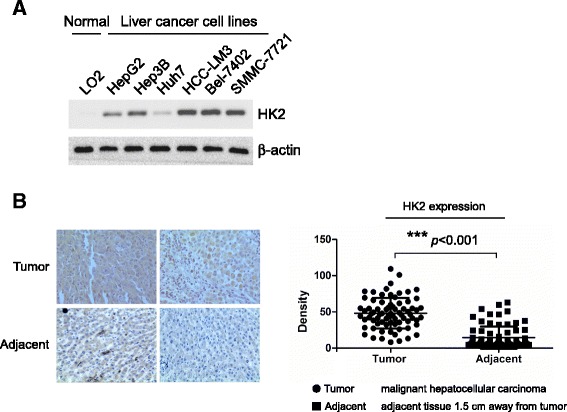
Fig. 1
Fig. 1
Aberrant expression of HK-2 in hepatocellular carcinoma(HCC). a, HK-2 was highly expressed in HCC cell lines. Western blotting was performed to examine HK-2 expression in several HCC cell lines and normal hepatic cell LO2. b, HK-2 was highly expressed in HCC tissue. Representative figures of immunohistochemical staining for HK-2 in HCC tissues and paired adjacent normal tissue (left panel), statistical results of HK-2 staining in 75 different HCC tissues and matched adjacent normal tissue (right panel). The asterisk (***, p < 0.001) indicated a significant difference of HK-2 expression between tumor and paired adjacent normal tissue
Fig. 2
Fig. 2
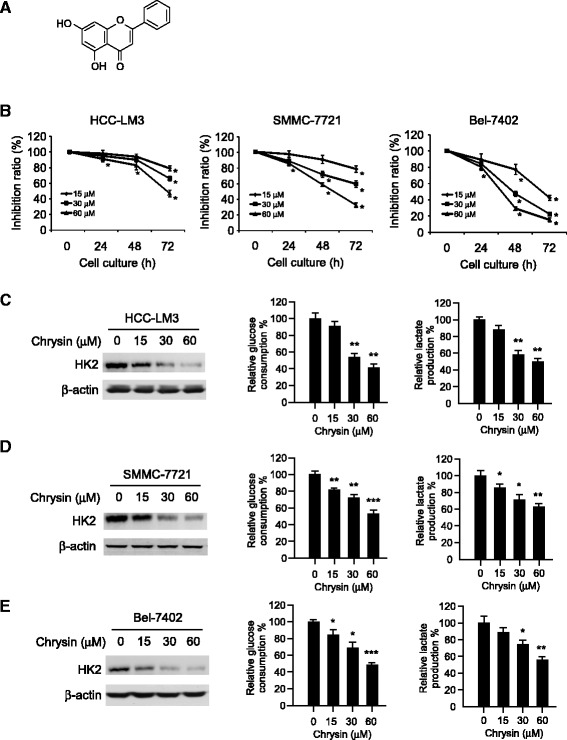
Chrysin inhibited cell proliferation and glycolysis in HCC cells. a, The chemical structure of chrysin. b, HCC cells were treated with indicated concentration of chrysin for indicated times, cell proliferation was measured as described in Material and Methods. The asterisk (*, p < 0.05) indicated a significant decrease of HCC cell proliferation after chrysin treatment. c-e, chrysin suppressed glycolysis in HCC-LM3 (top), SMMC-7721 (middle) and Bel-7402 (bottom) cells. HCC cells were treated with various concentrations of chrysin for 8 h and the cell lysates were subjected to SDS-PAGE to examine the change of indicated protein (left panels). Glucose consumption (middle panels) and lactate production (right panels) in cell culture medium were analyzed. The graph showed the data of at least three independent experiments expressed as means ± SD, the asterisks (*, p < 0.05, **, p < 0.01, ***, p < 0.001, Student’s t test) indicated significant inhibition of glucose consumption and lactate secretion after chrysin treatment
Fig. 3
Fig. 3
Chrysin induced HCC cell apoptosis by reducing HK-2 in mitochondria. a, HCC cells were treated with chrysin for 24 h, the mitochondria fractions was extracted and examined by western blotting to detect the change of indicated protein. b, HCC-LM3 cell was treated with chrysin for 24 h and the lysates of mitochondria fractions were immunoprecipitated with HK-2 or VDAC-1 antibodies, then the binding affinity was analyzed with western blotting analysis. c, HCC cells were treated with various chrysin for 24 h and cell lysates were probed with indicated antibodies
Fig. 4
Fig. 4
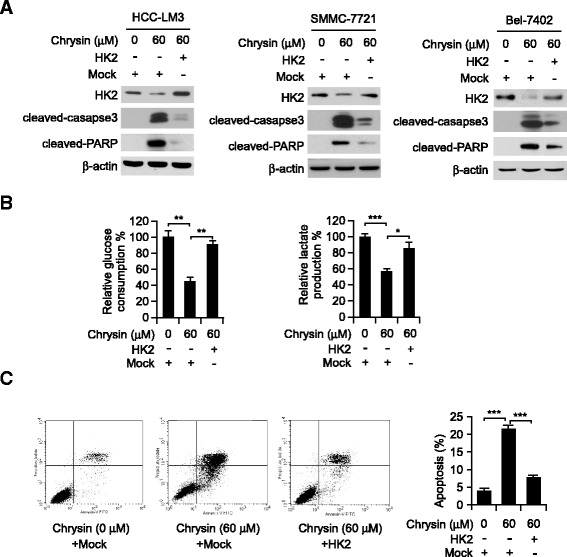
Overexpression of HK-2 impaired the effect of chrysin on apoptosis and tumor glycolysis. a, activated caspase-3 and PARP in HCC cell with exogenous HK-2 expression. HCC cells were transfected with pORF-HK-2, 24 h later, the cells were treated with 60 μM chrysin, cell lysates were subjected to SDS-PAGE and probed with indicated protein. b and c, the effect of chrysin on glycolysis and apoptosis in HK-2 overexpressed HCC-LM3 cells. HCC-LM3 cell was transfected with pORF-HK-2 for 24 h and seeded in 6 well plates for 10 h, then exposed to 60 μM chrysin, tumor glycolysis (b) and apoptosis (c) was examined at 8 h and 24 h, respectively. b, The graph showed the data of at least three independent experiments expressed as means ± SD, the asterisks (*, p < 0.05, **, p < 0.01, ***, p < 0.001, Student’s t test) indicated significant difference between different groups. c, Representative FACS results of Annexin V-PI double staining were shown (left panels), and the graph (right panel) showed the data of at least three independent experiments expressed as means ± SD, the asterisks (***, p < 0.001, Student’s t test) indicated a significant difference
Fig. 5
Fig. 5
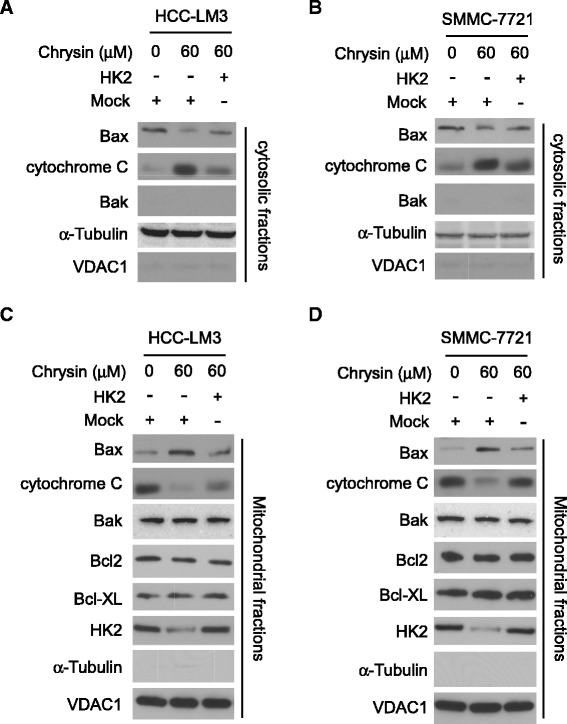
Chrysin induced Bax activation on mitochondrial. HCC cells were transfected with pORF-HK-2, 24 h later, the cells were treated with 60 μM chrysin for another 24 h, and subcellular fractions were prepared and subjected to SDS-PAGE and probed with indicated protein. a and b, cytosolic Bax, Bak and chrome c expressions in HCC-LM3 cell (a) and SMMC-7721 cell (b) were tested by western blotting. c and d, mitochondrial Bax, Bak, Bcl2, Bcl-xl, chrome c, and HK2 in HCC-LM3 cell (c) and SMMC-7721 cell (d) were tested by western blotting
Fig. 6
Fig. 6
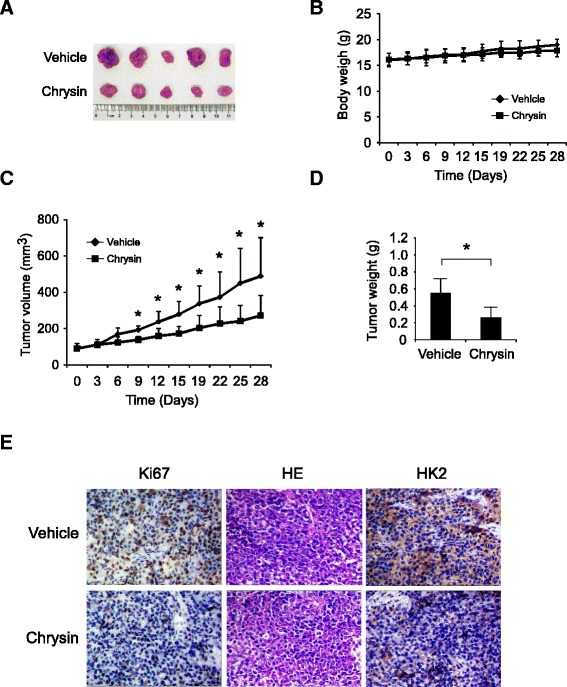
Chrysin inhibited HCC-LM3 xenograft growth in vivo. Nude mice with HCC-LM3 xenograft were randomly divided to groups when tumor volume reached 50 to 100 mm3. 30 mg/kg chrysin was administrated three times weekly by intraperitoneal injection. a, photograph of tumors in vehicle and chrysin-treated group; b, the change of body weight of tumor bearing mice; c, tumor growth curve in vehicle and treated group; d, tumor weight in vehicle and chrysin group; e, tumor tissues were subjected to immunohistochemistry staining with indicated antibodies to detect the change of HK-2, Ki67 after chrysin treatment

References

    1. Hanahan D, Weinberg RA. Hallmarks of cancer: the next generation. Cell. 2011;144:646–74. doi: 10.1016/j.cell.2011.02.013. - DOI - PubMed
    1. Vander Heiden MG, Cantley LC, Thompson CB. Understanding the Warburg effect: the metabolic requirements of cell proliferation. Science. 2009;324:1029–33. doi: 10.1126/science.1160809. - DOI - PMC - PubMed
    1. Peppicelli S, Bianchini F, Calorini L. Extracellular acidity, a “reappreciated” trait of tumor environment driving malignancy: perspectives in diagnosis and therapy. Cancer Metastasis Rev. 2014;33:823–32. doi: 10.1007/s10555-014-9506-4. - DOI - PubMed
    1. Mathupala SP, Ko YH, Pedersen PL. Hexokinase-2 bound to mitochondria: cancer’s stygian link to the “Warburg Effect” and a pivotal target for effective therapy. Semin Cancer Biol. 2009;19:17–24. doi: 10.1016/j.semcancer.2008.11.006. - DOI - PMC - PubMed
    1. Yoshida GJ. Metabolic reprogramming: the emerging concept and associated therapeutic strategies. J Exp Clin Cancer Res. 2015;34:111. doi: 10.1186/s13046-015-0221-y. - DOI - PMC - PubMed

MeSH terms