


Sleep disorders in children with moderate to severe persistent allergic rhinitis
- PMID: 28320604
- PMCID: PMC9449172
- DOI: 10.1016/j.bjorl.2017.01.008
Sleep disorders in children with moderate to severe persistent allergic rhinitis
Abstract
Introduction: Allergic rhinitis is associated with several complications, including sleep disorders. The Children's Sleep Habits Questionnaire has been recently translated and validated in Portuguese for the evaluation of sleep disorders in children.
Objective: To assess sleep disorders in children with moderate to severe persistent allergic rhinitis and to correlate the findings with disease severity markers.
Methods: We evaluated 167 children (4-10 years), 112 with allergic rhinitis and 55 controls. Parents/guardians of the children answered the Children's Sleep Habits Questionnaire, consisting of 33 questions divided into eight subscales, which refers to the previous week. Patients with rhinitis were also evaluated regarding the score of nasal and extra-nasal symptoms related to the previous week and the peak nasal inspiratory flow.
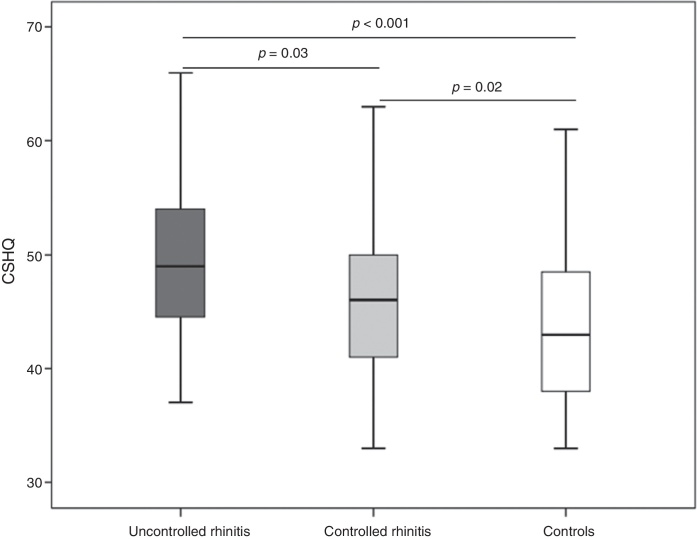
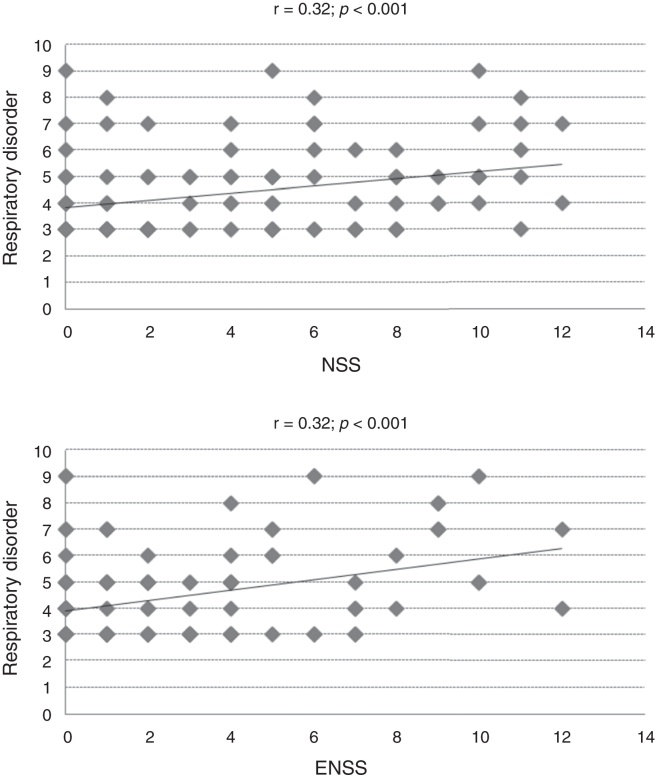
Results: There were no significant differences between groups of different age. All patients with rhinitis were being treated with nasal topical corticosteroids. The total Children's Sleep Habits Questionnaire score was significantly higher among children with rhinitis than in controls (median 48 vs. 43, p<0.001). Significantly higher values were also observed for the parasomnia (9 vs. 8), respiratory disorders (4 vs. 3) and daytime sleepiness (14 vs. 12) subscales. Among the patients with rhinitis, no significant correlation was observed between the total Children's Sleep Habits Questionnaire score and disease activity variables, but moderate correlations were observed for the respiratory distress subscale vs. nasal symptom score (r=0.32) and vs. extra-nasal symptom score (r=0.32).
Conclusion: Children with moderate to severe persistent allergic rhinitis, even when submitted to regular treatment, have a higher frequency of sleep disorders than controls, particularly concerning nocturnal breathing disorders, daytime sleepiness, and parasomnias. The intensity of sleep disorders found in some subscales was correlated with objective markers of allergic rhinitis severity.
Introdução: A rinite alérgica está associada a diversas complicações, como por exemplo os distúrbios do sono. O Children's Sleep Habits Questionnaire é um questionário para avaliação dos distúrbios do sono em crianças, recentemente traduzido e validado para o português.
Objetivos: Avaliar distúrbios do sono em crianças com rinite alérgica persistente moderada/grave e correlacionar os achados com marcadores de gravidade da doença.
Método: Foram avaliadas 167 crianças (4–10 anos), 112 com rinite alérgica e 55 controles. Todos os responsáveis pelas crianças responderam o questionário composto por 33 questões dividas em oito subescalas e referentes à última semana. Os pacientes com rinite foram avaliados também pelo escore de sintomas nasais e extra-nasais referentes à última semana e pelo pico de fluxo inspiratório nasal.
Resultados: Não houve diferenças significantes entre os grupos com relação à idade. Todos os pacientes com rinite vinham sendo tratados com corticosteroide tópico nasal. O escore total do questionário foi significantemente maior entre os com rinite que os controles (mediana 48 vs. 43; p < 0,001). Valores significantemente maiores também foram observados para as subescalas de parassonias (9 vs. 8), distúrbios respiratórios (4 vs. 3) e sonolência diurna (14 vs. 12). Entre os pacientes com rinite não foi observada correlação significante entre o escore total do questionário e as variáveis de atividade da doença, porém correlações moderadas foram observadas para a subescala de distúrbios respiratórios vs. escore de sintomas nasais (r = 0,32) e vs. escore de sintomas extra-nasais (r = 0,32).
Conclusões: Crianças com rinite alérgica persistente moderada-grave, mesmo em tratamento regular, apresentam maior frequência de distúrbios do sono do que controles, particularmente em relação aos distúrbios respiratórios noturnos, sonolência diurna e parassonias. A intensidade das alterações do sono encontradas em algumas subescalas se correlacionou com marcadores objetivos de gravidade da rinite alérgica.
Keywords: Allergic rhinitis; Children; Crianças; Distúrbios de sono; Questionário escrito; Rinite alérgica; Sleep disorders; Written questionnaire.
Copyright © 2017 Associação Brasileira de Otorrinolaringologia e Cirurgia Cérvico-Facial. Published by Elsevier Editora Ltda. All rights reserved.
Figures
Comment in
-
The effect of adenotonsillar hypertrophy and other obstructive diseases on sleep disorders in children.Braz J Otorhinolaryngol. 2018 Nov-Dec;84(6):805. doi: 10.1016/j.bjorl.2018.06.004. Epub 2018 Aug 7. Braz J Otorhinolaryngol. 2018. PMID: 30131244 Free PMC article. No abstract available.
References
-
- Solé D., Wandalsen G., Camelo-Nunes I., Naspitz C., ISAAC – Brazilian Group Prevalence of symptoms of asthma, rhinitis, and atopic eczema among Brazilian children and adolescents identified by the International Study of Asthma and Allergies in Childhood (ISAAC) – Phase 3. J Pediatr (Rio J) 2006;82:341–346. - PubMed
-
- Meltzer E., Blaiss M., Derebery M., Mahr T., Gordon B., Sheth K., et al. Burden of allergic rhinitis: results from the Pediatric Allergies in America survey. J Allergy Clin Immunol. 2009;124:S43–S70. - PubMed
-
- Neffen H., Mello J., Jr., Solé D., Naspitz C., Dodero A., Garza H., et al. Nasal allergies in the Latin American population: results from the Allergies in Latin America survey. Allergy Asthma Proc. 2010;31:S9–S27. - PubMed
-
- Urrutia-Pereira M., Solé D., Chong Neto H.J., Acosta V., Cepeda A.M., Álvarez-Castelló M., et al. Sleep disorders in Latin-American children with asthma and/or allergic rhinitis and normal controls. Allergol Immunopathol (Madr) 2016 no prelo. - PubMed
-
- Bousquet P., Demoly P., Devillier P., Mesbah K., Bousquet J. Impact of allergic rhinitis symptoms on quality of life in primary care. Int Arch Allergy Immunol. 2013;160:393–400. - PubMed
MeSH terms
Substances
LinkOut - more resources
Full Text Sources
Other Literature Sources
Medical
