Effect of season and sunlight on viral kinetics during hepatitis C virus therapy
- PMID: 28321328
- PMCID: PMC5353279
- DOI: 10.1136/bmjgast-2016-000115
Effect of season and sunlight on viral kinetics during hepatitis C virus therapy
Abstract
Background and aims: Rapid viral response (RVR) during antiviral treatment for hepatitis C virus (HCV) predicts sustained viral response (SVR). Recently, vitamin D levels have been associated with SVR. As sunlight is the most important source of vitamin D and shows seasonal variation, we evaluated the effect of season on viral kinetics during peginterferon/ribavirin-based therapy for HCV.
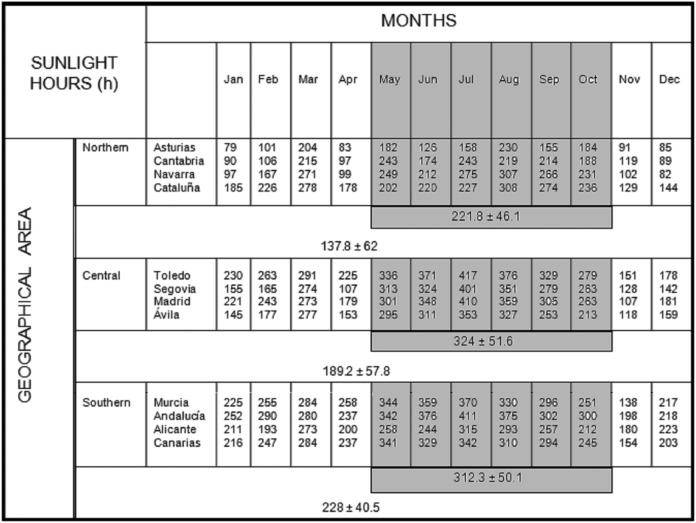
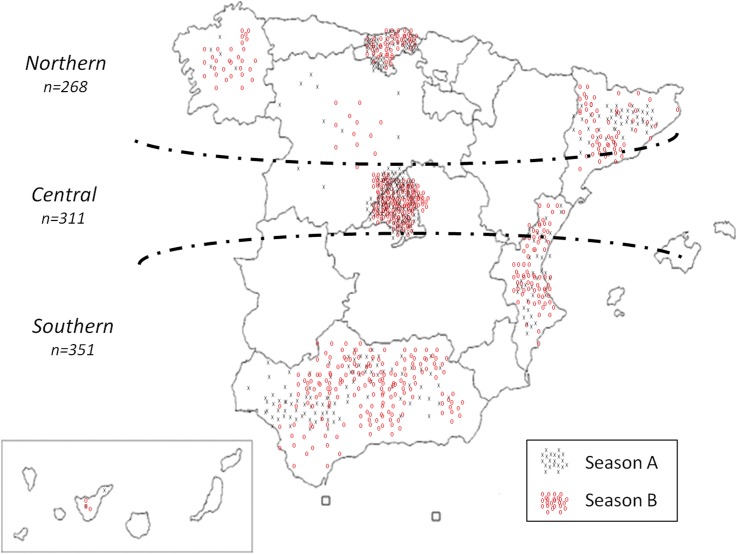
Methods: Consecutive HCV patients treated with peginterferon/ribavirin and boceprevir/ telaprevir (June 2011-July 2014) were included. Patients were grouped according to season when therapy was initiated (Season A: May-October and Season B: November-April) depending on hours of daily sunlight. Multiple logistic regression analysis included factors known to influence SVR to treatment. The dependent variables were undetectable viral load (VL) or VL ≤15 UI/mL (VL ≤15) at weeks 4, 8 and 12, end of treatment and SVR.
Results: The study included 930 patients (66.8% men; median 54 years) treated with telaprevir (n=537) or boceprevir, without (n=481) or with lead-in therapy of peginterferon/ribavirin. Baseline characteristics of patients in Season A (45.3%, n=421) and Season B groups were similar. Overall, a higher rate of RVR (23.5% vs 16.1%, p=0.005) and VL ≤15 (51.0% vs 38.6%, p≤0.001) was observed in patients starting treatment during Season A versus Season B. By logistic regression analysis, initiating treatment in Season A proved to be an independent predictor of RVR and VL ≤15.
Conclusions: In our setting, seasonality affects viral kinetics in HCV genotype 1 patients treated with peginterferon/ribavirin-based therapy. Our findings support the hypothesis that vitamin D influences viral response to peginterferon/ribavirin-based therapy.
Keywords: ANTIVIRAL THERAPY; CHRONIC HEPATITIS; HEPATITIS C; VITAMIN D RECEPTOR GENE.
Conflict of interest statement
Competing interests: None declared.
Figures
References
-
- Kitson MT, Roberts SK. D-livering the message: the importance of vitamin D status in chronic liver disease. J Hepatol 2012;57:897–909. doi:10.1016/j.jhep.2012.04.033 - DOI - PubMed
-
- Rosen CJ, Adams JS, Bikle DD, et al. The nonskeletal effects of vitamin D: an Endocrine Society scientific statement. Endocr Rev 2012;33:456–92. doi:10.1210/er.2012-1000 - DOI - PMC - PubMed
-
- Petta S, Cammà C, Scazzone C, et al. Low vitamin D serum level is related to severe fibrosis and low responsiveness to interferon-based therapy in genotype 1 chronic hepatitis C. Hepatology 2010;51:1158–67. doi:10.1002/hep.23489 - DOI - PubMed
-
- Arteh J, Narra S, Nair S. Prevalence of vitamin D deficiency in chronic liver disease. Dig Dis Sci 2010;55:2624–8. doi:10.1007/s10620-009-1069-9 - DOI - PubMed
-
- Lim LY, Chalasani N. Vitamin d deficiency in patients with chronic liver disease and cirrhosis. Curr Gastroenterol Rep 2012;14:67–73. doi:10.1007/s11894-011-0231-7 - DOI - PubMed
LinkOut - more resources
Full Text Sources
Other Literature Sources
Research Materials
Miscellaneous