


High-Grade Partial and Retracted (<2 cm) Proximal Hamstring Ruptures: Nonsurgical Treatment Revisited
- PMID: 28321428
- PMCID: PMC5347437
- DOI: 10.1177/2325967117692507
High-Grade Partial and Retracted (<2 cm) Proximal Hamstring Ruptures: Nonsurgical Treatment Revisited
Abstract
Background: High-grade partial proximal hamstring tears and complete tears with retraction less than 2 cm are a subset of proximal hamstring injuries where, historically, treatment has been nonoperative. It is unknown how nonoperative treatment compares with operative treatment.
Hypothesis: The clinical and functional outcomes of nonoperative and operative treatment of partial/complete proximal hamstring tears were compared. We hypothesize that operative treatment of these tears leads to better clinical and functional results.
Study design: Case series; Level of evidence, 4.
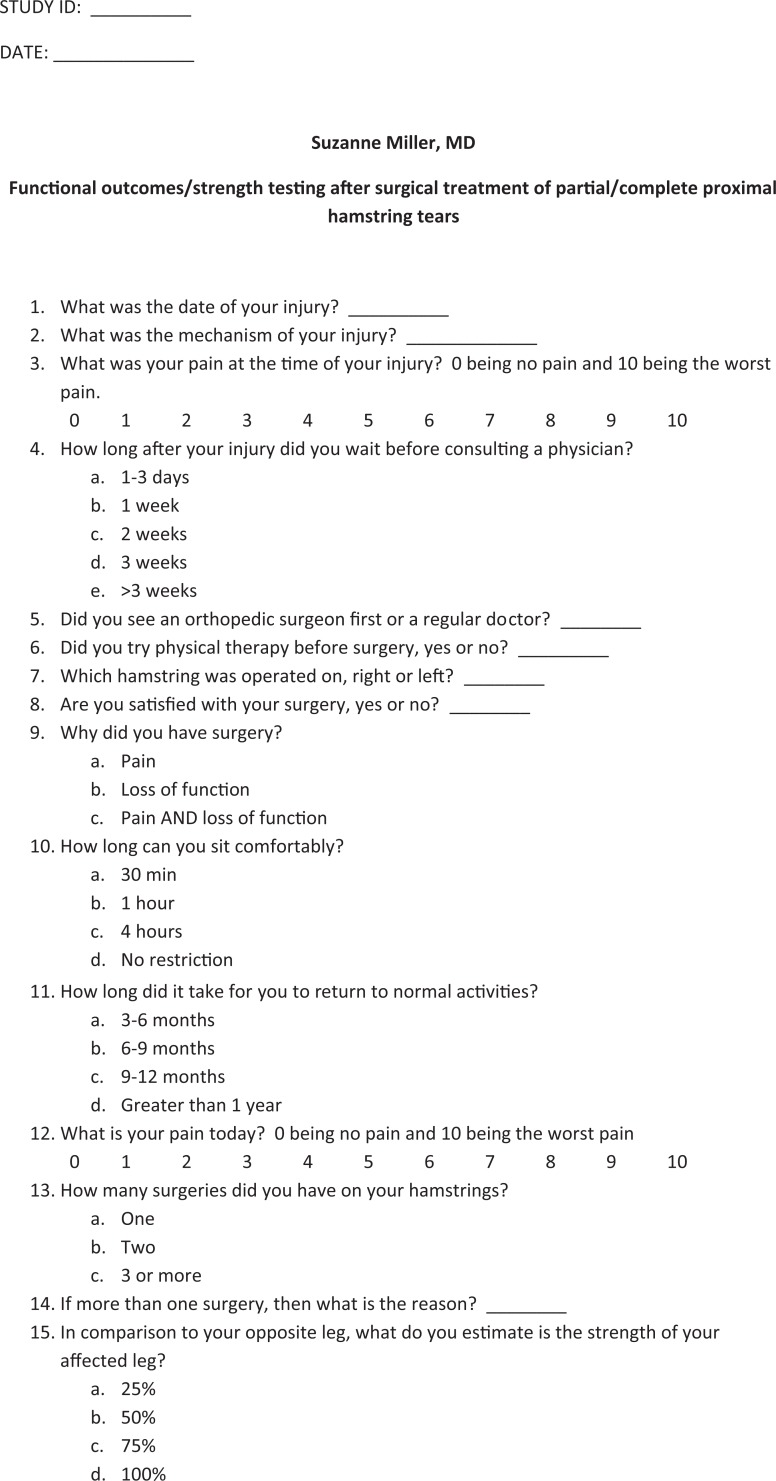
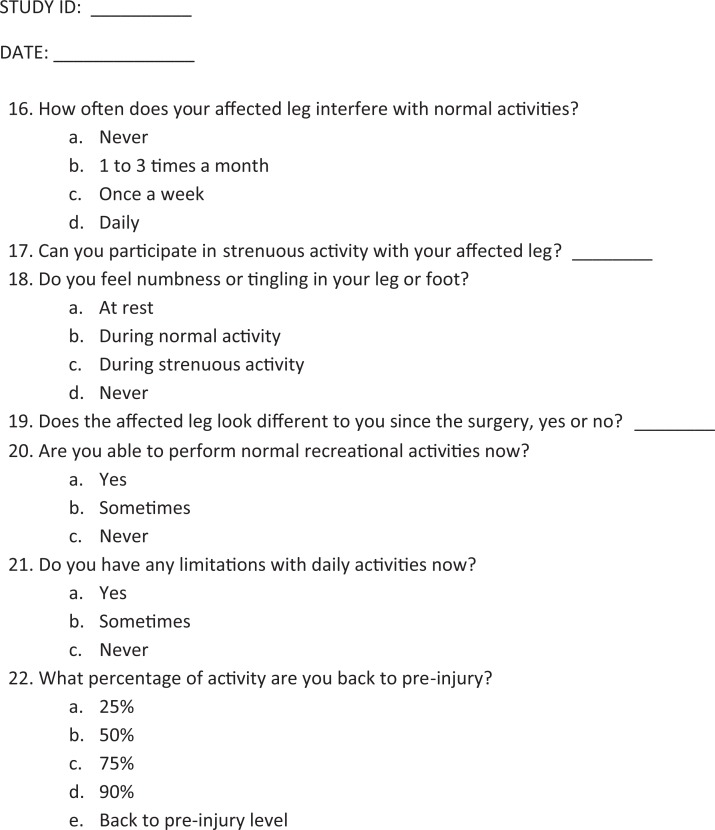
Methods: A retrospective review identified patients with a high-grade partial or complete proximal hamstring rupture with retraction less than 2 cm treated either operatively or nonoperatively from 2007 to 2015. All patients had an initial period of nonoperative treatment. Surgery was offered if patients had continued pain and/or limited function refractory to nonoperative treatment with physical therapy. Outcome measures were each patient's strength perception, ability to return to activity, Lower Extremity Functional Scale (LEFS) score, Short Form-12 (SF-12) physical and mental component outcome scores, distance traversed by a single-leg hop, and Biodex hamstring strength testing.
Results: A total of 25 patients were enrolled in the study. The 15 patients who were treated nonoperatively sustained injuries at a mean age of 55.73 ± 14.83 years and were evaluated 35.47 ± 30.35 months after injury. The 10 patients who elected to have surgery sustained injuries at 50.40 ± 6.31 years of age (P = .23) and were evaluated 30.11 ± 19.43 months after surgery. LEFS scores were significantly greater for the operative group compared with the nonoperative group (77/80 vs 64.3/80; P = .01). SF-12 physical component scores for the operative group were also significantly greater (P = .03). Objectively, operative and nonoperative treatment modalities showed no significant difference in terms of single-leg hop distance compared with each patient's noninjured leg (P = .26) and torque deficit at isokinetic speeds of 60 and 180 deg/s (P = .46 and .70, respectively).
Conclusion: Patients who undergo operative and nonoperative treatment of high-grade partial and/or complete proximal hamstring tears with <2 cm retraction demonstrate good clinical and functional outcomes. In our series, 40% of patients treated nonoperatively with physical therapy went on to have surgery. For those patients with persistent pain and/or loss of function despite conservative treatment, surgical repair is a viable treatment option that is met with good results.
Keywords: hamstring surgical outcomes; hamstring surgical repair; high-grade partial hamstring tears; proximal hamstring tears.
Conflict of interest statement
One or more of the authors has declared the following potential conflict of interest or source of funding: S.L.M. has partial ownership of Parcus Medical.
Figures
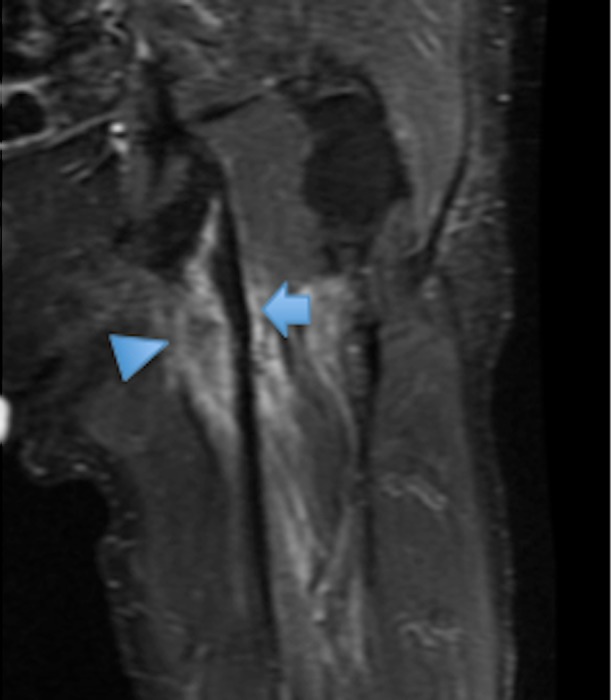

References
-
- Aldridge SE, Heilpern GN, Carmichael JR, Sprowson AP, Wood DG. Incomplete avulsion of the proximal insertion of the hamstring: outcome two years following surgical repair. J Bone Joint Surg Br. 2012;94:660–662. - PubMed
-
- Barnett AJ, Negus JJ, Barton T, Wood DG. Reattachment of the proximal hamstring origin: outcome in patients with partial and complete tears. Knee Surg Sports Traumatol Arthrosc. 2015;23:2130–2135. - PubMed
-
- Binkley JM, Stratford PW, Lott SA, Riddle DL. The Lower Extremity Functional Scale (LEFS): scale development, measurement properties, and clinical application. North American Orthopaedic Rehabilitation Research Network. Phys Ther. 1999;79:371–383. - PubMed
-
- Bowman KF, Jr, Cohen SB, Bradley JP. Operative management of partial-thickness tears of the proximal hamstring muscle in athletes. Am J Sports Med. 2013;41:1363–1371. - PubMed
-
- Cohen S, Bradley J. Acute proximal hamstring rupture. J Am Acad Orthop Surg. 2007;15:350–355. - PubMed
LinkOut - more resources
Full Text Sources
Other Literature Sources
Miscellaneous
