


It's in the eye of the beholder: selective attention to drink properties during tasting influences brain activation in gustatory and reward regions
- PMID: 28321607
- PMCID: PMC5880857
- DOI: 10.1007/s11682-017-9710-2
It's in the eye of the beholder: selective attention to drink properties during tasting influences brain activation in gustatory and reward regions
Abstract
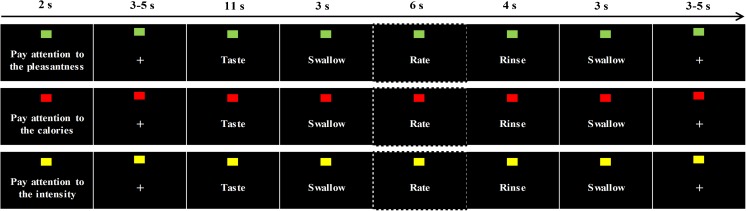
Statements regarding pleasantness, taste intensity or caloric content on a food label may influence the attention consumers pay to such characteristics during consumption. There is little research on the effects of selective attention on taste perception and associated brain activation in regular drinks. The aim of this study was to investigate the effect of selective attention on hedonics, intensity and caloric content on brain responses during tasting drinks. Using functional MRI brain responses of 27 women were measured while they paid attention to the intensity, pleasantness or caloric content of fruit juice, tomato juice and water. Brain activation during tasting largely overlapped between the three selective attention conditions and was found in the rolandic operculum, insula and overlying frontal operculum, striatum, amygdala, thalamus, anterior cingulate cortex and middle orbitofrontal cortex (OFC). Brain activation was higher during selective attention to taste intensity compared to calories in the right middle OFC and during selective attention to pleasantness compared to intensity in the right putamen, right ACC and bilateral middle insula. Intensity ratings correlated with brain activation during selective attention to taste intensity in the anterior insula and lateral OFC. Our data suggest that not only the anterior insula but also the middle and lateral OFC are involved in evaluating taste intensity. Furthermore, selective attention to pleasantness engaged regions associated with food reward. Overall, our results indicate that selective attention to food properties can alter the activation of gustatory and reward regions. This may underlie effects of food labels on the consumption experience of consumers.
Keywords: Calories; Functional magnetic resonance imaging; Intensity; Pleasantness; Selective attention; Taste.
Conflict of interest statement
Funding
This work was done as part of the FOCOM project which was supported by the European Regional Development Fund and the Dutch Provinces Gelderland and Overijssel (Grant number 2011–017004).
Conflict of interest
The authors declare that they have no conflicts of interest.
Ethical approval
All procedures performed in this study were in accordance with the Declaration of Helsinki (amendment of Fortaleza, 2013), approved by the Medical Ethical Committee of Wageningen University and registered in the Dutch Trial Register (NTR5253).
Informed consent
Written informed consent was obtained from all participants included in this study.
Figures


References
-
- Baxter MG, Murray EA. The amygdala and reward. Nature Reviews. Neuroscience. 2002;3(July):563–573. - PubMed
MeSH terms
Grants and funding
LinkOut - more resources
Full Text Sources
Other Literature Sources
Medical
