


Susceptibility to neurofibrillary tangles: role of the PTPRD locus and limited pleiotropy with other neuropathologies
- PMID: 28322283
- PMCID: PMC5608624
- DOI: 10.1038/mp.2017.20
Susceptibility to neurofibrillary tangles: role of the PTPRD locus and limited pleiotropy with other neuropathologies
Abstract
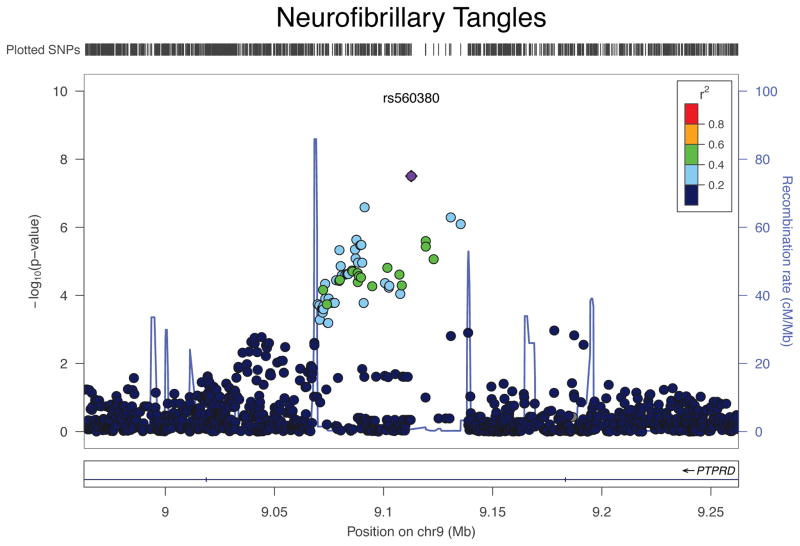
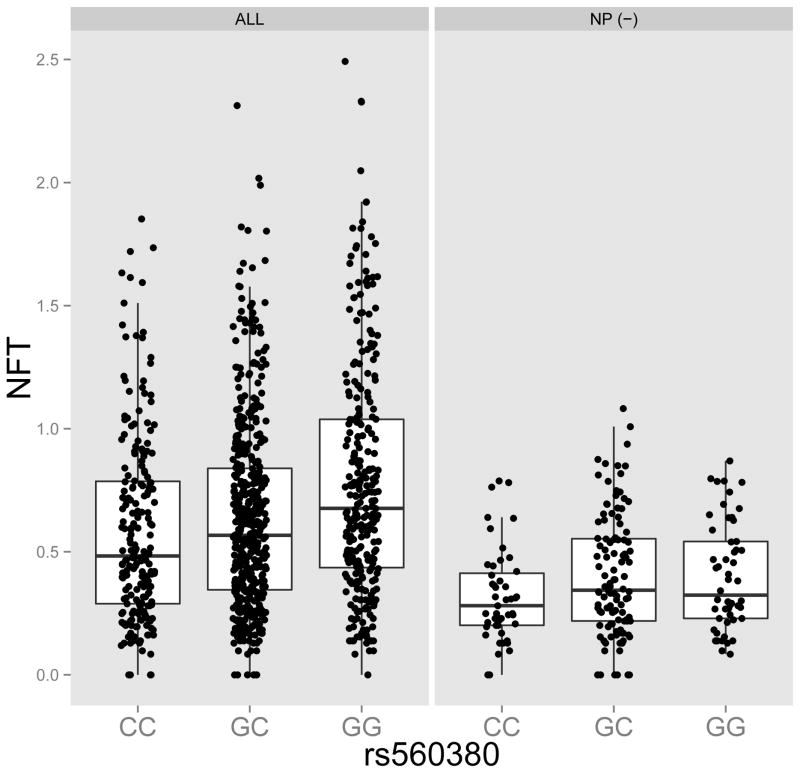
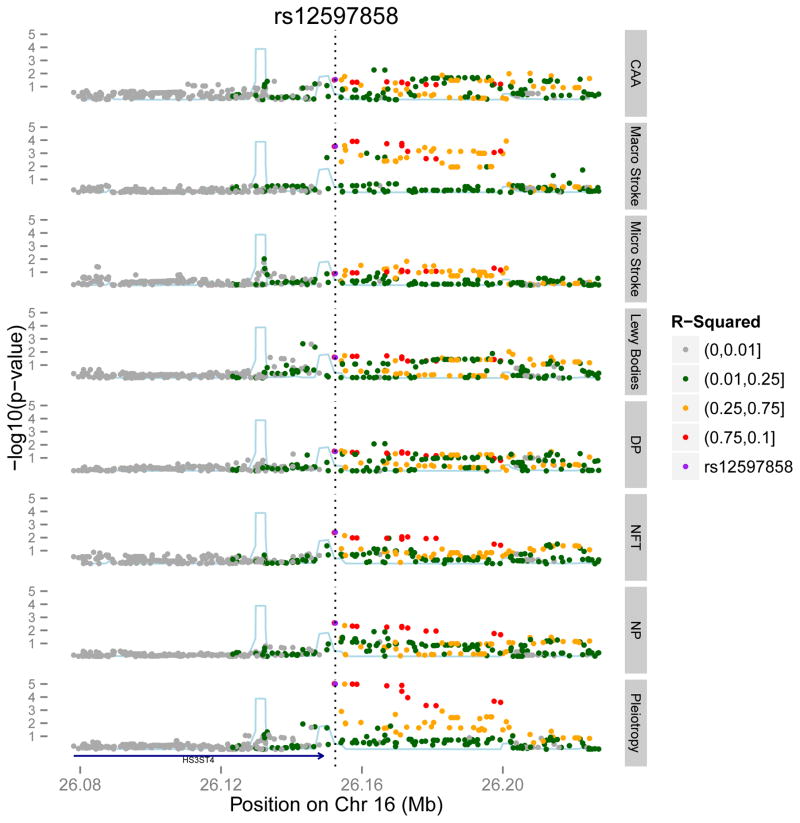
Tauopathies, including Alzheimer's disease (AD) and other neurodegenerative conditions, are defined by a pathological hallmark: neurofibrillary tangles (NFTs). NFT accumulation is thought to be closely linked to cognitive decline in AD. Here, we perform a genome-wide association study for NFT pathologic burden and report the association of the PTPRD locus (rs560380, P=3.8 × 10⁻⁸) in 909 prospective autopsies. The association is replicated in an independent data set of 369 autopsies. The association of PTPRD with NFT is not dependent on the accumulation of amyloid pathology. In contrast, we found that the ZCWPW1 AD susceptibility variant influences NFT accumulation and that this effect is mediated by an accumulation of amyloid β plaques. We also performed complementary analyses to identify common pathways that influence multiple neuropathologies that coexist with NFT and found suggestive evidence that certain loci may influence multiple different neuropathological traits, including tau, amyloid β plaques, vascular injury and Lewy bodies. Overall, these analyses offer an evaluation of genetic susceptibility to NFT, a common end point for multiple different pathologic processes.
Conflict of interest statement
Dr. Schneider is a consultant for Navidea Biopharmaceuticals and an advisor to Eli Lilly Inc. and Genetech. All other authors report no conflict of interest.
Figures
References
-
- Kukull WA, Higdon R, Bowen JD, McCormick WC, Teri L, Schellenberg GD, et al. Dementia and Alzheimer disease incidence: a prospective cohort study. Arch Neurol. 2002;59(11):1737–1746. - PubMed
Publication types
MeSH terms
Substances
Grants and funding
LinkOut - more resources
Full Text Sources
Other Literature Sources
