. 2017 Aug:101:153-164.
doi: 10.1016/j.ijbiomac.2017.03.087. Epub 2017 Mar 18.

Understanding the link between antimicrobial properties of dietary olive phenolics and bacterial ATP synthase

Affiliations

Understanding the link between antimicrobial properties of dietary olive phenolics and bacterial ATP synthase

Amon Amini et al. Int J Biol Macromol. 2017 Aug.

Abstract

The naturally occurring olive phenolics tyrosol, hydroxytyrosol, dihydroxyphenylglycol (DHPG), and oleuropein are known to have antioxidant, antitumor, and antibacterial properties. In the current study, we examined whether the antimicrobial properties of tyrosol, hydroxytyrosol, DHPG, and oleuropein were linked to the inhibition of bacterial ATP synthase. Tyrosol, hydroxytyrosol, DHPG, and oleuropein inhibited Escherichia coli wild-type and mutant membrane-bound F1Fo ATP synthase to variable degrees. The growth properties of wild-type, null, and mutant strains in presence of above olive phenolics were also abrogated to variable degrees on limiting glucose and succinate. Tyrosol and oleuropein synergistically inhibited the wild-type enzyme. Comparative wild-type and mutant F1Fo ATP synthase inhibitory profiles suggested that αArg-283 is an important residue and olive phenolics bind at the polyphenol binding pocket of ATP synthase. Growth patterns of wild-type, null, and mutant strains in the presence of tyrosol, hydroxytyrosol, DHPG, and oleuropein also hint at the possibility of additional molecular targets. Our results demonstrated that ATP synthase can be used as a molecular target and the antimicrobial properties of olive phenolics in general and tyrosol in particular can be linked to the binding and inhibition of bacterial ATP synthase.

Keywords: Dihydroxyphenylglycol; E. coli F(1)F(o) ATP synthase; Enzyme inhibition; Hydroxytyrosol; Oleuropein; Olive phenolics; Tyrosol.


Figures

Figure 1
Figure 1
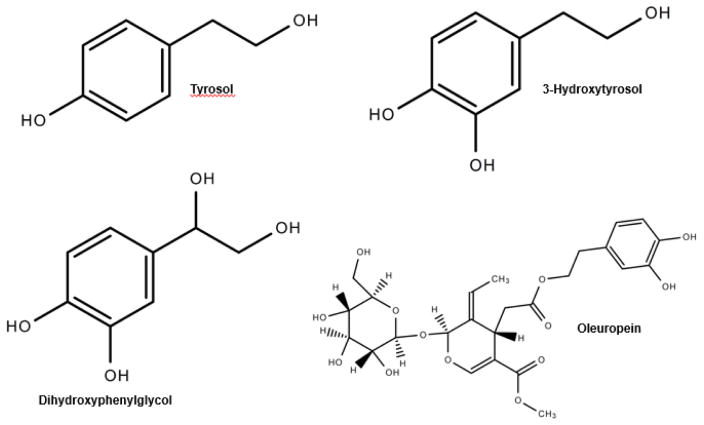
Structures of olive phenolics tyrosol, hydroxytyrosol, dihydroxyphenylglycol (DHPG), and oleuropein.
Figure 2
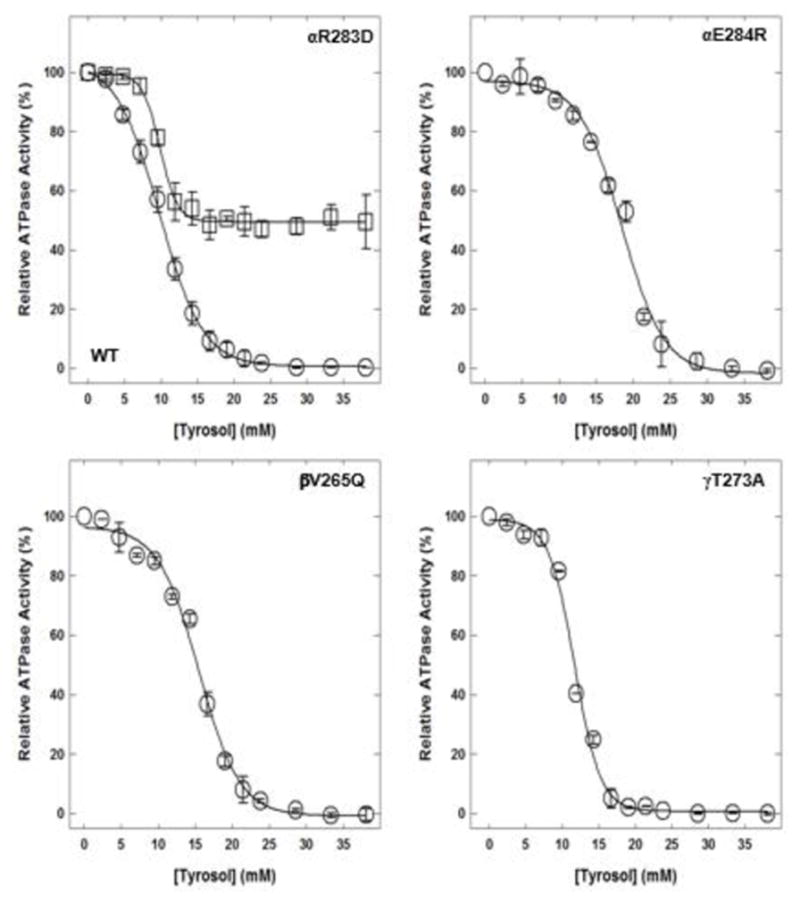
Figure 2. Tyrosol-induced inhibition of wild-type and mutant membrane-bound F1Fo ATP synthase
Membrane-bound F1Fo ATP synthase was incubated for 60 minutes at room temperature with incremental concentrations of tyrosol, and then 1 mL of ATPase cocktail was added and activity measured. Experimental details are given in the Materials and Methods section. Each data point represents the average of 3–4 experiments done in duplicate tubes, using 2–3 independent membrane-bound F1Fo ATP synthase preparations. Abbreviations: ATP, adenosine triphosphate; WT, wild-type.
Figure 3
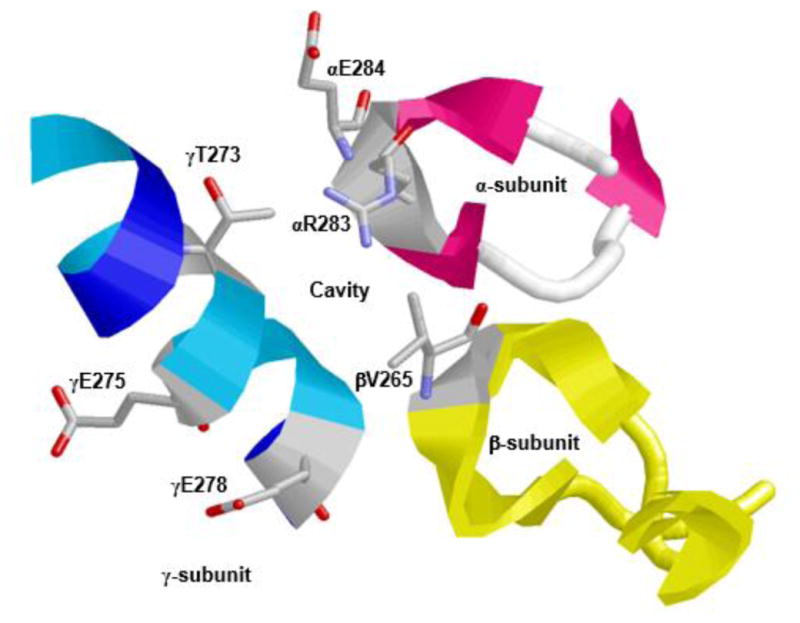
Figure 3. X-ray crystallographic structure of F1Fo ATP synthase illustrating the polyphenol binding pocket
α-, β-, and γ-subunits forming an olive phenolic binding cavity is depicted. Residues αArg-283, αGlu-284, βVal-265, and γThr-273 along with γGln-275 and γGln 278 are identified. RasMol software was used to generate the figure with PDB file 2JJ1 [12]. Escherichia coli residue numbering is used. Abbreviation: ATP, adenosine triphosphate.
Figure 4
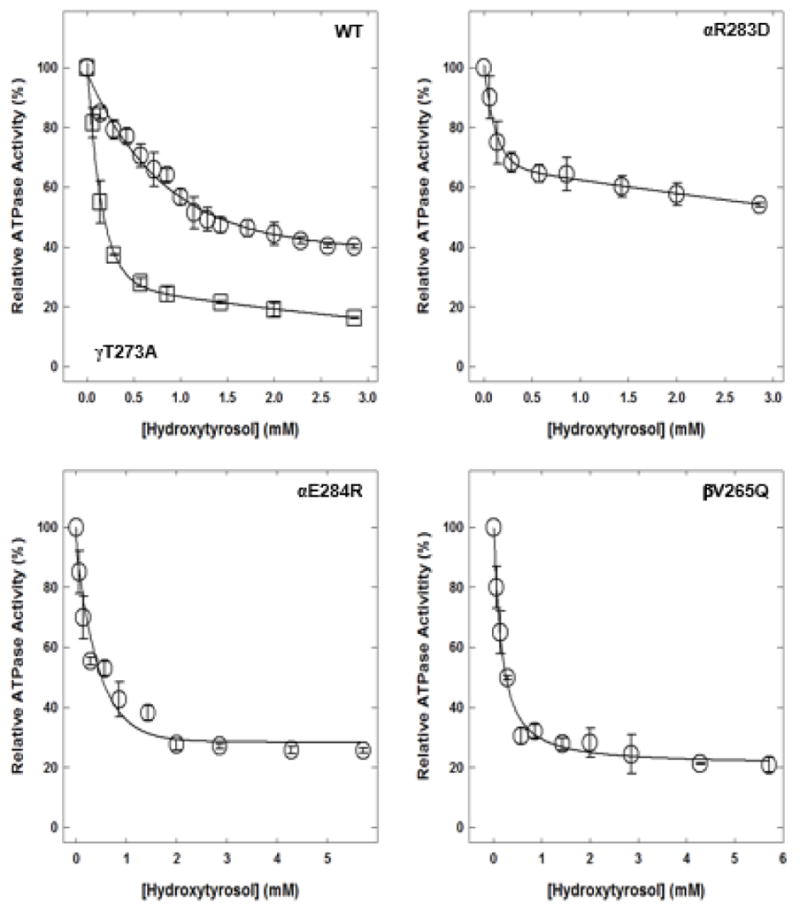
Figure 4. Hydroxytyrosol-induced inhibition of E. coli wild-type and mutant membrane-bound F1Fo ATP synthase
Membrane-bound F1Fo ATP synthase was incubated for 60 minutes at room temperature with varied concentrations of hydroxytyrosol, and then 1 mL of ATPase cocktail was added and activity measured. Experimental details are given in the Materials and Methods section. Each data point represents the average of 3–4 experiments done in duplicate tubes, using 2–3 independent F1Fo membrane preparations. Abbreviations: ATP, adenosine triphosphate; WT, wild-type.
Figure 5
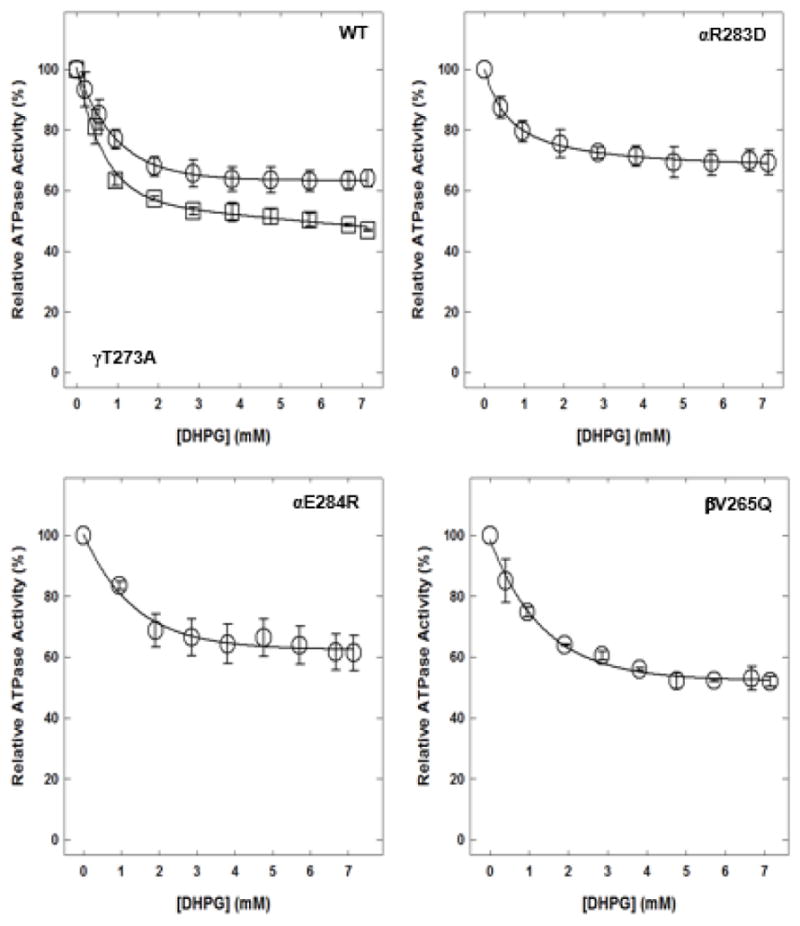
Figure 5. Dihydroxyphenylglycol (DHPG)-induced inhibition of wild-type and mutant membrane-bound F1Fo ATP synthase
Membrane-bound F1Fo ATP synthase was incubated for 60 minutes at room temperature with varied concentrations of DHPG, and then 1 mL of ATPase cocktail was added and activity measured. Each data point is the average of 3–4 experiments done in duplicate tubes, using 2–3 independent F1Fo membrane preparations. Abbreviations: ATP, adenosine triphosphate; WT, wild-type.
Figure 6
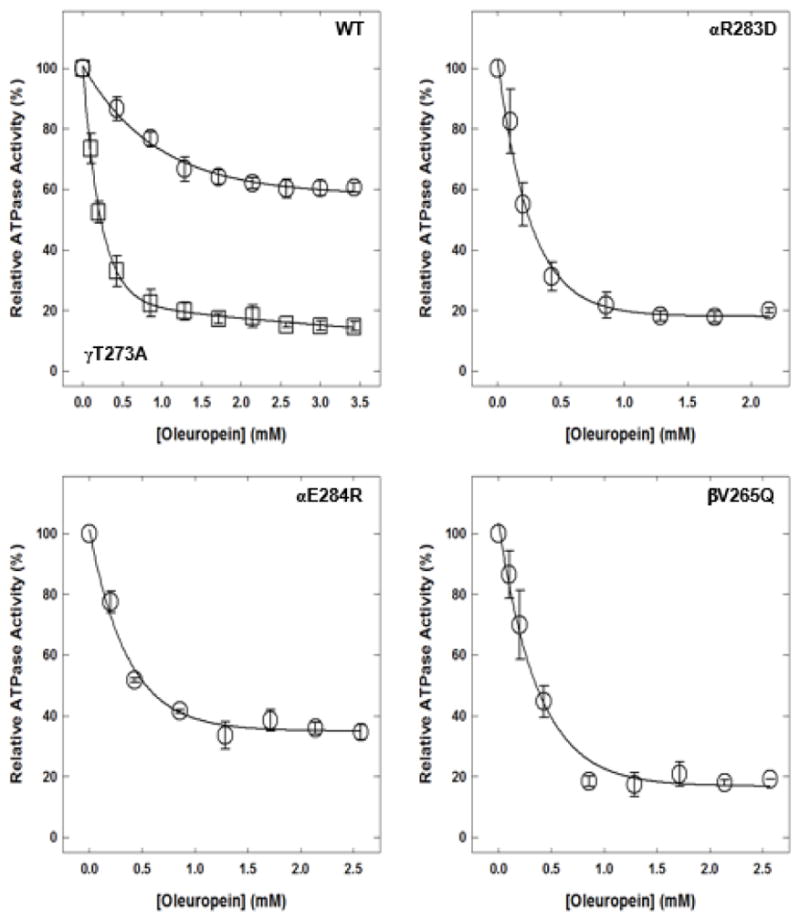
Figure 6. Oleuropein-induced inhibition of wild-type and mutant membrane-bound F1Fo ATP synthase
Membrane-bound F1Fo ATP synthase was incubated for 60 minutes at room temperature with varied concentrations of oleuropein, and then 1 mL of ATPase cocktail was added and activity measured. Each data point is the average of 3–4 experiments done in duplicate tubes, using 2–3 independent F1Fo membrane preparations. Abbreviations: ATP, adenosine triphosphate; WT, wild-type.
Figure 7
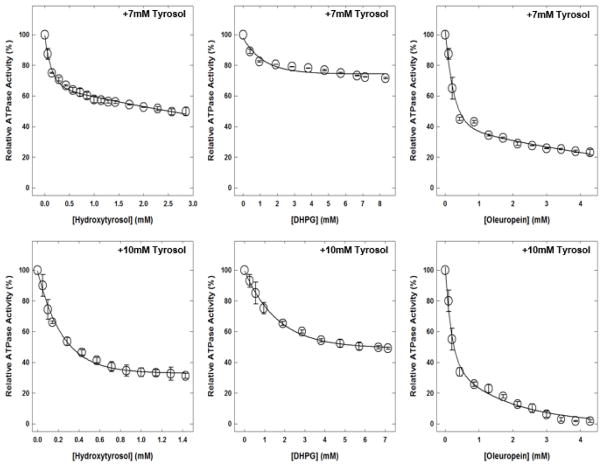
Figure 7. Hydroxytyrosol, DHPG, or oleuropein-induced inhibition of wild-type membrane-bound F1Fo ATP synthase in presence of fixed concentrations of tyrosol
Membrane-bound F1Fo ATP synthase was incubated for 60 minutes at room temperature with two fixed concentrations of 7 and 10 mM of tyrosol. Top panel (7 mM) represents 25% and bottom panel (10 mM) represents 50% inhibition points in the presence of tyrosol. Tyrosol incubation was followed by incremental addition of hydroxytyrosol, dihydroxyphenylglycol (DHPG), or oleuropein; and samples were incubated for an additional 60 minutes. Then, 1 mL ATPase cocktail was added and activity was measured at optical density (OD)700. Each data point is the average of 3–4 experiments done in duplicate tubes, using 2–3 independent F1Fo ATP synthase membrane preparations. Abbreviations: ATP, adenosine triphosphate.
Figure 8
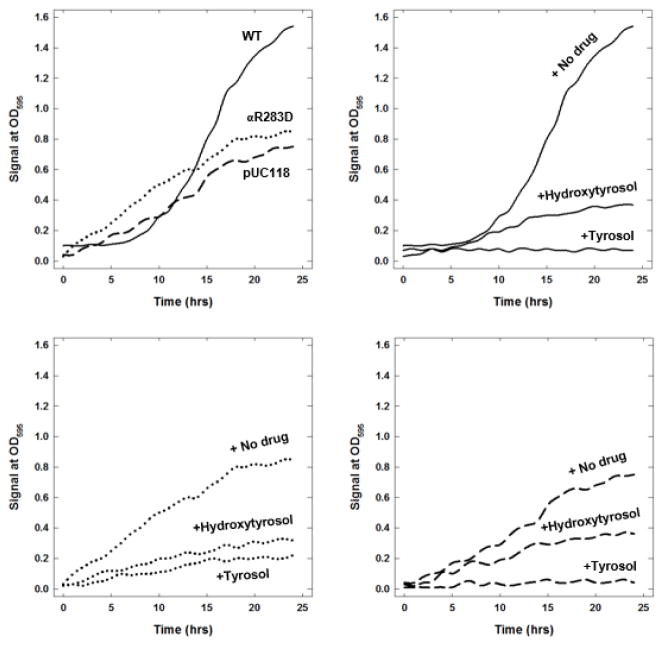
Figure 8. Wild-type, mutant, and null E. coli growth signals at OD595 in the presence and absence of tyrosol and hydroxytyrosol
About 200 μL Escherichia coli culture was grown in limiting glucose with maximal inhibitory concentrations of tyrosol (25 mM) and hydroxytyrosol (3 mM) in a 96-well plate. OD at λ595 nM was set to be measured every 60 minutes for 24 hours with shaking. Experimental details are given in the Materials and Methods section. Each data point is the average of at least three sample readings. Abbreviations: OD, optical density; WT, wild-type.

References

    1. Senior AE. J Biol Chem. 2012;287:30049–30062. - PMC - PubMed
    1. Ahmad Z, Cox JL. The Scientific World Journal. 2014;2014:10.
    1. Weber J, Senior AE. FEBS Lett. 2003;545:61–70. - PubMed
    1. Noji H, Yoshida M. J Biol Chem. 2001;276:1665–1668. - PubMed
    1. Ahmad Z, Okafor F, Laughlin TF. J Amino Acids. 2011;2011:785741. - PMC - PubMed

MeSH terms