Review
. 2018 Jan;109(Pt B):219-225.
doi: 10.1016/j.nbd.2017.03.007. Epub 2017 Mar 16.

Internalization, axonal transport and release of fibrillar forms of alpha-synuclein

Affiliations
Review

Internalization, axonal transport and release of fibrillar forms of alpha-synuclein

Gregor Bieri et al. Neurobiol Dis. 2018 Jan.

Abstract

Intra-neuronal protein aggregates made of fibrillar alpha-synuclein (α-syn) are the hallmark of Parkinson's disease (PD). With time, these aggregates spread through the brain following axonal projections. Understanding the mechanism of this spread is central to the study of the progressive nature of PD. Here we review data relevant to the uptake, transport and release of α-syn fibrils. We summarize several cell surface receptors that regulate the uptake of α-syn fibrils by neurons. The aggregates are then transported along axons, both in the anterograde and retrograde direction. The kinetics of transport suggests that they are part of the slow component b of axonal transport. Recent findings indicate that aggregated α-syn is secreted by neurons by non-canonical pathways that may implicate various molecular chaperones including USP19 and the DnaJ/Hsc70 complex. Additionally, α-syn fibrils may also be released and transmitted from neuron-to-neuron via exosomes and tunneling nanotubes. Understanding these different mechanisms and molecular players underlying α-syn spread is crucial for the development of therapies that could halt the progression of α-syn-related degenerative diseases.

Keywords: Alpha-synuclein; Axonal transport; Exosome; Fibrils; Parkinson's disease; Prion; Spread; Tunneling nanotube; Unconventional secretion.


Figures

Figure 1
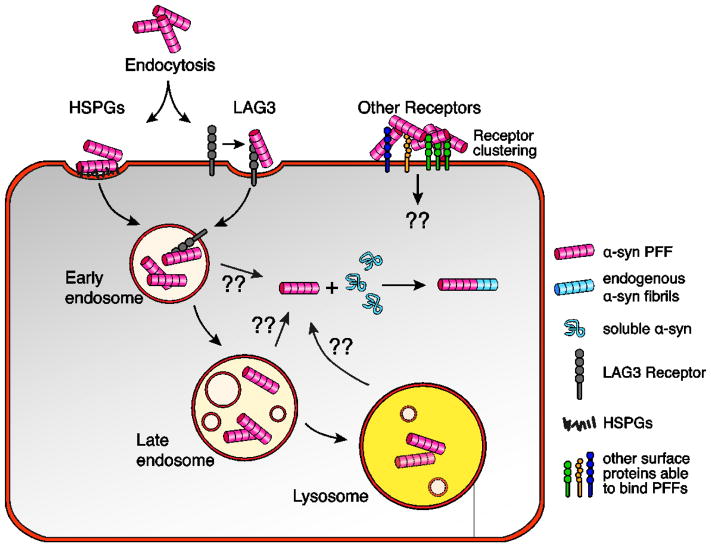
Figure 1. Internalization of α-synuclein fibrils and aggregation of endogenous α-syn protein
Recombinant α-syn fibrils are transported into the cell through endocytosis. This process is facilitated by the binding of α-syn PFFs to the cell membrane through interactions with cell surface molecules. In particular, the cell surface receptor LAG3 (lymphocyte activation gene 3) can bind and mediate the endocytosis of fibrillary α-syn. Additionally, α-syn fibrils can bind and cluster a number of other surface receptors at the plasma membrane. It is currently unknown whether any of these cell surface proteins can regulate the uptake of α-syn as well. Heparan sulfate proteoglycans (HSPG), abundant extracellular glycoproteins that are able to interact with a large number of extracellular proteins and ligands, are able to bind α-syn fibrils and promote their uptake. Internalized PFFs travel through the early and late endosomal compartment to the lysosome, where they are destined for degradation. Through some unknown process, α-syn PFFs can escape the lumen of the endosomal compartment and template the misfolding of soluble endogenously expressed α-syn in the cytoplasm. (??) indicate unknown mechanisms and molecular players.
Figure 2
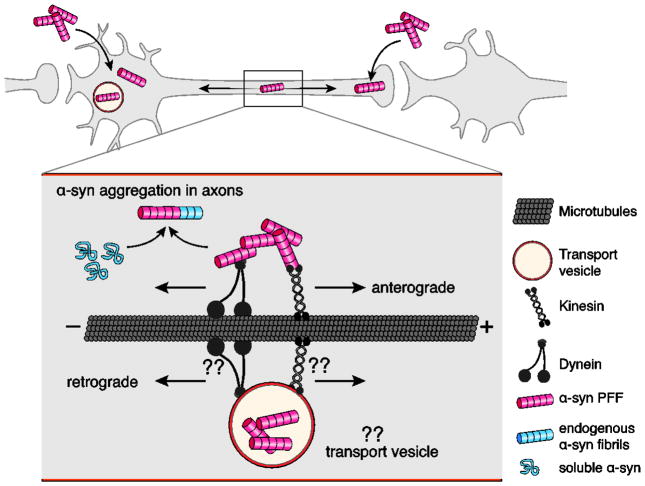
Figure 2. Axonal transport of α-syn fibrils
α-syn fibrils can be internalized both in the dendrite/cell body compartment and in axons. α-syn fibrils are actively transported along microtubules both in the anterograde and retrograde direction. It is currently not well understood if internalized α-syn fibrils are being transported directly in the cytoplasm or in transport vesicles following endocytosis. Kinesins and dynein families of proteins are the main types of molecular motors transporting cargos along microtubules in anterograde and retrograde directions. The motor and adapter proteins mediating α-syn fibril transport, both in the cytosol as well as in transport vesicles, are still unknown. Aggregation is thought to initially occur in axons, where α-syn fibrils can encounter and template the misfolding of soluble endogenous α-syn proteins that are transported along axons for delivery to synapses. (??) indicate unknown mechanisms and molecular players.
Figure 3
Figure 3. Cellular pathways mediating α-syn release
Following endocytosis, part of the internalized α-syn PFFs can be secreted again from the endosomal compartment without being targeted to the lysosome for degradation. Neutralizing antibodies can block the secreted α-syn fibrils and prevent the cell to cell transmission. Cytosolic α-syn monomers, oligomers and possibly fibrils can be targeted to secretory vesicles for release. Two molecular players with chaperone activity, including USP19 and DnaJ/Hsc70, can mediated the secretion of cytosolic α-syn. It is currently unknown if these two pathways can also mediate the secretion of α-syn fibrils as well. Small amounts of soluble and oligomeric α-syn are packaged into endosome-derived membrane vesicles called exosomes and can be secreted into the extracellular space. It is currently unclear if α-syn fibrils are present in exosomes. Tunneling nanotubes can also mediate the direct release and transmission of α-syn between cells, possibly in lysosome-derived transport vesicles. Neutralizing antibodies target α-syn fibrils released into the extracellular space and potentially reduce or prevent transmission to a second cell. (??) indicate unknown mechanisms and molecular players.

References

    1. Abeliovich A, Gitler AD. Defects in trafficking bridge Parkinson’s disease pathology and genetics. Nature. 2016;539:207–216. doi: 10.1038/nature20414. - DOI - PubMed
    1. Abounit S, Bousset L, Loria F, Zhu S, de Chaumont F, Pieri L, Olivo-Marin JC, Melki R, Zurzolo C. Tunneling nanotubes spread fibrillar α-synuclein by intercellular trafficking of lysosomes. EMBO J. 2016;35:e201593411–2138. doi: 10.15252/embj.201593411. - DOI - PMC - PubMed
    1. Abounit S, Zurzolo C. Wiring through tunneling nanotubes--from electrical signals to organelle transfer. Journal of Cell Science. 2012;125:1089–1098. doi: 10.1242/jcs.083279. - DOI - PubMed
    1. Alvarez-Erviti L, Seow Y, Schapira AH, Gardiner C, Sargent IL, Wood MJA, Cooper JM. Lysosomal dysfunction increases exosome-mediated alpha-synuclein release and transmission. Neurobiol Dis. 2011;42:360–367. doi: 10.1016/j.nbd.2011.01.029. - DOI - PMC - PubMed
    1. Baba M, Nakajo S, Tu PH, Tomita T, Nakaya K, Lee VMY, Lee V, Trojanowski JQ, Iwatsubo T. Aggregation of a-Synuclein in Lewy Bodies of Sporadic Parkinson’s Disease and Dementia with Lewy Bodies. Am J Pathol. 1998;152:879–884. - PMC - PubMed

Substances