


Erythrocyte glutathione levels as long-term predictor of transition to psychosis
- PMID: 28323286
- PMCID: PMC5416673
- DOI: 10.1038/tp.2017.30
Erythrocyte glutathione levels as long-term predictor of transition to psychosis
Abstract
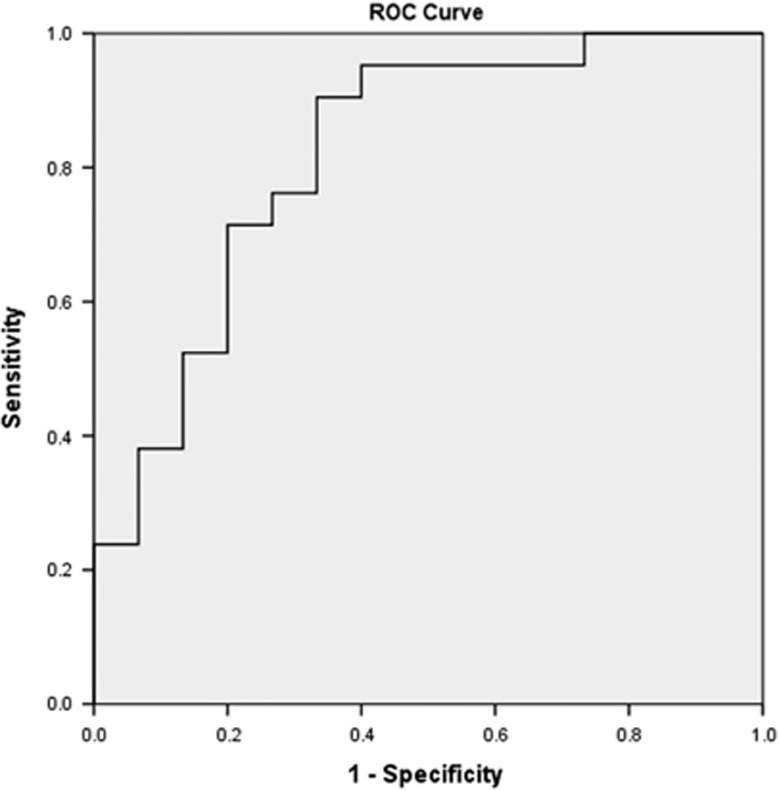
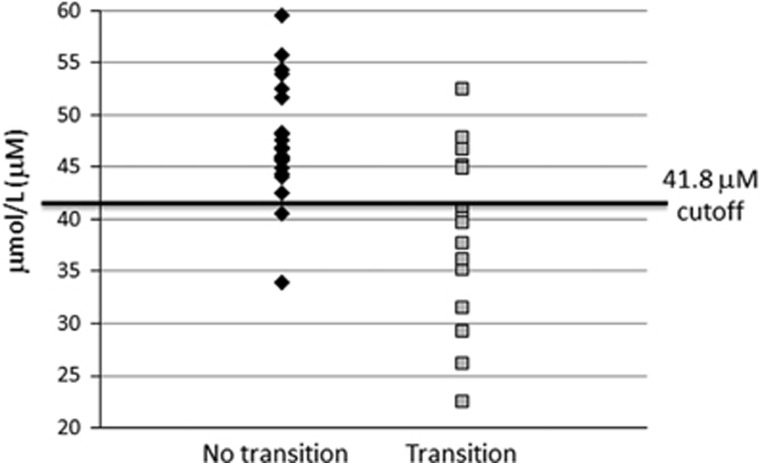
A high proportion of individuals deemed at elevated risk for psychosis will actually never progress to develop the illness. Pharmaceutical intervention may not be necessary in these cases, and may in fact be damaging depending on the invasiveness of the treatment strategy. This highlights the need for biomarkers that are better able to reliably differentiate between at-risk individuals who will subsequently transition to psychosis and those who will not. Low glutathione (GSH) levels have been observed in schizophrenia and in patients with first-episode psychosis. The aim of this study was to determine the predictive value of erythrocyte GSH levels on the transition to psychosis in individuals at risk of developing the illness. Erythrocyte GSH levels were measured in 36 at-risk individuals, 15 of whom had transitioned to psychosis at the 7-year follow-up. Univariate Cox regression analysis showed that transition to psychosis at the 7-year time point was significantly associated with low GSH levels at baseline. The area under the receiving operating characteristic curve was 0.819, indicating that GSH can be considered a good predictor of outcome. Although these results need to be replicated, adding the criterion 'low erythrocyte GSH' to the set of criteria used to identify individuals at risk of psychosis may be indicated.
Conflict of interest statement
The authors declare no conflict of interest.
Figures
References
-
- Yung AR, McGorry PD, McFarlane CA, Jackson HJ, Patton GC, Rakkar A. Monitoring and care of young people at incipient risk of psychosis. Schizophr Bull 1996; 22: 283–303. - PubMed
-
- Yung AR, Nelson B, Stanford C, Simmons MB, Cosgrave EM, Killackey E et al. Validation of "prodromal" criteria to detect individuals at ultra high risk of psychosis: 2 year follow-up. Schizophr Res 2008; 105: 10–17. - PubMed
-
- Nelson B, Yuen HP, Wood SJ, Lin A, Spiliotacopoulos D, Bruxner A et al. Long-term follow-up of a group at ultra high risk ("prodromal") for psychosis: the PACE 400 study. JAMA Psychiatry 2013; 70: 793–802. - PubMed
-
- Fusar-Poli P, Bonoldi I, Yung AR, Borgwardt S, Kempton MJ, Valmaggia L et al. Predicting psychosis: meta-analysis of transition outcomes in individuals at high clinical risk. Arch Gen Psychiatry 2012; 69: 220–229. - PubMed
-
- Moghaddam B. A mechanistic approach to preventing schizophrenia in at-risk individuals. Neuron 2013; 78: 1–3. - PubMed
Publication types
MeSH terms
Substances
LinkOut - more resources
Full Text Sources
Other Literature Sources
Medical
