Bioactivity of food peptides: biological response of rats to bovine milk whey peptides following acute exercise
- PMID: 28326005
- PMCID: PMC5345594
- DOI: 10.1080/16546628.2017.1290740
Bioactivity of food peptides: biological response of rats to bovine milk whey peptides following acute exercise
Abstract
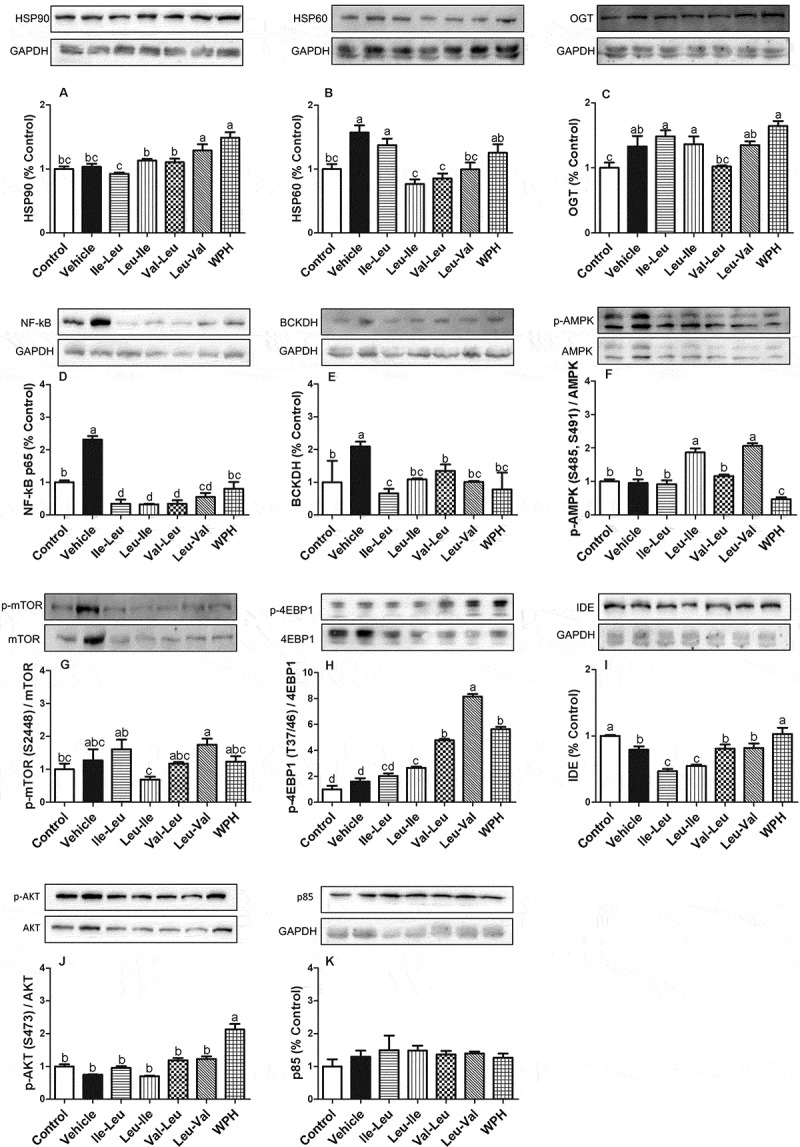
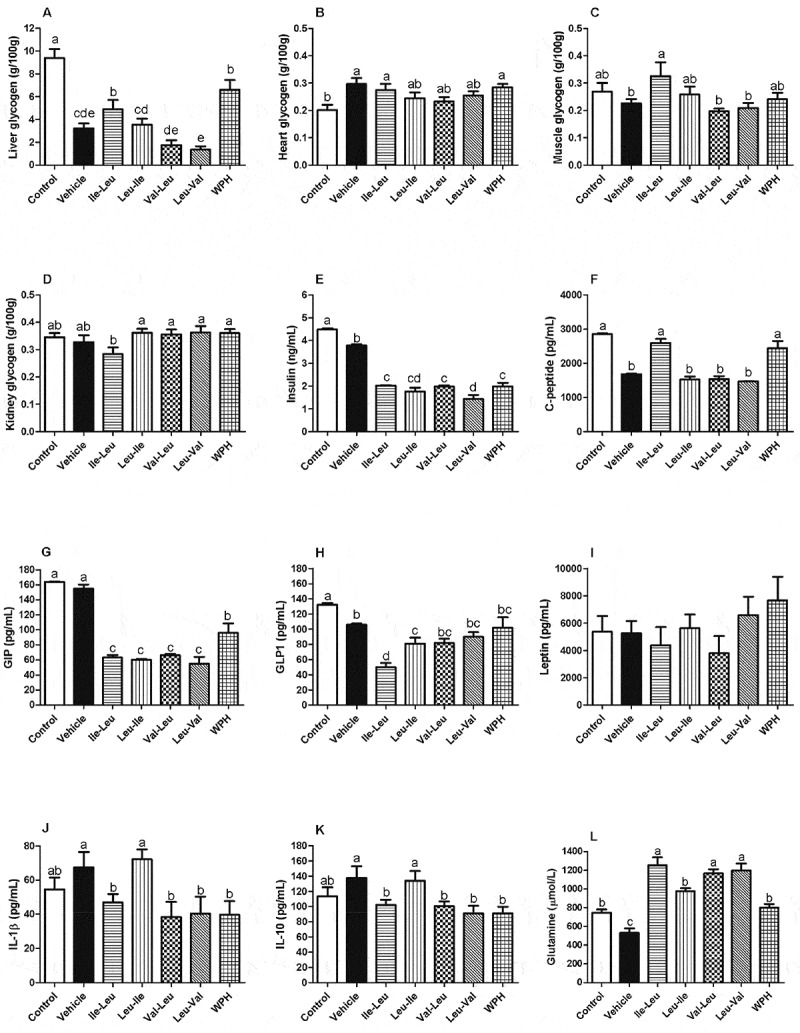
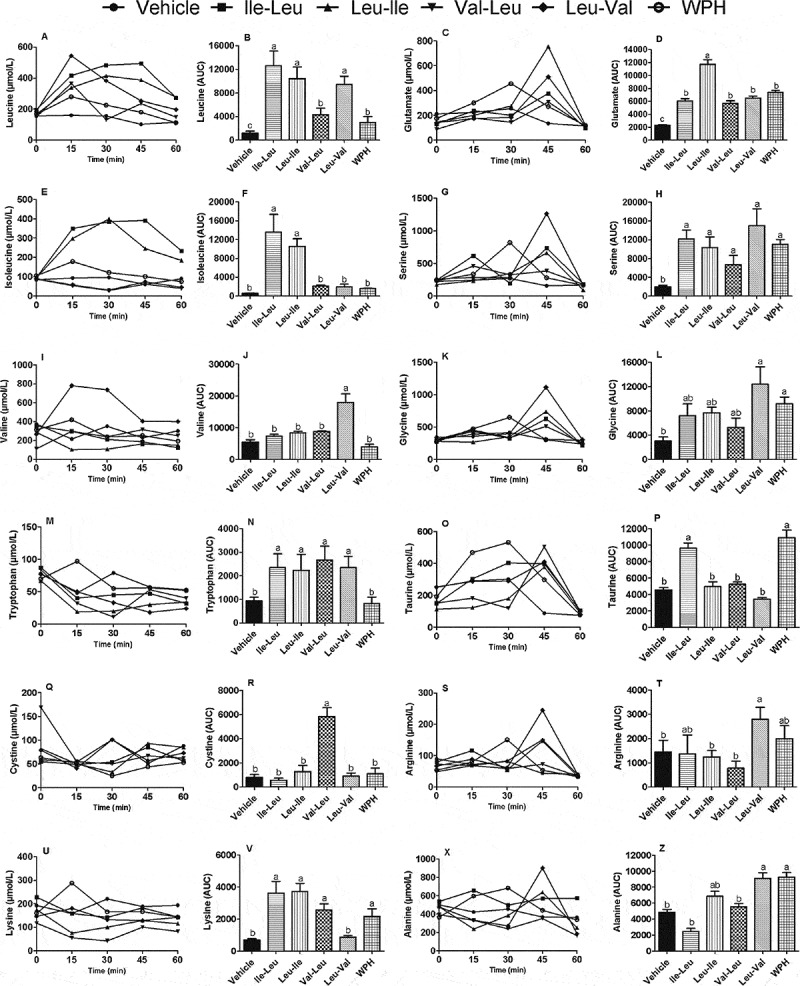
Background: Several physiologically beneficial effects of consuming a whey protein hydrolysate (WPH) have been attributed to the greater availability of bioactive peptides. Aims: The aim was to investigate the effect of four branched-chain amino acid- (BCAA-)containing dipeptides, present in WPH, on immune modulation, stimulation of HSP expression, muscle protein synthesis, glycogen content, satiety signals and the impact of these peptides on the plasma free amino acid profiles. Methods: The animals were divided in groups: control (rest, without gavage), vehicle (water), L-isoleucyl-L-leucine (lle-Leu), L-leucyl-L-isoleucine (Leu-lle), L-valyl-Lleucine (Val-Leu), L-leucyl-L-valine (Leu-Val) and WPH. All animals were submitted to acute exercise, except for control. Results: lle-Leu stimulated immune response, hepatic and muscle glycogen and HSP60 expression, whereas Leu-Val enhanced HSP90 expression. All dipeptides reduced glucagon-like peptide-1 and glucose-dependent insulinotropic polypeptide, no changes were observed on leptin. All peptides inhibited NF-kB expression. The plasma amino acid time-course showed peptide-specific and isomer-specific metabolic features, including increases of the BCAAs. Conclusion: The data indicate that lle-Leu was effective to attenuate immune-suppression exercise-induced, promoted glycogen content and stimulated anti-stress effect (HSP). Furthermore, Leu-Val increased HSP90, p-4EBP1, p-mTOR and p-AMPK expression. The data suggest the involvement of these peptides in various beneficial functions of WPH consumption.
Keywords: Bioactive peptides; HSP; glycogen; immune; whey protein hydrolysate.
Figures
References
-
- De Moura CS, Lollo PCB, Morato PN. Whey protein hydrolysate enhances the exercise-induced heat shock protein (HSP70) response in rats. Food Chem. 2013;136:1350–11. - PubMed
-
- Morifuji M, Sakai K, Sanbongi C. Dietary whey protein increases liver and skeletal muscle glycogen levels in exercise-trained rats. Br J Nutr. 2005;93:439–445. - PubMed
-
- Pal S, Radavelli-Bagatini S, Hagger M. Comparative effects of whey and casein proteins on satiety in overweight and obese individuals: a randomized controlled trial. Eur J Clin Nutr. 2014;68:980–986. - PubMed
-
- Marshall K. Therapeutic applications of whey protein. Altern. Med Rev. 2004;9:136–156. - PubMed
LinkOut - more resources
Full Text Sources
Other Literature Sources
Research Materials
Miscellaneous