


miRNAs in the vitreous humor of patients affected by idiopathic epiretinal membrane and macular hole
- PMID: 28328945
- PMCID: PMC5362220
- DOI: 10.1371/journal.pone.0174297
miRNAs in the vitreous humor of patients affected by idiopathic epiretinal membrane and macular hole
Erratum in
-
Correction: miRNAs in the vitreous humor of patients affected by idiopathic epiretinal membrane and macular hole.PLoS One. 2017 Apr 20;12(4):e0176618. doi: 10.1371/journal.pone.0176618. eCollection 2017. PLoS One. 2017. PMID: 28426810 Free PMC article.
Abstract
Purpose: The aim of the present study was to assess the expression of miRNAs in the Vitreous Humor (VH) of patients with Macular Hole (MH) and Epiretinal Membrane (ERM) compared to a control group.
Methods: In this prospective, comparative study, 2-ml of VH was extracted from the core of the vitreous chamber in consecutive patients who underwent standard vitrectomy for ERM and MH. RNA was extracted and TaqMan® Low Density Arrays (TLDAs) were used to profile the transcriptome of 754 miRNAs. Results were validated by single TaqMan® assays. Finally, we created a biological network of differentially expressed miRNA targets and their nearest neighbors.
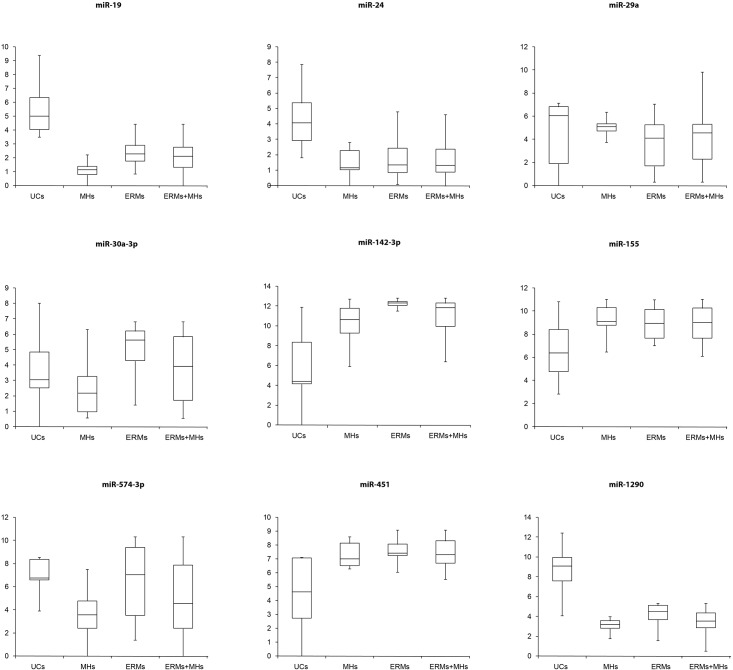
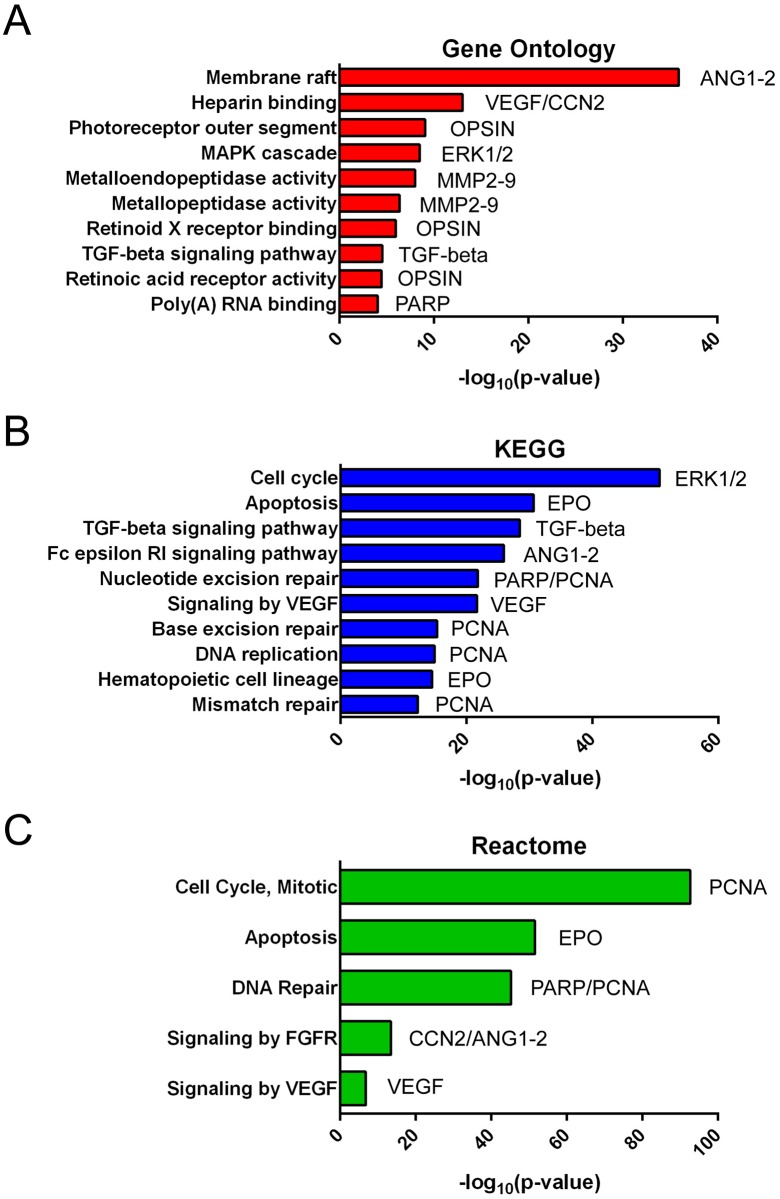
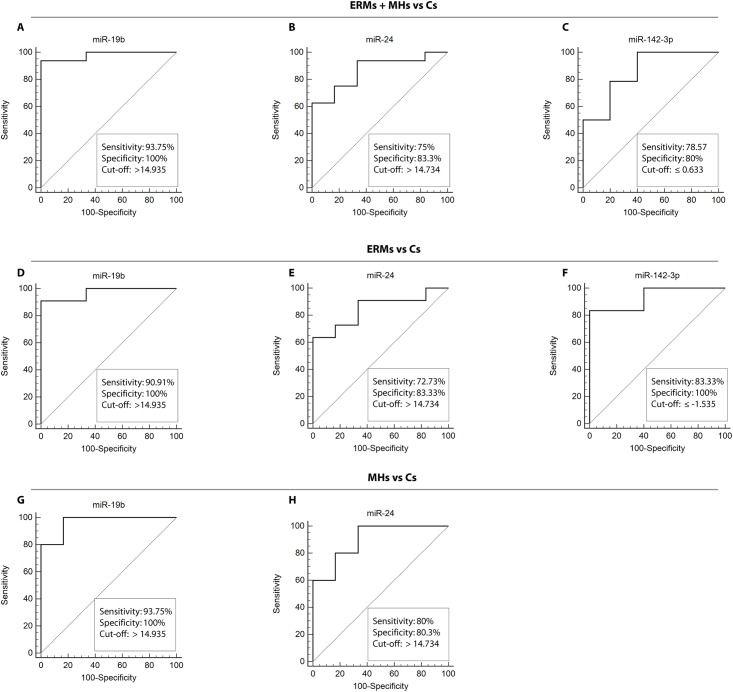
Results: Overall 10 eyes with MH, 16 eyes with idiopathic ERM and 6 controls were enrolled in the study. Profiling data identified 5 miRNAs differentially expressed in patients affected by MH and ERM with respect to controls. Four were downregulated (miR-19b, miR-24, miR-155, miR-451) and 1 was downregulated (miR-29a); TaqMan® assays of the VH of patients affected by MH and ERM, with respect to controls, showed that the most differentially expressed were miR-19b (FC -9.13, p:<0.00004), mir-24 (FC -7.52, p:<0.004) and miR-142-3p (FC -5.32, p:<0.011). Our network data showed that deregulation of differentially expressed miRNAs induces an alteration of several pathways associated with genes involved in both MH and ERM.
Conclusion: The present study suggests that disregulation of miR-19b, miR-24 and miR-142-3p, might be related to the alterations that characterize patients affected by MH and ERM.
Conflict of interest statement
Figures
References
-
- Sebag J, “Vitreous: in Health and Disease,” Springer, 2014;266–267.
-
- Girach A, de Smet MD, “Diseases of the Vitreo-Macular Interface”, Springer Science & Business Media, 2013; 51
-
- Aaberg TM, Blair CJ, Gass JD. Macular holes. Am J Ophthalmol. 1970. April;69(4):555–62. - PubMed
-
- Martinez J, Smiddy WE, Kim J, Gass JD. Differentiating macular holes from macular pseudoholes. Am J Ophthalmol. 1994. June 15;117(6):762–7. - PubMed
Publication types
MeSH terms
Substances
LinkOut - more resources
Full Text Sources
Other Literature Sources
