


Convoys of Social Relations in Cross-National Context
- PMID: 28329836
- PMCID: PMC6281328
- DOI: 10.1093/geront/gnw204
Convoys of Social Relations in Cross-National Context
Abstract
Purpose of the study: This study examines national variations in social networks among older adults across 4 countries in diverse regions of the world: Japan, Lebanon, Mexico, and the United States. The aim is to provide insights into universal as well as unique attributes of social networks in later life.
Design and methods: The analyses examine convoy characteristics among adults aged 50+ in metropolitan areas of Japan (N = 557), Lebanon (N = 284), Mexico (N = 556), and the United States (N = 583). Data were collected using the hierarchical mapping technique on representative samples in each locale. Multilevel models were conducted by nation to examine whether convoy characteristics vary by age and closeness.
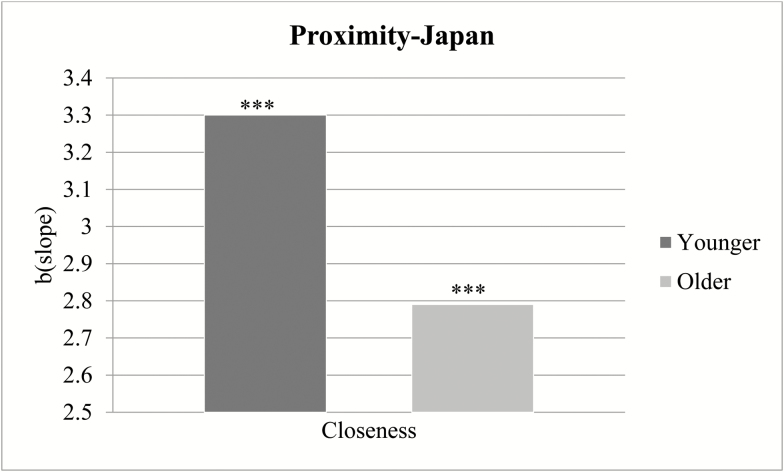
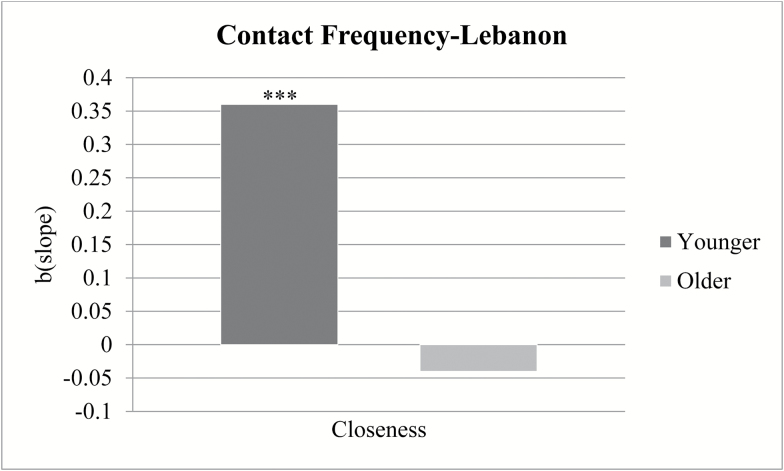
Results: Network size and geographic proximity were dimensions of social networks sensitive to national context. By contrast, how age and feelings of closeness varied with contact frequency and the presence of children in networks revealed universal patterns. Furthermore, feelings of closeness varied by age with regard to size and contact frequency in Lebanon, proximity in Japan, and composition in Mexico.
Implications: Identifying universal and unique characteristics of social networks in later life provide a preliminary empirical basis upon which to advance a global perspective on convoys of social relations and how they inform policies that can facilitate health and well-being among middle-aged and older people around the world.
Figures


References
-
- Abdulrahim S. Ajrouch K. J. Jammal A., & Antonucci T. C (2012). Survey methods and aging research in an Arab sociocultural context: A case study from Beirut, Lebanon. Journal of Gerontology: Social Sciences, 67, 775–782. doi:10.1093/geronb/gbs083 - PubMed
-
- Ajrouch K. J. Akiyama H., & Antonucci T. C (2007). Cohort differences in social relations among the elderly. In Wahl H. W. Tesch-Romer C., & Hoff A. (Eds.), Emergence of new person-environment dynamics in old age: A multidisciplinary exploration (pp. 43–64). Amityville, NY: Baywood Publishing Company, Inc.
-
- Akiyama H. (2005). A comparative study of social relations: U.S. and Japan. Tokyo, Japan: Funded by the Japan Society for the Promotion of Science.
Publication types
MeSH terms
Grants and funding
LinkOut - more resources
Full Text Sources
Other Literature Sources
Medical
