


Evaluation of biochemical markers during somatic embryogenesis in Silybum marianum L
- PMID: 28330141
- PMCID: PMC4755959
- DOI: 10.1007/s13205-016-0366-1
Evaluation of biochemical markers during somatic embryogenesis in Silybum marianum L
Abstract
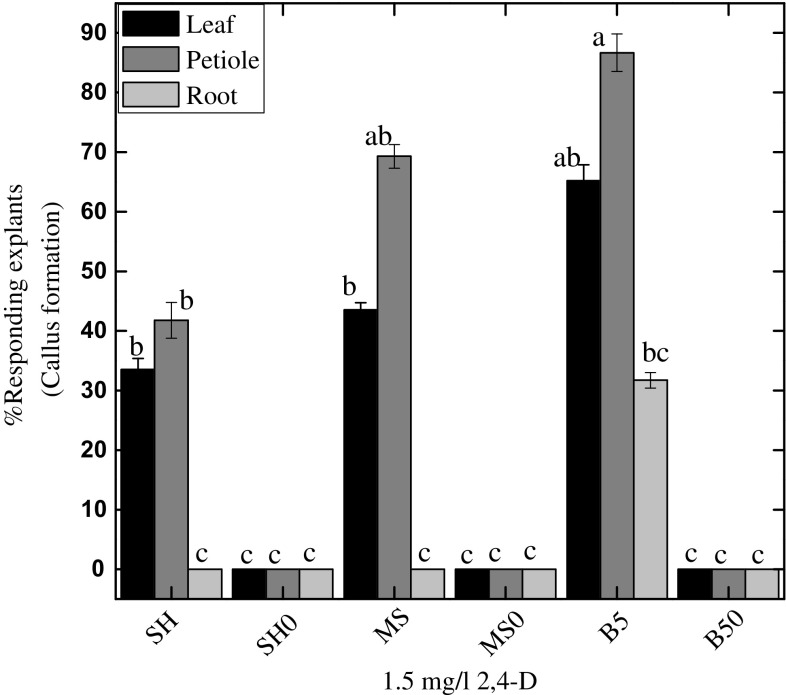
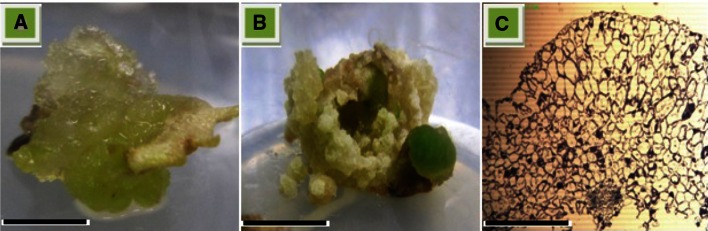
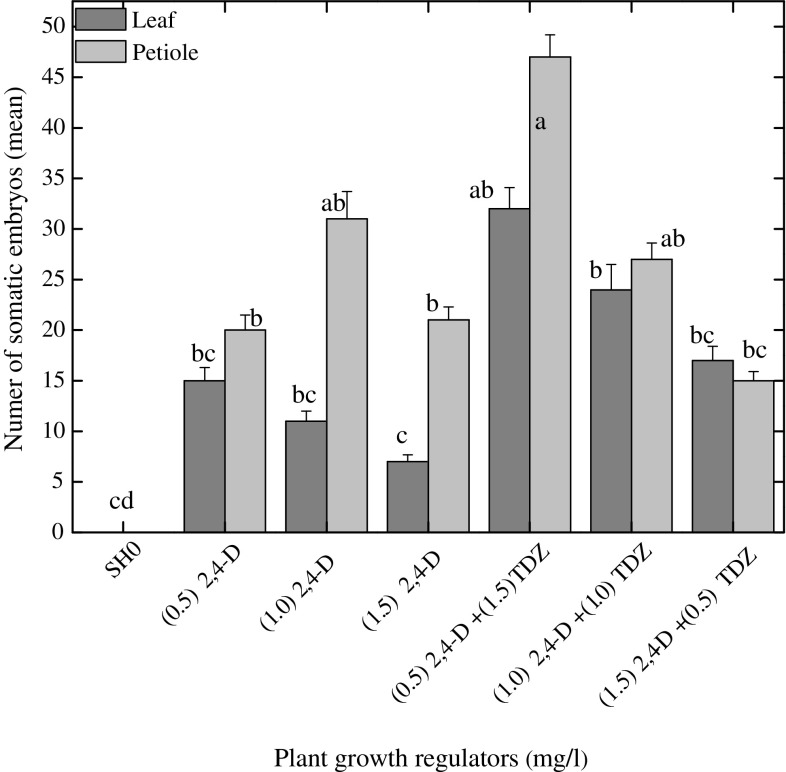
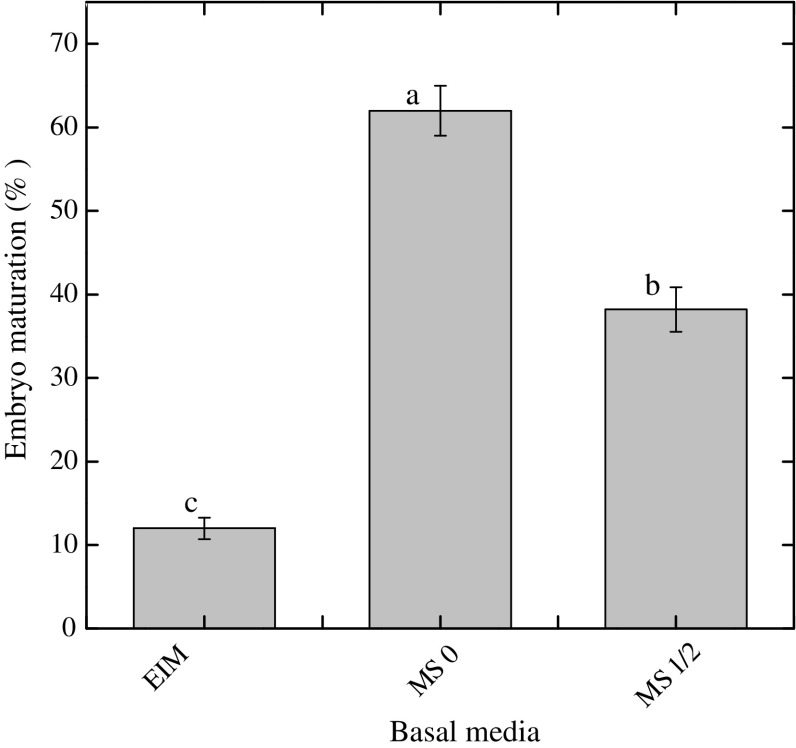
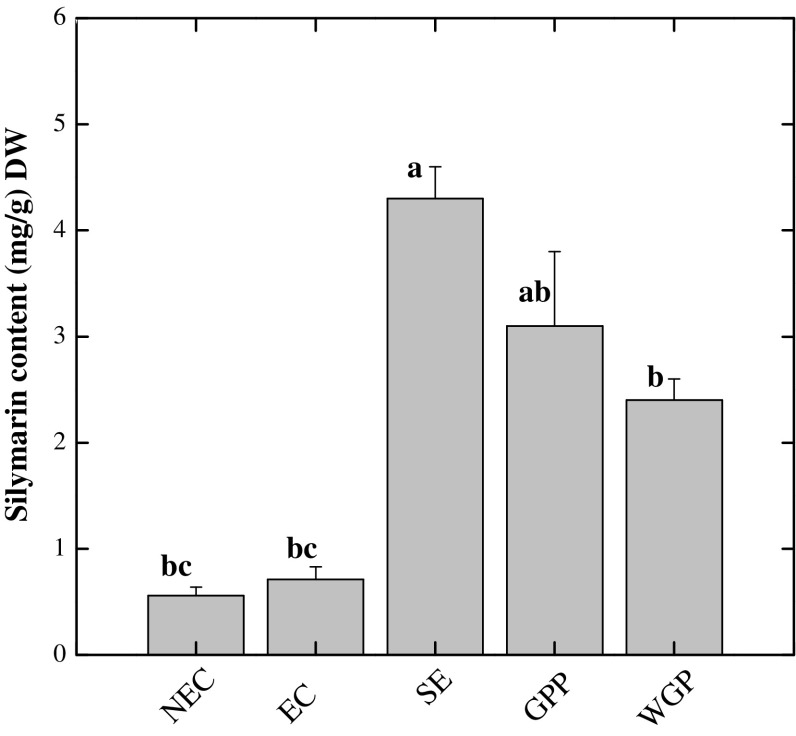
In present report effects of explants type, basal media and plant growth regulators (PGRs) were tested for induction of indirect somatic embryogenesis in medicinally important plant Silybum marianum L. Leaf, petiole and root explants were exploited in vitro on B5 (Gamborg), SH (Schenk and Hildebrandt) and MS (Murashige and Skoog) media for induction of embryogenic callus followed by somatic embryogenesis. Highest callus induction frequency (76 ± 4.8 %) was recorded when petiole explants of in vitro derived plantlets were cultured on B5 medium supplemented with 1.5 mg l-1 2,4-dichlorophenoxyacetic acid (2,4_D) in combination with 1.5 mg l-1 Thidiazuron (TDZ). Induction and multiplication of somatic embryos were observed, when the embryogenic calluses were sub-cultured on to B5 medium containing 0.5 mg l-1 2,4-D plus 1.5 mg l-1 TDZ. At this PGRs treatment, 77 % of the cultures responded with 39.1 somatic embryos per callus. Furthermore, MS0 medium was indicated more reponsive for growth and maturation of somatic embryos. Analysis of biochemical markers during various growth phases in somatic embryogenesis revealed that somatic embryos exhibited highest level of total carbohydrate, starch, ascorbic acid and total free amino acids. However, higher protein levels were detected in non-embryogenic callus. Nevertheless, considerable amount of silymarin (4.1 mg g-1 DW) was detected in somatic embryos than other growth phases. Thus, the present study concluded that biochemical and physiological changes during embryogenesis are influenced by interplay of explants type, basal media and PGRs.
Keywords: Biochemical; Explant; HPLC; Plant growth regulator; Silybum; Somatic embryo.
Conflict of interest statement
The authors declare no competing interests.
Figures
References
-
- Abbasi BH, Khan MA, Mahmood T, Ahmad M, Chaudhary MF, Khan MA. Shoot regeneration and free-radical scavenging activity in Silybum marianum L. Plant Cell Tissue Organ Cult. 2010;101:371–376. doi: 10.1007/s11240-010-9692-x. - DOI
-
- Bates L, Waldren R, Teare I. Rapid determination of free proline for water-stress studies. Plant Soil. 1973;39:205–207. doi: 10.1007/BF00018060. - DOI
-
- Chanprame S, Kuo T, Widholm J. Soluble carbohydrate content of soybean [Glycine max (L.) Merr.] somatic and zygotic embryos during development. In Vitro Cell Dev Biol-Plant. 1998;34:64–68. doi: 10.1007/BF02823125. - DOI
-
- Correia S, Cunha AE, Salgueiro L, Canhoto JM. Somatic embryogenesis in tamarillo (Cyphomandra betacea): approaches to increase efficiency of embryo formation and plant development. Plant Cell Tissue Organ Cult. 2012;109:143–152. doi: 10.1007/s11240-011-0082-9. - DOI
-
- Cready MJ, Siliviera V, Owens HS. Determination of starch and amylase in vegetables. Anal Chem. 1950;22:1156. doi: 10.1021/ac60045a016. - DOI
LinkOut - more resources
Full Text Sources
Other Literature Sources
