. 2017 Mar 22;9(382):eaai7863.
doi: 10.1126/scitranslmed.aai7863.

An automated smartphone-based diagnostic assay for point-of-care semen analysis

Affiliations

An automated smartphone-based diagnostic assay for point-of-care semen analysis

Manoj Kumar Kanakasabapathy et al. Sci Transl Med. .

Abstract

Male infertility affects up to 12% of the world's male population and is linked to various environmental and medical conditions. Manual microscope-based testing and computer-assisted semen analysis (CASA) are the current standard methods to diagnose male infertility; however, these methods are labor-intensive, expensive, and laboratory-based. Cultural and socially dominated stigma against male infertility testing hinders a large number of men from getting tested for infertility, especially in resource-limited African countries. We describe the development and clinical testing of an automated smartphone-based semen analyzer designed for quantitative measurement of sperm concentration and motility for point-of-care male infertility screening. Using a total of 350 clinical semen specimens at a fertility clinic, we have shown that our assay can analyze an unwashed, unprocessed liquefied semen sample with <5-s mean processing time and provide the user a semen quality evaluation based on the World Health Organization (WHO) guidelines with ~98% accuracy. The work suggests that the integration of microfluidics, optical sensing accessories, and advances in consumer electronics, particularly smartphone capabilities, can make remote semen quality testing accessible to people in both developed and developing countries who have access to smartphones.


Conflict of interest statement

Competing interests: H.S. is the inventor of patent application PCT/US2016/038739 submitted by the Brigham and Women’s Hospital that covers home evaluation of the quality of semen samples.

Figures

Fig. 1
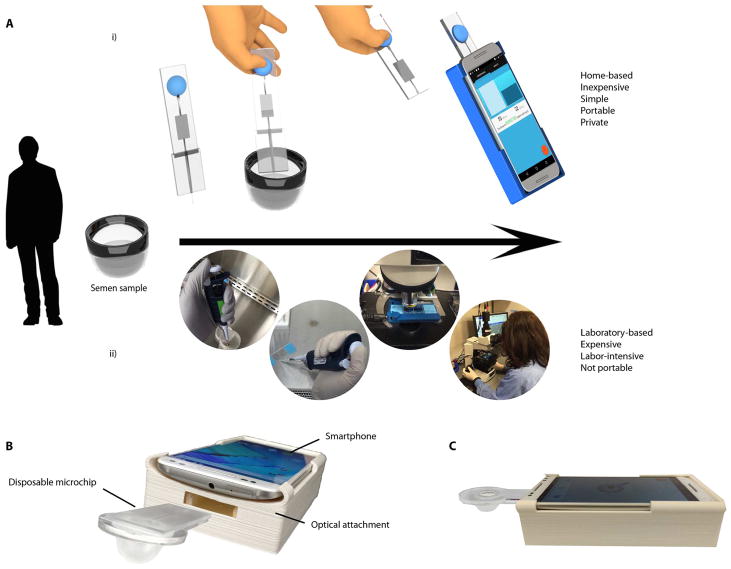
Fig. 1. The process flow for semen analysis using the smartphone-based device and conventional methods
(A) (i) Process of operation: A small volume of an unwashed, unprocessed semen sample is loaded into a microfluidic device that has a capillary-based disposable tip at the inlet and a rubber bulb at the outlet to create negative pressure in the microchannel for manual, power-free sample loading. The user manually detaches the capillary disposable tip from the microfluidic device through a simple snap-off mechanism and inserts the clean microfluidic device into the smartphone optical attachment. The user then initializes the smartphone application, which analyzes the sample with <5-s mean video processing time. (ii) Conventional method of semen analysis performed in a laboratory setting. The sample is drawn using a pipette and is loaded onto a semen glass slide counting chamber. The glass slide is placed under a desktop microscope, and a technician performs the analysis either manually or using a CASA system. (B) Actual image of the smartphone accessory and the microchip (C) along with its side view.
Fig. 2
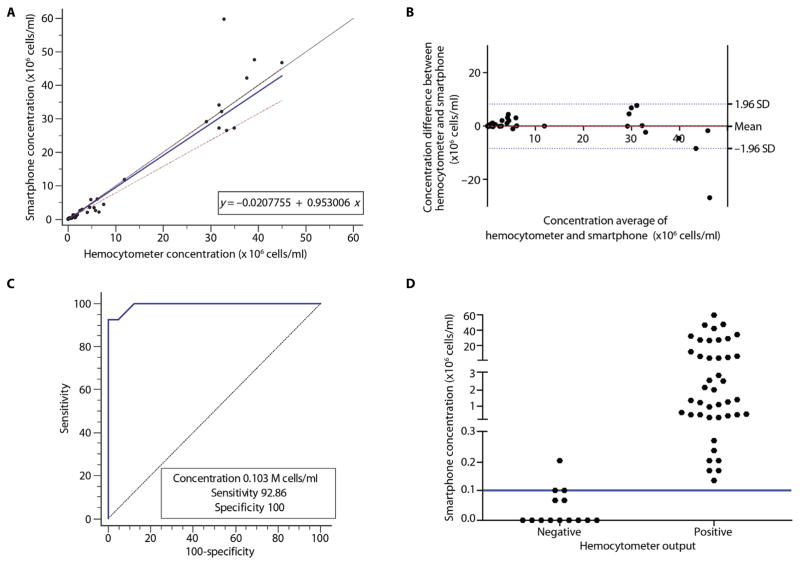
Fig. 2. Device evaluation using cryopreserved semen samples based on sperm concentration criterion of 100,000 sperm/ml
(A) Direct comparison of sperm concentrations calculated by the smartphone-based device and manual microscope-based method. The solid blue line represents the regression line, the solid black line represents the identity line, and two dashed red lines represent the confidence band (n = 56). (B) Bland-Altman analysis to compare the results obtained by the smartphone-based semen analyzer and manual microscope-based method. The red dashed line is the mean difference of the methods, and the blue dotted lines represent the 95% LOAs. ROC curves (C) along with a vertical scatterplot (D) show the sensitivity and specificity of the smartphone-based device in detecting samples with sperm concentrations at ~100,000 sperm/ml. In (D), “Negative” and “Positive” represent sperm concentrations below and above 100,000 cells/ml, respectively, indicated by the blue line. Manual analysis was used as the reference method.
Fig. 3
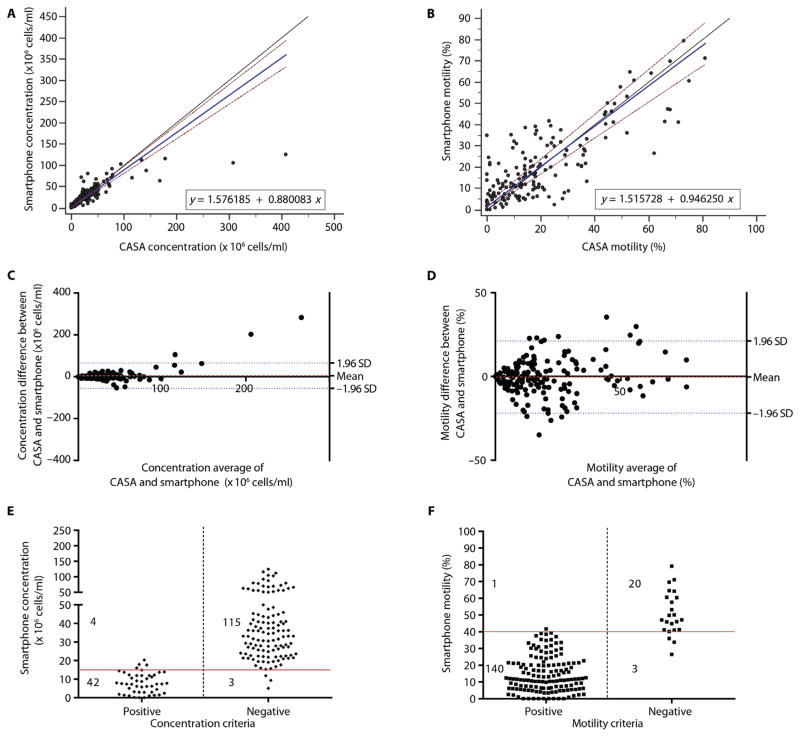
Fig. 3. On-site device evaluation performed by trained users using unwashed, unprocessed semen samples
Passing-Bablok analysis to compare (A) sperm concentration and (B) sperm motility as measured by the smartphone-based semen analyzer and CASA for all patient semen samples. The solid blue line represents the regression line, the solid black line represents the identity line, and two dashed red lines represent the confidence band in the Passing-Bablok figures. Bland-Altman analysis to compare (C) sperm concentration and (D) sperm motility as measured by the smartphone-based semen analyzer and CASA for all patient semen samples. The red dashed line in the Bland-Altman figures is the mean difference of the methods, and the blue dotted lines represent the 95% LOAs. Scatterplots (E and F) represent the qualitative performance of the device in measuring sperm concentration and motility, respectively. The solid red lines represent the threshold values for each criterion. “Positive” and “Negative” in (E) represent sperm concentration below and above 15 million sperm/ml measured by CASA, respectively. “Positive” and “Negative” in (F) represent sperm motility below and above 40% measured by CASA, respectively.
Fig. 4
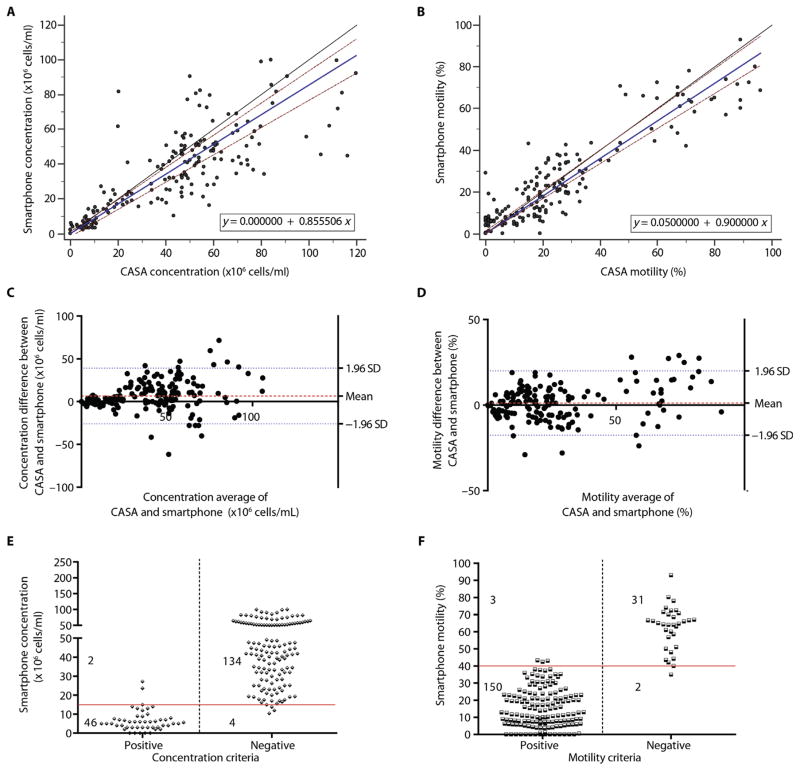
Fig. 4. On-site device evaluation performed by 10 untrained users using unwashed, unprocessed semen samples
Passing-Bablok analysis to compare (A) sperm concentration and (B) sperm motility as measured by the smartphone-based semen analyzer and CASA for all patient semen samples. The solid blue line represents the regression line, the solid black line represents the identity line, and two dashed red lines represent the confidence band in the Passing-Bablok figures. Bland-Altman analysis to compare (C) sperm concentration and (D) sperm motility as measured by the smartphone-based semen analyzer and CASA for all patient semen samples. The red dashed line in the Bland-Altman figures is the mean difference of the methods, and the blue dotted lines represent the 95% LOAs. Scatterplots (E and F) represent the qualitative performance of the device in measuring concentration and motility. The solid red lines represent the threshold values for each criterion. “Positive” and “Negative” in (E) represent sperm concentration below and above 15 million sperm/ml measured by CASA, respectively. “Positive” and “Negative” in (F) represent sperm motility below and above 40% measured by CASA, respectively.
Fig. 5
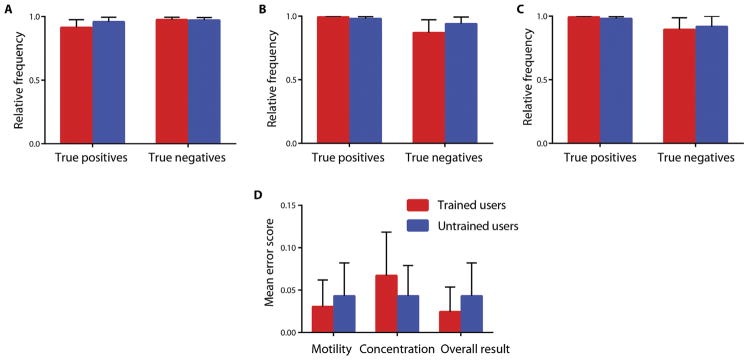
Fig. 5. Usability of the smartphone-based semen analyzer by trained and untrained users
The accuracy of correctly classifying the patient semen samples using the smartphone-based semen analyzer based on the WHO criteria for (A) sperm concentration, (B) sperm motility, and (C) sperm concentration and motility using 164 samples tested by trained users and 186 samples tested by 10 untrained users. Relative frequency represents the rate of correctness of the trained and untrained user groups. (D) A comparison of the mean error score as obtained for the groups of trained and untrained users. The mean error scale ranges from 0 to 2. All error bars represent the 95% CIs.

Comment in

References

    1. Agarwal A, Mulgund A, Hamada A, Chyatte MR. A unique view on male infertility around the globe. Reprod Biol Endocrinol. 2015;13:37. - PMC - PubMed
    1. Diamond DA, Zurakowski D, Bauer SB, Borer JG, Peters CA, Cilento BG, Jr, Paltiel HJ, Rosoklija I, Retik AB. Relationship of varicocele grade and testicular hypotrophy to semen parameters in adolescents. J Urol. 2007;178:1584–1588. - PubMed
    1. de Kretser DM. Endocrinology of male infertility. Br Med Bull. 1979;35:187–192. - PubMed
    1. Reijo R, Lee TY, Salo P, Alagappan R, Brown LGJ, Rosenberg M, Rozen S, Jaffe T, Straus D, Hovatta O, de la Chapelle A, Silber S, Page DC. Diverse spermatogenic defects in humans caused by Y chromosome deletions encompassing a novel RNA-binding protein gene. Nat Genet. 1995;10:383–393. - PubMed
    1. Eisenberg ML, Li S, Behr B, Pera RR, Cullen MR. Relationship between semen production and medical comorbidity. Fertil Steril. 2015;103:66–71. - PubMed

Publication types