


Enterococcal meningitis in association with Strongyloides hyperinfection syndrome
- PMID: 28331839
- PMCID: PMC5348214
- DOI: 10.18683/germs.2017.1105
Enterococcal meningitis in association with Strongyloides hyperinfection syndrome
Abstract
Introduction: Strongyloidiasis can cause hyperinfection or disseminated infection in an immunocompromised host, and is an important factor linked to enterococcal bacteremia and meningitis.
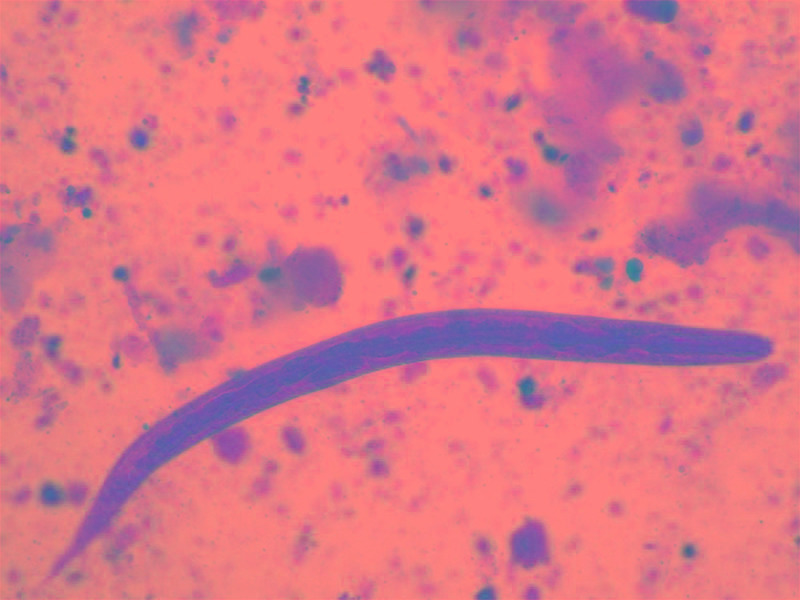
Case reports: We report two cases highlighting the importance of suspecting Strongyloides hyperinfection syndrome in patients with enterococcal meningitis.
Conclusion: Our cases highlight the importance of suspecting Strongyloides hyperinfection syndrome in cases of community acquired enterococcal bacteremia and meningitis.
Keywords: Strongyloides hyperinfection syndrome; enterococcal bacteremia; enterococcal meningitis.
Conflict of interest statement
Conflicts of interest: All authors – none to declare.
Figures

References
-
- Grove DI. Human strongyloidiasis. Adv Parasitol. 1996;38:251–309. - PubMed
-
- Siddiqui AA, Berk SL. Diagnosis of Strongyloides stercoralis infection. Clin Infect Dis. 2001;33:1040–7. - PubMed
-
- Arias CA, Murray BE. Enterococcal Infections. In: Longo DL, Fauci AS, Kasper DL, et al., editors. Harrison’s Principles of Internal Medicine. 19th edition. McGraw Hill Education; 2012. pp. 971–6.
Publication types
LinkOut - more resources
Full Text Sources
Other Literature Sources