Adaptation of the Arizona Cognitive Task Battery for use with the Ts65Dn mouse model (Mus musculus) of Down syndrome
- PMID: 28333487
- PMCID: PMC5552447
- DOI: 10.1037/com0000069
Adaptation of the Arizona Cognitive Task Battery for use with the Ts65Dn mouse model (Mus musculus) of Down syndrome
Abstract
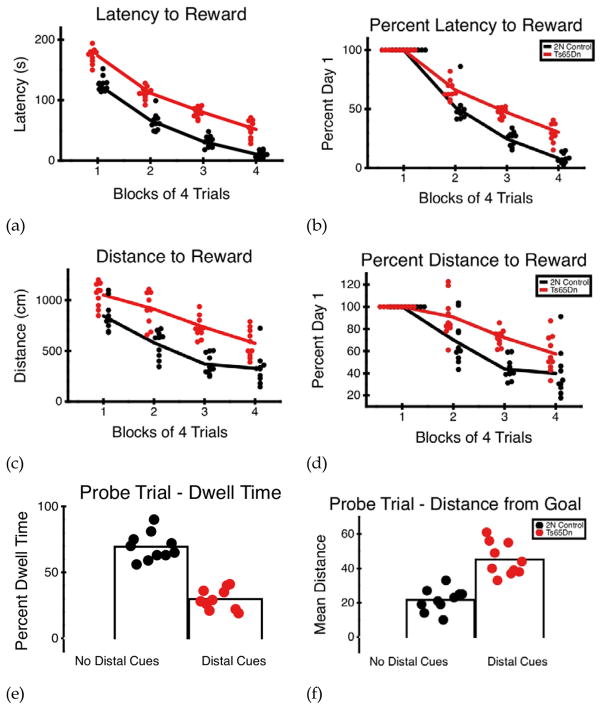
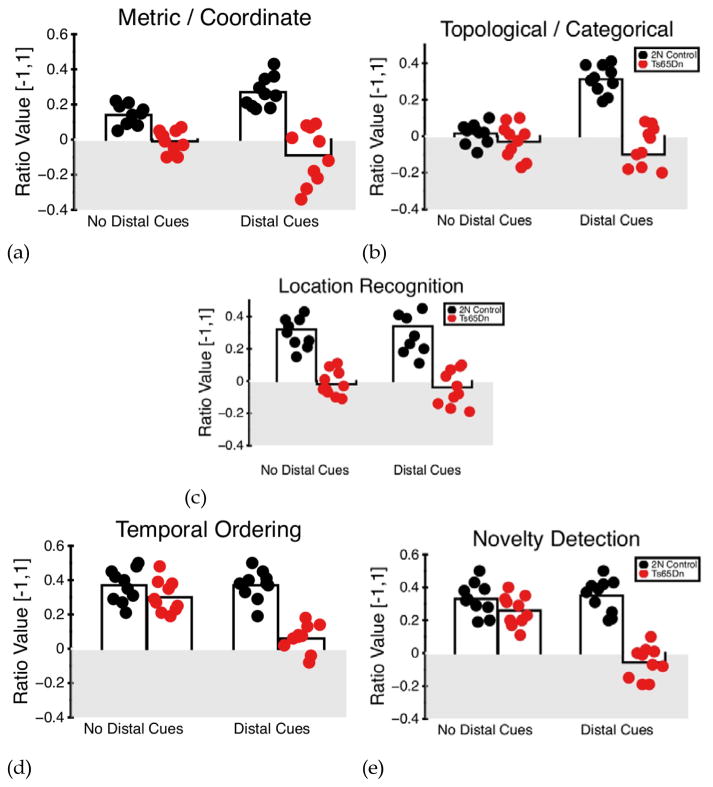
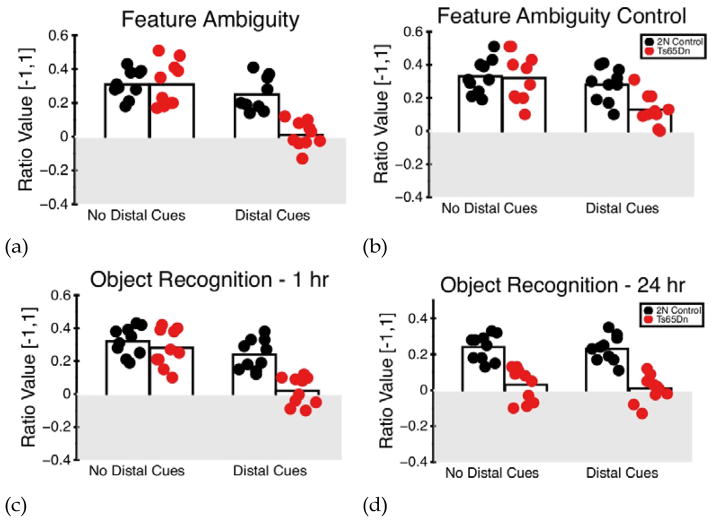
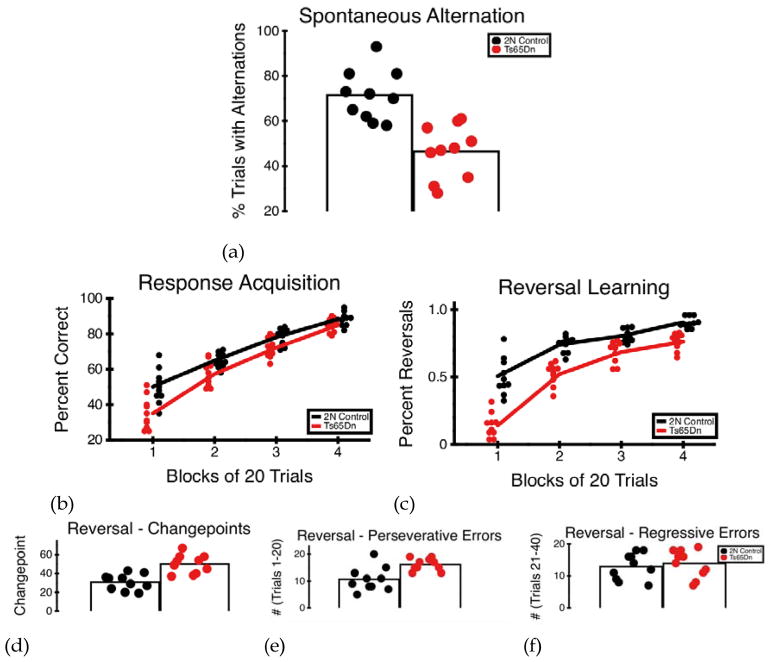
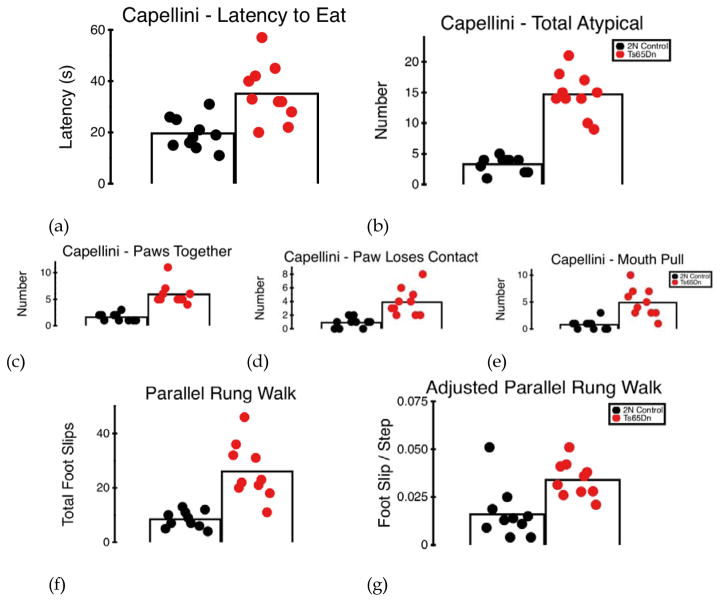
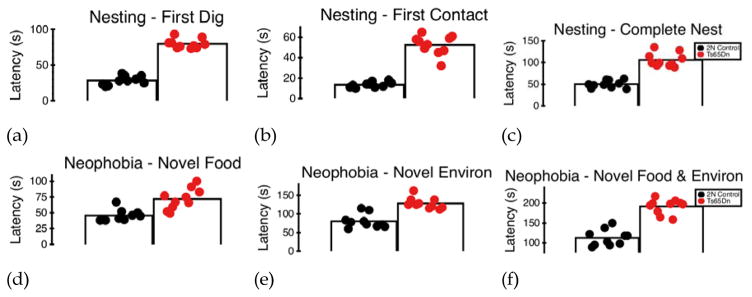
We propose and validate a clear strategy to efficiently and comprehensively characterize neurobehavioral deficits in the Ts65Dn mouse model of Down syndrome. This novel approach uses neurocognitive theory to design and select behavioral tasks that test specific hypotheses concerning the results of Down syndrome. In this article, we model the Arizona Cognitive Task Battery, used to study human populations with Down syndrome, in Ts65Dn mice. We observed specific deficits for spatial memory, impaired long-term memory for visual objects, acquisition and reversal of motor responses, reduced motor dexterity, and impaired adaptive function as measured by nesting and anxiety tasks. The Ts65Dn mice showed intact temporal ordering, novelty detection, and visual object recognition with short delays. These results phenocopy the performance of participants with Down syndrome on the Arizona Cognitive Task Battery. This approach extends the utility of mouse models of Down syndrome by integrating the expertise of clinical neurology and cognitive neuroscience into the mouse behavioral laboratory. Further, by directly emphasizing the reciprocal translation of research between human disease states and the associated mouse models, we demonstrate that it is possible for both groups to mutually inform each other's research to more efficiently generate hypotheses and elucidate treatment strategies. (PsycINFO Database Record
(c) 2017 APA, all rights reserved).
Conflict of interest statement
All authors declare they have no competing financial or professional interests.
Figures
References
-
- Bannerman D, Deacon R, Offen S, Friswell J, Grubb M, Rawlins J. Double dissociation of function within the hippocampus: spatial memory and hyponeophagia. Behavioral Neuroscience. 2002;116(5):884. - PubMed
-
- Baumann O, Chan E, Mattingley JB. Distinct neural networks underlie encoding of categorical versus coordinate spatial relations during active navigation. Neuro Image. 2012;60(3):1630–1637. - PubMed
-
- Benjamini Y, Drai D, Elmer G, Kafkafi N, Golani I. Controlling the false discovery rate in behavior genetics research. Behavioural Brain Research. 2001;125(1):279–284. - PubMed
MeSH terms
Grants and funding
LinkOut - more resources
Full Text Sources
Other Literature Sources
Medical