


Street trees reduce the negative effects of urbanization on birds
- PMID: 28333989
- PMCID: PMC5363989
- DOI: 10.1371/journal.pone.0174484
Street trees reduce the negative effects of urbanization on birds
Abstract
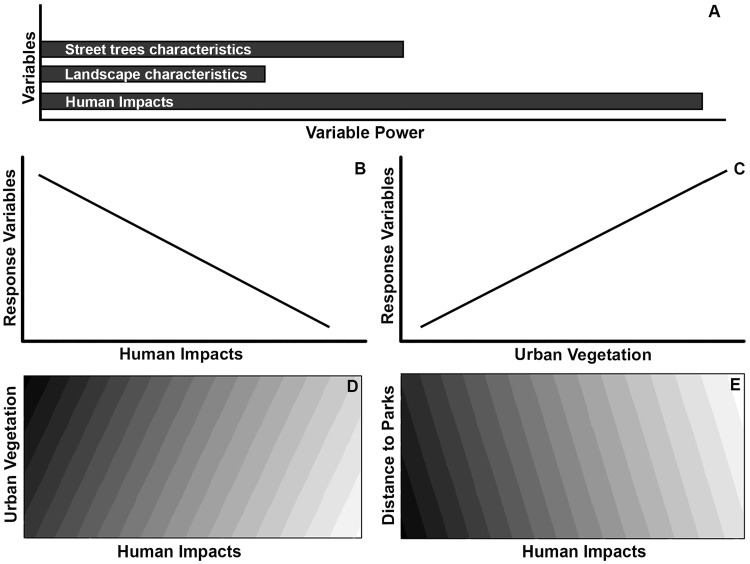
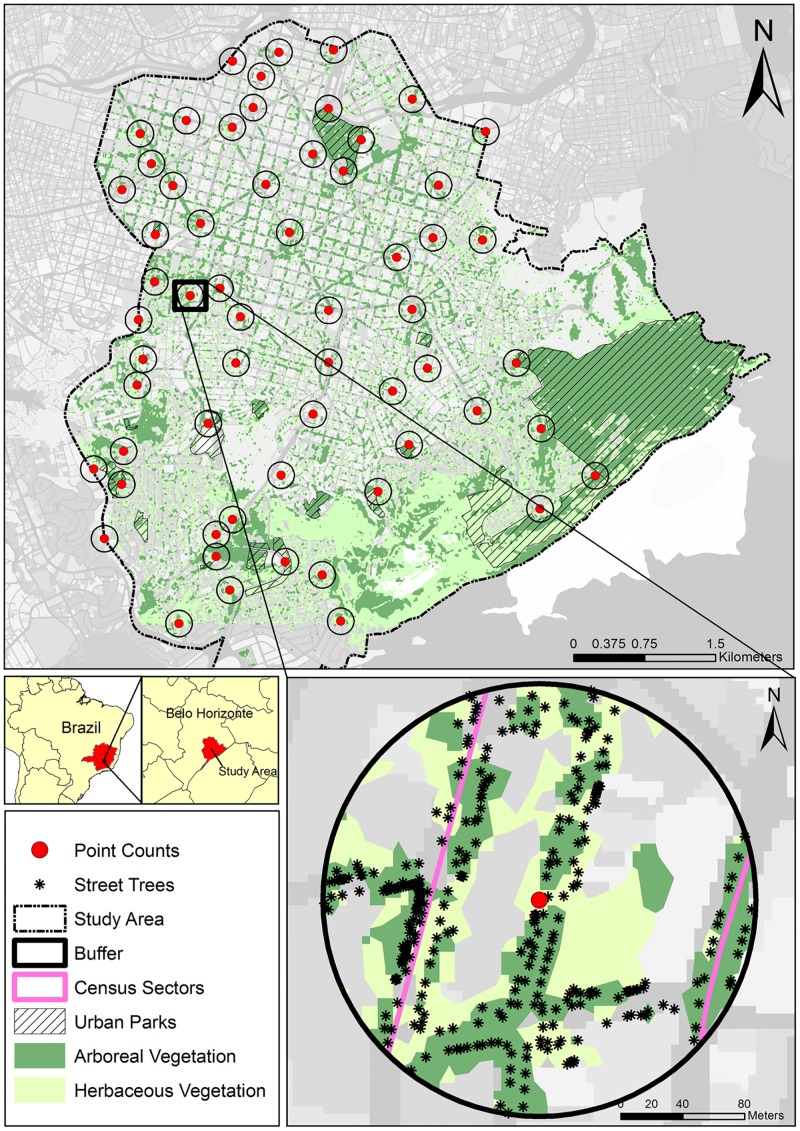
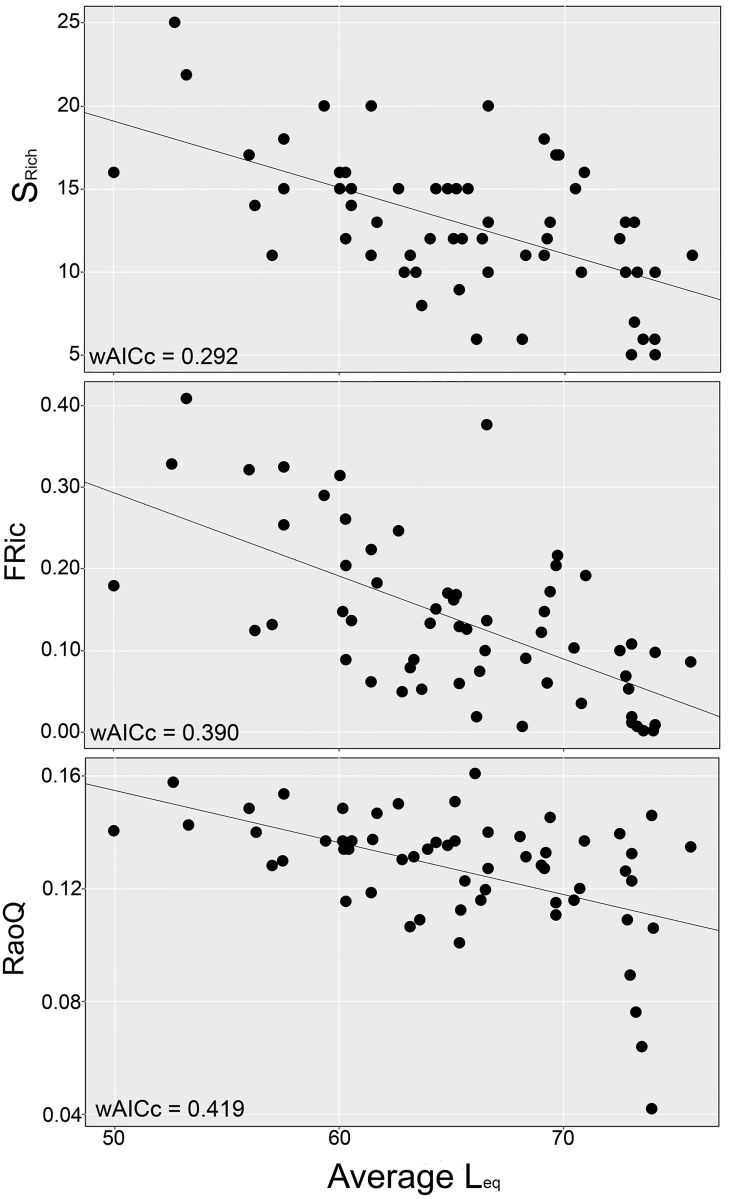
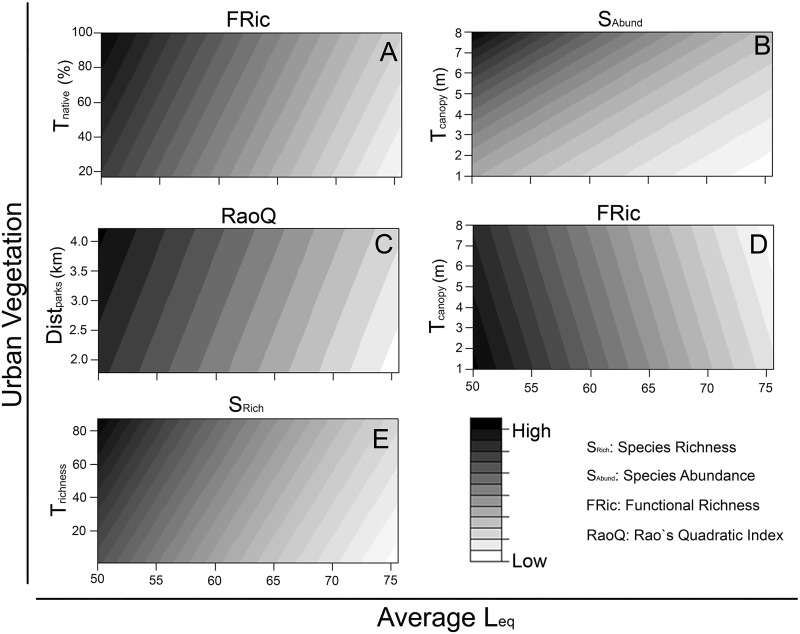
The effects of streets on biodiversity is an important aspect of urban ecology, but it has been neglected worldwide. Several vegetation attributes (e.g. street tree density and diversity) have important effects on biodiversity and ecological processes. In this study, we evaluated the influences of urban vegetation-represented by characteristics of street trees (canopy size, proportion of native tree species and tree species richness)-and characteristics of the landscape (distance to parks and vegetation quantity), and human impacts (human population size and exposure to noise) on taxonomic data and functional diversity indices of the bird community inhabiting streets. The study area was the southern region of Belo Horizonte (Minas Gerais, Brazil), a largely urbanized city in the understudied Neotropical region. Bird data were collected on 60 point count locations distributed across the streets of the landscape. We used a series of competing GLM models (using Akaike's information criterion for small sample sizes) to assess the relative contribution of the different sets of variables to explain the observed patterns. Seventy-three bird species were observed exploiting the streets: native species were the most abundant and frequent throughout this landscape. The bird community's functional richness and Rao's Quadratic Entropy presented values lower than 0.5. Therefore, this landscape was favoring few functional traits. Exposure to noise was the most limiting factor for this bird community. However, the average size of arboreal patches and, especially the characteristics of street trees, were able to reduce the negative effects of noise on the bird community. These results show the importance of adequately planning the urban afforestation process: increasing tree species richness, preserving large trees and planting more native trees species in the streets are management practices that will increase bird species richness, abundance and community functional aspects and consequently improve human wellbeing and quality of life.
Conflict of interest statement
Figures
References
-
- United Nations, Department of Economic and Social Affairs Population Division. World urbanization prospects [Internet]. New York: United Nations; 2014.
-
- Secretariat of the Convention on Biological Diversity Cities and biodiversity outlook: action and policy. Montreal; 2012.
-
- McDonald RI, Marcotullio PJ, Güneralp B. Urbanization and global trends in biodiversity and ecosystem services In: Elmqvist T, Fragkias M, Goodness J, Güneralp B, Marcotullio PJ, McDonald RI, et al. , editors. Urbanization, biodiversity and ecosystem services: challenges and opportunities. Dordrecht: Springer Netherlands; 2013. pp. 31–52.
MeSH terms
LinkOut - more resources
Full Text Sources
Other Literature Sources
