


Low sphingosine-1-phosphate plasma levels are predictive for increased mortality in patients with liver cirrhosis
- PMID: 28334008
- PMCID: PMC5363961
- DOI: 10.1371/journal.pone.0174424
Low sphingosine-1-phosphate plasma levels are predictive for increased mortality in patients with liver cirrhosis
Abstract
Background & aim: The association of circulating sphingosine-1-phosphate (S1P), a bioactive lipid involved in various cellular processes, and related metabolites such as sphinganine-1-phosphate (SA1P) and sphingosine (SPH) with mortality in patients with end-stage liver disease is investigated in the presented study. S1P as a bioactive lipid mediator, is involved in several cellular processes, however, in end-stage liver disease its role is not understood.
Methods: The study cohort consisted of 95 patients with end-stage liver disease and available information on one-year outcome. The median MELD (Model for end-stage liver disease) score was 12.41 (Range 6.43-39.63). The quantification of sphingolipids in citrated plasma specimen was performed after methanolic protein precipitation followed by hydrophilic interaction liquid chromatography and tandem mass spectrometric detection.
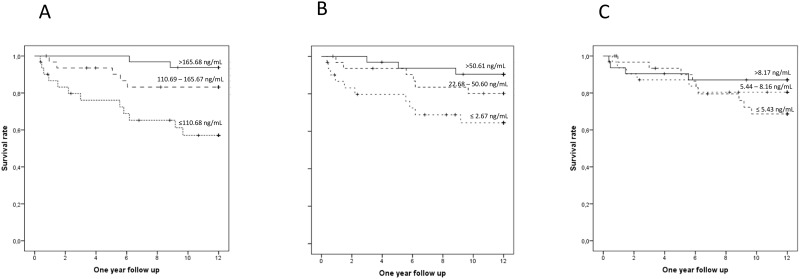
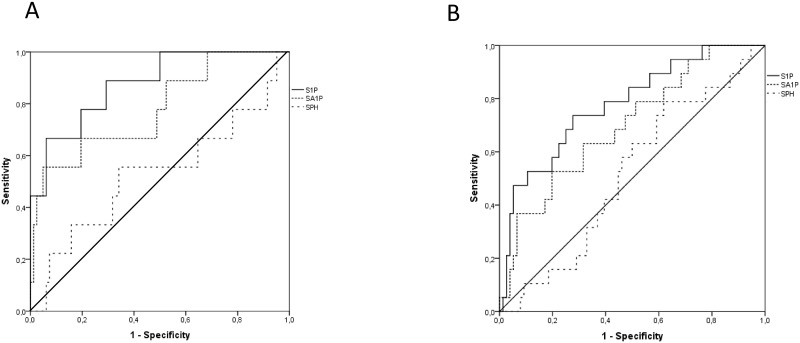
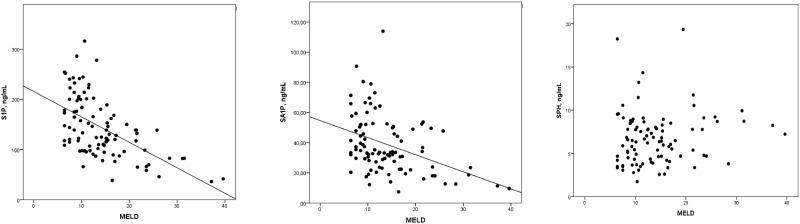
Results: S1P and SA1P displayed significant correlations with the MELD score. Patients with circulating S1P levels below the lowest tertile (110.68 ng/ml) showed the poorest one-year survival rate of only 57.1%, whereas one-year survival rate in patients with S1P plasma levels above 165.67 ng/ml was 93.8%. In a multivariate cox regression analysis including platelet counts, concentrations of hemoglobin and MELD score, S1P remained a significant predictor for three-month and one-year mortality.
Conclusions: Low plasma S1P concentrations are highly significantly associated with prognosis in end-stage liver disease. This association is independent of the stage of liver disease. Further studies should be performed to investigate S1P, its role in the pathophysiology of liver diseases and its potential for therapeutic interventions.
Conflict of interest statement
Figures
References
-
- Yatomi Y. Sphingosine 1-phosphate in vascular biology: possible therapeutic strategies to control vascular diseases. Curr. Pharm. Des. 2006; 12:575–87. - PubMed
MeSH terms
Substances
LinkOut - more resources
Full Text Sources
Other Literature Sources
Medical
