


Nanomaterials for Cardiac Myocyte Tissue Engineering
- PMID: 28335261
- PMCID: PMC5224604
- DOI: 10.3390/nano6070133
Nanomaterials for Cardiac Myocyte Tissue Engineering
Abstract
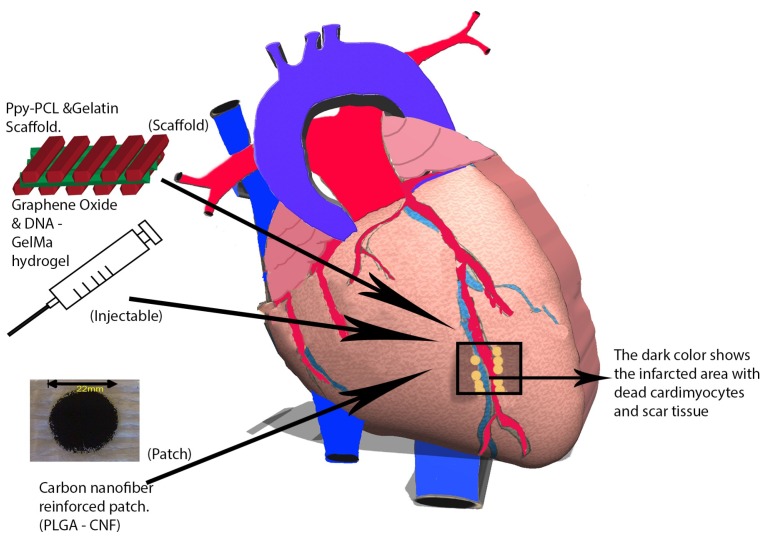
Since their synthesizing introduction to the research community, nanomaterials have infiltrated almost every corner of science and engineering. Over the last decade, one such field has begun to look at using nanomaterials for beneficial applications in tissue engineering, specifically, cardiac tissue engineering. During a myocardial infarction, part of the cardiac muscle, or myocardium, is deprived of blood. Therefore, the lack of oxygen destroys cardiomyocytes, leaving dead tissue and possibly resulting in the development of arrhythmia, ventricular remodeling, and eventual heart failure. Scarred cardiac muscle results in heart failure for millions of heart attack survivors worldwide. Modern cardiac tissue engineering research has developed nanomaterial applications to combat heart failure, preserve normal heart tissue, and grow healthy myocardium around the infarcted area. This review will discuss the recent progress of nanomaterials for cardiovascular tissue engineering applications through three main nanomaterial approaches: scaffold designs, patches, and injectable materials.
Keywords: cardiac infarction; injectable; nanomaterials; patch; scaffold; tissue engineering.
Figures
References
-
- Mozaffarian D., Benjamin E.J., Go A.S., Arnett D.K., Blaha M.J., Cushman M., Das S.R., de Ferranti S., Despres J.P., Fullerton H.J., et al. Heart Disease and Stroke Statistics-2016 Update: A Report From the American Heart Association. Circulation. 2016;133:e38–e360. doi: 10.1161/CIR.0000000000000350. - DOI - PubMed
Publication types
LinkOut - more resources
Full Text Sources
Other Literature Sources
