


GC-MS Metabolomic Analysis to Reveal the Metabolites and Biological Pathways Involved in the Developmental Stages and Tissue Response of Panax ginseng
- PMID: 28335577
- PMCID: PMC6155413
- DOI: 10.3390/molecules22030496
GC-MS Metabolomic Analysis to Reveal the Metabolites and Biological Pathways Involved in the Developmental Stages and Tissue Response of Panax ginseng
Abstract
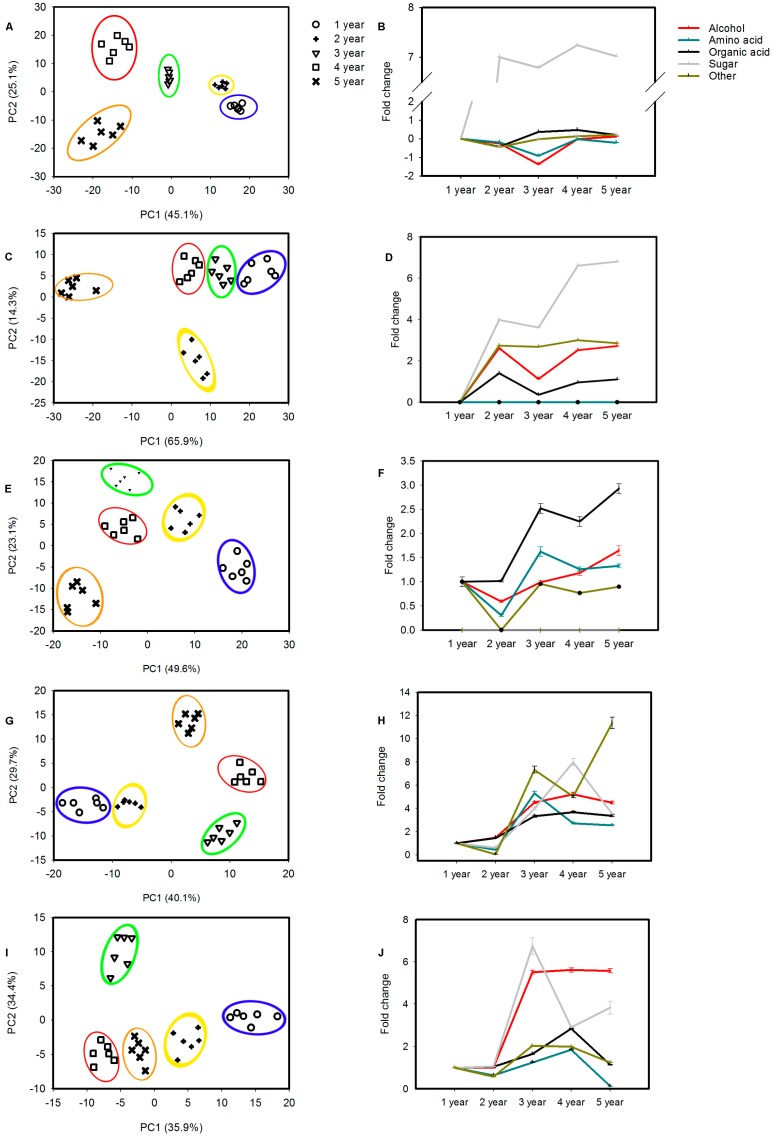
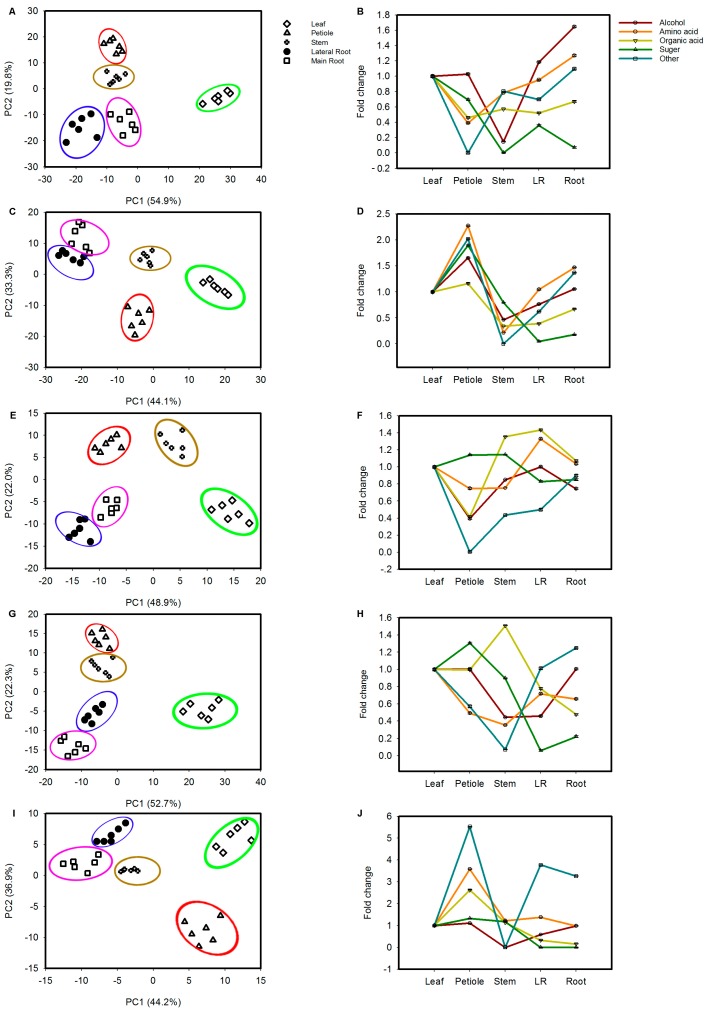
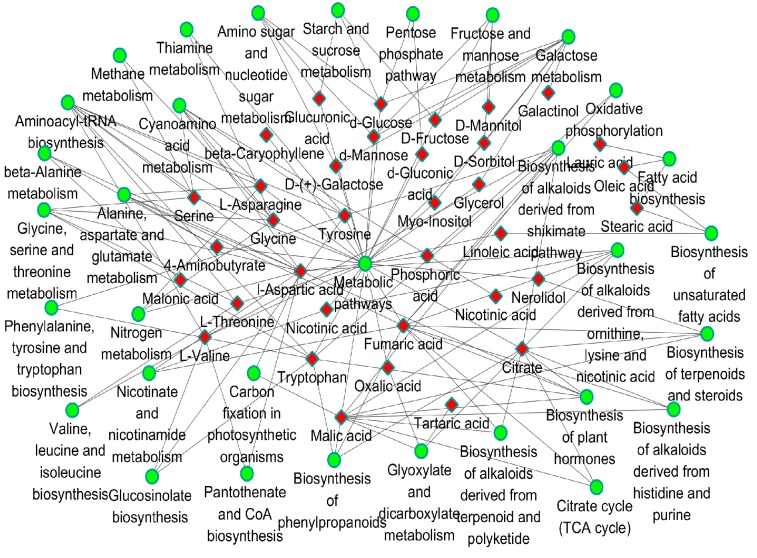
Ginsenosides, the major compounds present in ginseng, are known to have numerous physiological and pharmacological effects. The physiological processes, enzymes and genes involved in ginsenoside synthesis in P. ginseng have been well characterized. However, relatively little information is known about the dynamic metabolic changes that occur during ginsenoside accumulation in ginseng. To explore this topic, we isolated metabolites from different tissues at different growth stages, and identified and characterized them by using gas chromatography coupled with mass spectrometry (GC-MS). The results showed that a total of 30, 16, 20, 36 and 31 metabolites were identified and involved in different developmental stages in leaf, stem, petiole, lateral root and main root, respectively. To investigate the contribution of tissue to the biosynthesis of ginsenosides, we examined the metabolic changes of leaf, stem, petiole, lateral root and main root during five development stages: 1-, 2-, 3-, 4- and 5-years. The score plots of partial least squares-discriminate analysis (PLS-DA) showed clear discrimination between growth stages and tissue samples. Kyoto Encyclopedia of Genes and Genomes (KEGG) pathway analysis in the same tissue at different growth stages indicated profound biochemical changes in several pathways, including carbohydrate metabolism and pentose phosphate metabolism, in addition, the tissues displayed significant variations in amino acid metabolism, sugar metabolism and energy metabolism. These results should facilitate further dissection of the metabolic flux regulation of ginsenoside accumulation in different developmental stages or different tissues of ginseng.
Keywords: GC-MS metabolite profiling; developmental stages; ginsenoside; plant metabolism.
Conflict of interest statement
The authors declare no conflict of interest.
Figures
References
-
- Watanabe M., Balazadeh S., Tohge T., Erban A., Giavalisco P., Kopka J., Mueller-Roeber B., Fernie A.R., Hoefgen R. Comprehensive dissection of spatiotemporal metabolic shifts in primary, secondary, and lipid metabolism during developmental senescence in Arabidopsis. Plant Physiol. 2013;162:1290–1310. doi: 10.1104/pp.113.217380. - DOI - PMC - PubMed
MeSH terms
Substances
LinkOut - more resources
Full Text Sources
Other Literature Sources
Miscellaneous
