. 2017:2017:7841823.
doi: 10.1155/2017/7841823. Epub 2017 Feb 27.

Hepatoprotective Effects of Antrodia cinnamomea: The Modulation of Oxidative Stress Signaling in a Mouse Model of Alcohol-Induced Acute Liver Injury

Affiliations

Hepatoprotective Effects of Antrodia cinnamomea: The Modulation of Oxidative Stress Signaling in a Mouse Model of Alcohol-Induced Acute Liver Injury

Yange Liu et al. Oxid Med Cell Longev. 2017.

Abstract

In the present study, the components of A. cinnamomea (AC) mycelia were systematically analyzed. Subsequently, its hepatoprotective effects and the underlying mechanisms were explored using a mouse model of acute alcohol-induced liver injury. AC contained 25 types of fatty acid, 16 types of amino acid, 3 types of nucleotide, and 8 types of mineral. The hepatoprotective effects were observed after 2 weeks of AC treatment at doses of 75 mg/kg, 225 mg/kg, and 675 mg/kg in the mouse model. These effects were indicated by the changes in the levels of aspartate aminotransferase, alanine aminotransferase, several oxidation-related factors, and inflammatory cytokines in serum and/or liver samples. AC reduced the incidence rate of necrosis, inflammatory infiltration, fatty droplets formation, and cell apoptosis in liver detecting via histological and TUNEL assay. In addition, AC reduced the expression of cleaved caspase-3, -8, and -9 and the levels of phosphor-protein kinase B (Akt) and phosphor-nuclear factor-κB (NF-κB) in the liver samples. Collectively, AC-mediated hepatoprotective effects in a mouse model of acute alcohol-induced liver injury are the result of reduction in oxidative stress. This may be associated with Akt/NF-κB signaling. These results provide valuable evidence to support the use of A. cinnamomea as a functional food and/or medicine.


Conflict of interest statement

The authors have declared that there is no conflict of interests.

Figures
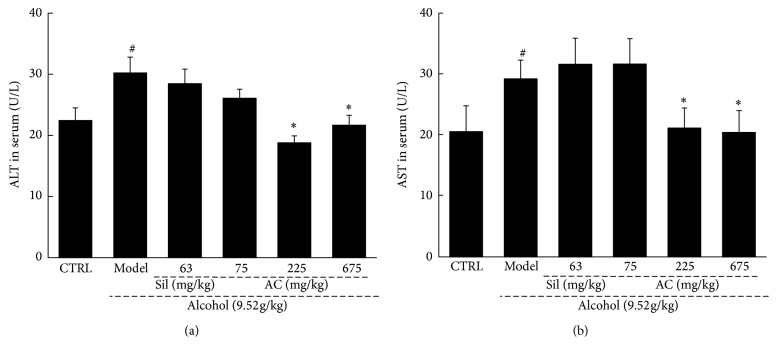
Figure 1
Figure 1
Two-week AC and Sil treatment reduced the levels of (a) ALT and (b) AST in the serum of mice with acute alcohol-induced liver injury. The data were analyzed using a one-way ANOVA and they are expressed as means SEMs (n = 10). #P < 0.05 in a comparison with the no-alcohol control group; P < 0.05 in a comparison with the alcohol-only control group. AC: A. cinnamomea mycelia; Sil: silymarin; ALT: alanine aminotransferase; AST: aspartate aminotransferase; ANOVA: analysis of variance; SEM: standard error of the mean.
Figure 2
Figure 2
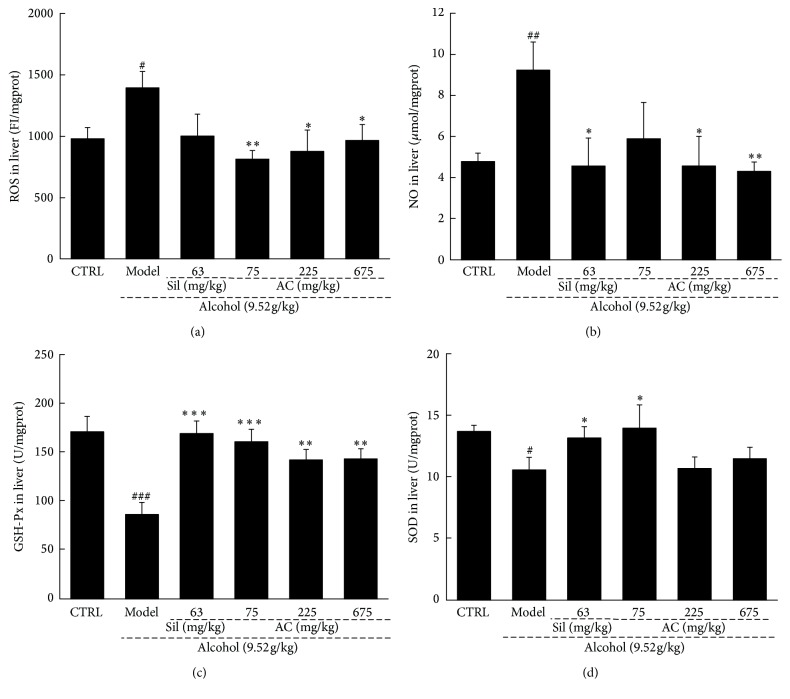
Two-week AC and Sil treatments affected the levels of (a) ROS, (b) NO, (c) GSH-Px, and (d) SOD in the livers of mice with acute alcohol-induced liver injury. The data were analyzed using a one-way ANOVA and they are expressed as means SEMs (n = 10). #P < 0.05, ##P < 0.01, and ###P < 0.001 in a comparison with the no-alcohol control group; P < 0.05, ∗∗P < 0.01, and ∗∗∗P < 0.001 in a comparison with the alcohol-only control group. AC: A. cinnamomea mycelia; Sil: silymarin; ANOVA: analysis of variance; GSH-Px: glutathione peroxidase; NO: nitric oxide; ROS: reactive oxygen species; SOD: superoxide dismutase; SEM: standard error of the mean.
Figure 3
Figure 3
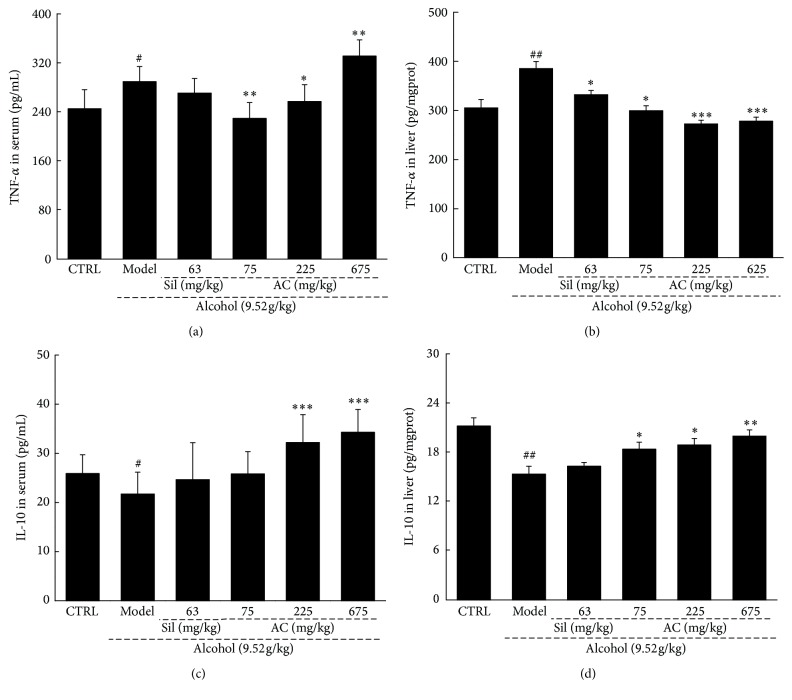
Two-week AC and Sil treatment (a and b) reduced the levels of TNF-α and (c and d) increased the levels of IL-10 in the serum and liver of mice with acute alcohol-induced liver injury. The data were analyzed using a one-way ANOVA and they are expressed as means SEMs (n = 10). #P < 0.05 and ##P < 0.01 in a comparison with the no-alcohol control group; P < 0.05, ∗∗P < 0.01, and ∗∗∗P < 0.001 in a comparison with the alcohol-only control group. AC: A. cinnamomea mycelia; Sil: silymarin; ANOVA: analysis of variance; SEM: standard error of the mean; IL-10: interleukin-10; TNF-α: tumor necrosis factor-α.
Figure 4
Figure 4
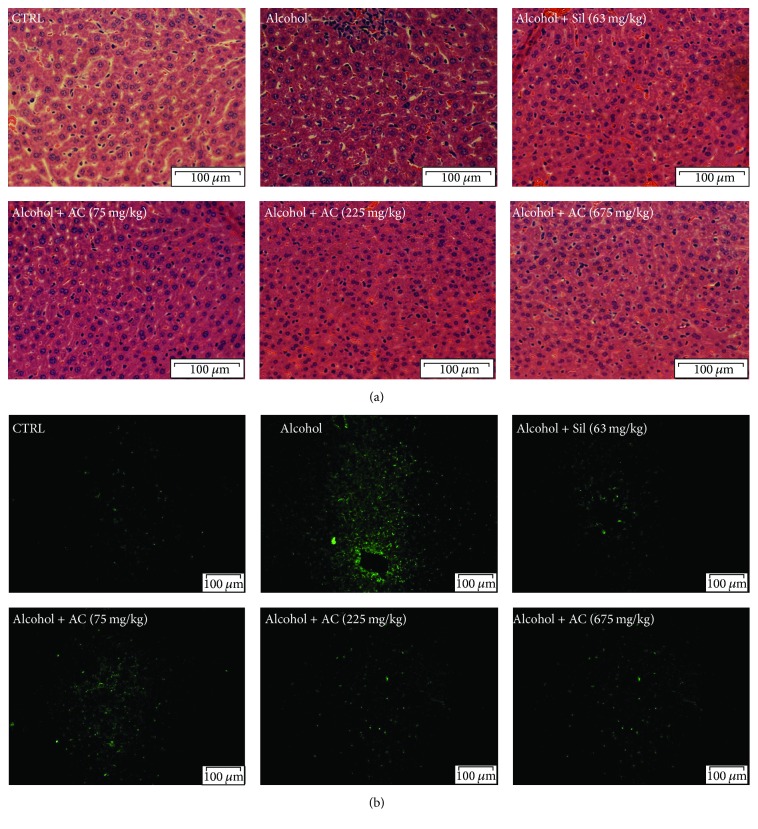
(a) Histopathological analysis in liver shown by H&E staining (scale bar: 100 μm; magnification: 40x). (b) Apoptosis rate detection shown by TUNEL-positive cells with green fluorescence (scale bar: 100 μm; magnification: 20x). AC: A. cinnamomea mycelia; Sil: silymarin; H&E: Hematoxylin and eosin; TUNEL: terminal deoxynucleotidyl transferase-mediated dUTP nick end-labeling.
Figure 5
Figure 5
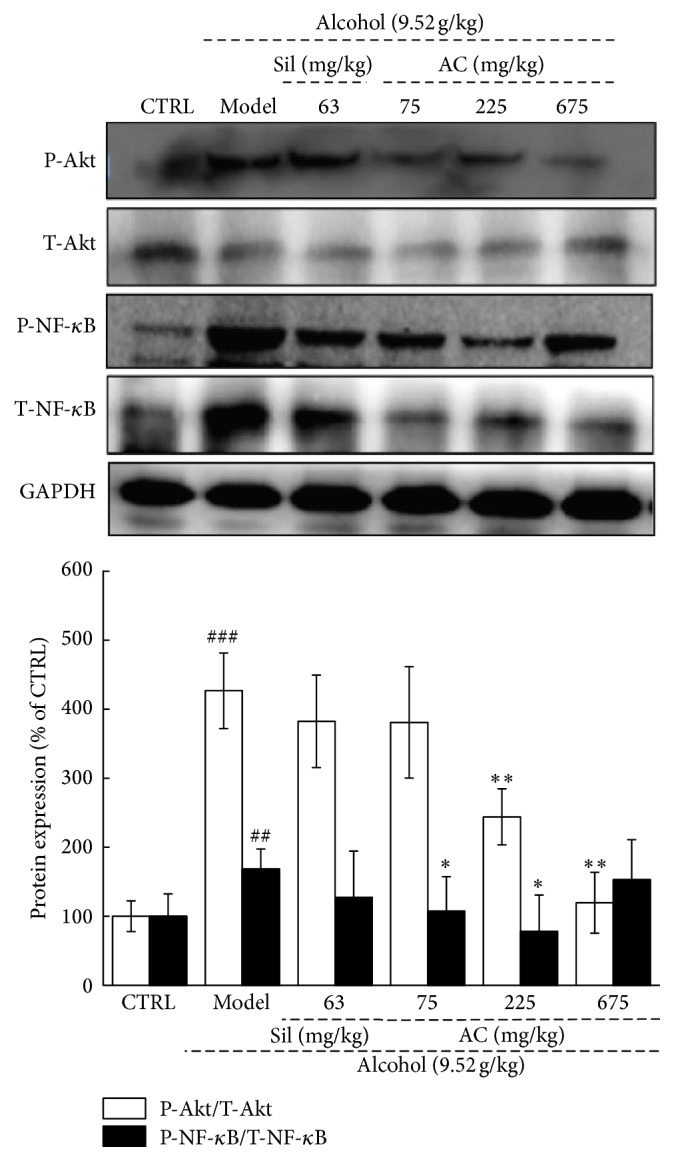
Two-week AC and Sil treatment suppressed the levels of phosphor-NF-κB and phosphor-Akt in the livers of mice with acute alcohol-induced liver injury. The data on quantified protein expression were normalized to the levels of GAPDH. The data were analyzed using a one-way ANOVA and they are expressed as means SEMs (n = 10). ##P < 0.01 and ###P < 0.001 in a comparison with the no-alcohol control group; P < 0.05 and ∗∗P < 0.01 in a comparison with the alcohol-only control group. AC: A. cinnamomea mycelia; Sil: silymarin; Akt: protein kinase B; ANOVA: analysis of variance; SEM: standard error of the mean; GAPDH: glyceraldehyde-3-phosphate dehydrogenase; NF-κB: nuclear factor-κB.
Figure 6
Figure 6
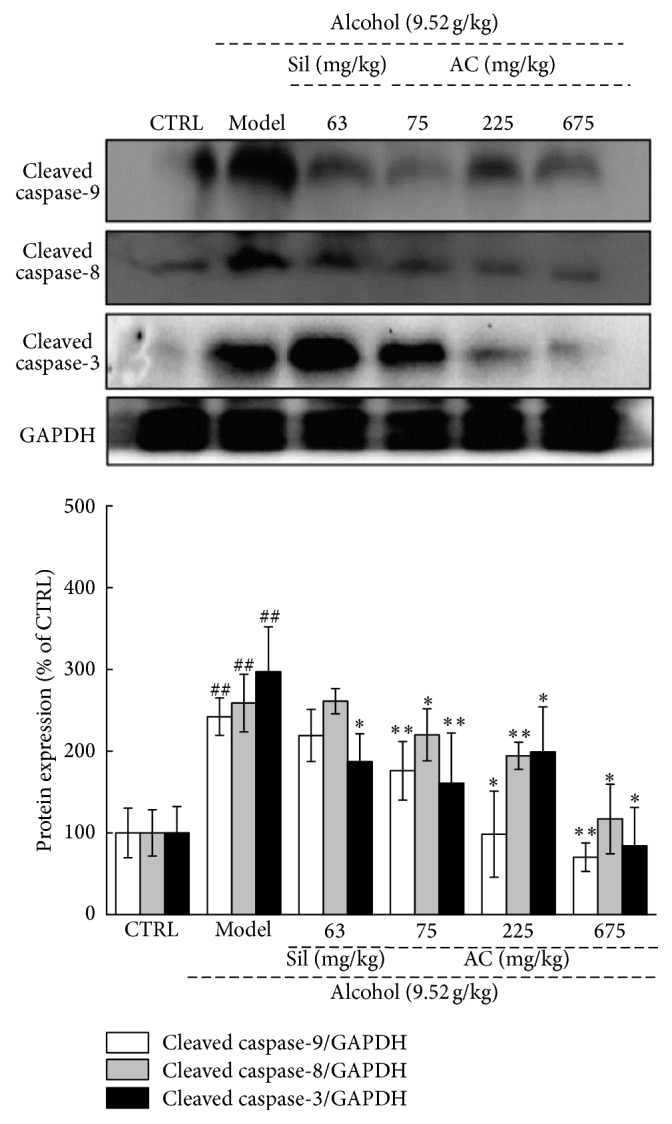
Two-week AC and Sil treatments suppressed the expression of cleaved caspase-3, -8, and -9 in the livers of mice with acute alcohol-induced liver injury. The data on quantified protein expression were normalized to the levels of GAPDH. The data were analyzed using a one-way ANOVA and they are expressed as means SEMs (n = 10). ##P < 0.01 in a comparison with the no-alcohol control group; P < 0.05 and ∗∗P < 0.01 in a comparison with the alcohol-only control group. AC: A. cinnamomea mycelia; Sil: silymarin; ANOVA: analysis of variance; SEM: standard error of the mean; GAPDH: glyceraldehyde-3-phosphate dehydrogenase.

References

    1. Bakhautdin B., Das D., Mandal P., et al. Protective role of HO-1 and carbon monoxide in ethanol-induced hepatocyte cell death and liver injury in mice. Journal of Hepatology. 2014;61(5):1029–1037. doi: 10.1016/j.jhep.2014.06.007. - DOI - PMC - PubMed
    1. Chiu H.-W., Hua K.-F. Hepatoprotective effect of wheat-based solid-state fermented antrodia cinnamomea in carbon tetrachloride-induced liver injury in rat. PLOS ONE. 2016;11(4) doi: 10.1371/journal.pone.0153087.e0153087 - DOI - PMC - PubMed
    1. Lee H.-I., McGregor R. A., Choi M.-S., et al. Low doses of curcumin protect alcohol-induced liver damage by modulation of the alcohol metabolic pathway, CYP2E1 and AMPK. Life Sciences. 2013;93(18-19):693–699. doi: 10.1016/j.lfs.2013.09.014. - DOI - PubMed
    1. Tang Y., Zhang L., Forsyth C. B., Shaikh M., Song S., Keshavarzian A. The role of miR-212 and iNOS in alcohol-induced intestinal barrier dysfunction and steatohepatitis. Alcoholism: Clinical and Experimental Research. 2015;39(9):1632–1641. doi: 10.1111/acer.12813. - DOI - PMC - PubMed
    1. Dai C., Li D., Gong L., Xiao X., Tang S. Curcumin ameliorates furazolidone-induced DNA damage and apoptosis in human hepatocyte L02 cells by inhibiting ROS production and mitochondrial pathway. Molecules. 2016;21(8, article no. 1061) doi: 10.3390/molecules21081061. - DOI - PMC - PubMed

MeSH terms

LinkOut - more resources