Meta-Analysis
. 2017 Mar 24:7:43464.
doi: 10.1038/srep43464.

Circulating tumor cell status monitors the treatment responses in breast cancer patients: a meta-analysis

Affiliations
Meta-Analysis

Circulating tumor cell status monitors the treatment responses in breast cancer patients: a meta-analysis

Wen-Ting Yan et al. Sci Rep. .

Abstract

Whether circulating tumor cells (CTCs) can be used as an indicator of treatment response in breast cancer (BC) needs to be clarified. We addressed this issue by a meta-analysis. PubMed, EMBase and Cochrane library databases were searched in June 2016. Effect measures were estimated as pooled risk ratio (RR), odds ratio (OR) or mean difference by fixed- or random-effect models, according to heterogeneity of included studies. In total, 50 studies with 6712 patients were recruited. Overall analysis showed that there was a significant reduction of CTC-positive rate (RR = 0.68, 95% CI: 0.61-0.76, P < 0.00001) after treatment. Subgroup analyses revealed that neoadjuvant treatment, adjuvant treatment, metastatic treatment or combination therapy could reduce the CTC-positive rate, but surgery could not; moreover, the reduction was only found in HER2+ or HER2- patients but not in the triple-negative ones. Reduction of CTC-positive rate was associated with lower probability of disease progression (OR = 0.54, 95% CI: 0.33-0.89, P = 0.01) and longer overall survival period (mean difference = 11.61 months, 95% CI: 8.63-14.59, P < 0.00001) as well as longer progression-free survival period (mean difference = 5.07 months, 95% CI: 2.70-7.44, P < 0.0001). These results demonstrate that CTC status can serve as an indicator to monitor the effectiveness of treatments and guide subsequent therapies in BC.


Conflict of interest statement

The authors declare no competing financial interests.

Figures
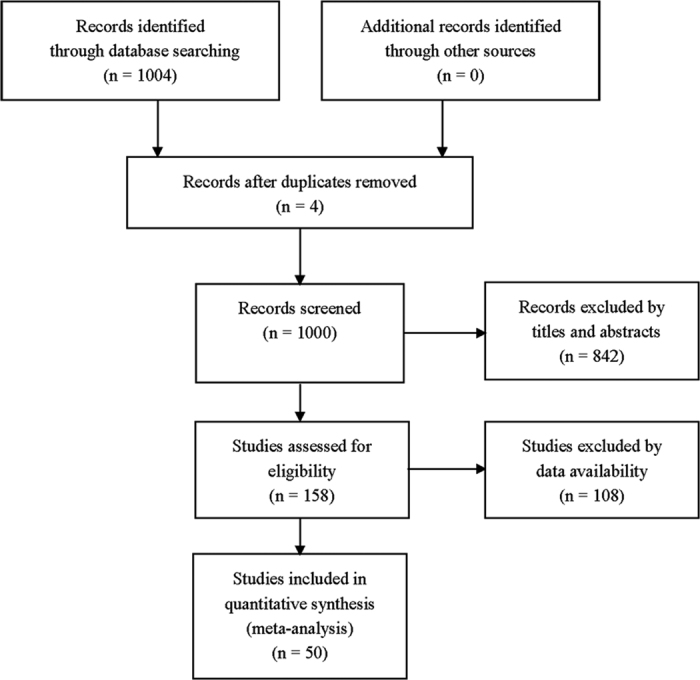
Figure 1
Figure 1. Flowchart for article search.
Figure 2
Figure 2. Forest plot for the comparison of CTC-positive rate before and after treatment: overall analysis.
The black diamond and its extremities indicate the pooled risk ratio center and 95% confidential interval.
Figure 3
Figure 3. Forest plot for the comparison of CTC count before and after treatment: overall analysis.
The black diamond indicates the difference of CTC counts (cells/7.5 mL peripheral blood; the post-therapeutic counts minus the pre-therapeutic counts). Its center indicates the mean and the extremities indicate the 95% confidential interval.
Figure 4
Figure 4. Forest plot for the comparison of CTC-positive rate before and after treatment: subgroup analysis of different CTC determination methods (threshold).
The results of ≥5 CTCs/7.5 mL as positive (A) ≥1 CTCs/7.5 mL as positive (B) other threshold as positive (C) and RT-PCR method (D) are shown, respectively. The center of black diamond and its extremities indicate the pooled risk ratio and 95% confidential interval.
Figure 5
Figure 5. Forest plot for the comparison of CTC-positive rate before and after treatment: subgroup analysis of different therapy strategies.
The results of neoadjuvant setting (A), adjuvant setting (B), metastatic setting (C), surgery (D) and combination therapy (E) are shown, respectively. The center of black diamond and its extremities indicate the pooled risk ratio and 95% confidential interval.
Figure 6
Figure 6. Forest plot for the comparison of CTC-positive rate before and after treatment: subgroup analysis of different molecular subtypes.
The results of HER2-positive subtype (A) HER2-negative subtype (B) and triple-negative subtype (C) are shown, respectively. The black diamond and its extremities indicate the pooled risk ratio center and 95% confidential interval.
Figure 7
Figure 7. Forest plot for the comparison of prognosis between the CTC-reduced patients and those without CTC-unchanged or -elevated.
The diamond indicated the odds ratio of disease progression (A) the difference of progression-free survival (B) or overall survival period (C). The centers of the diamonds indicated the pooled odds ratio (A) or the mean difference (B,C) and the extremities indicated the 95% confidential interval.
Figure 8
Figure 8. Forest plot for the comparison of prognosis between the CTC-reduced patients and those without CTC-unchanged or –elevated: subgroup analysis of disease progression.
The diamond indicated the odds ratio of disease progression in the metastatic setting (A), the adjuvant setting (B) or the neoadjuvant setting (C). The centers of the diamonds indicated the pooled odds ratio and the extremities indicated the 95% confidential interval.
Figure 9
Figure 9. Funnel plot for the studies included for comparison of CTC-positive rate before and after treatment.

References

    1. Ursaru M., Jari I., Naum A., Scripcariu V. & Negru D. Causes of Death in Patients with Stage 0-Ii Breast Cancer. Revista medico-chirurgicala a Societatii de Medici si Naturalisti din Iasi 119, 374–378 (2015). - PubMed
    1. Maltoni R., Gallerani G., Fici P., Rocca A. & Fabbri F. CTCs in early breast cancer: A path worth taking. Cancer Lett 376, 205–210, doi: 10.1016/j.canlet.2016.03.051 (2016). - DOI - PubMed
    1. Beije N., Jager A. & Sleijfer S. Circulating tumor cell enumeration by the CellSearch system: the clinician’s guide to breast cancer treatment? Cancer Treat Rev 41, 144–150, doi: 10.1016/j.ctrv.2014.12.008 (2015). - DOI - PubMed
    1. Wallwiener M. et al. Serial enumeration of circulating tumor cells predicts treatment response and prognosis in metastatic breast cancer: a prospective study in 393 patients. BMC Cancer 14, 512, doi: 10.1186/1471-2407-14-512 (2014). - DOI - PMC - PubMed
    1. Pierga J. Y. et al. Circulating tumor cell detection predicts early metastatic relapse after neoadjuvant chemotherapy in large operable and locally advanced breast cancer in a phase II randomized trial. Clin Cancer Res 14, 7004–7010, doi: 10.1158/1078-0432.CCR-08-0030 (2008). - DOI - PubMed

Publication types

MeSH terms

Substances
