


Task-Related Functional Connectivity Analysis of Emotion Discrimination in a Family Study of Schizophrenia
- PMID: 28338738
- PMCID: PMC5737224
- DOI: 10.1093/schbul/sbx004
Task-Related Functional Connectivity Analysis of Emotion Discrimination in a Family Study of Schizophrenia
Abstract
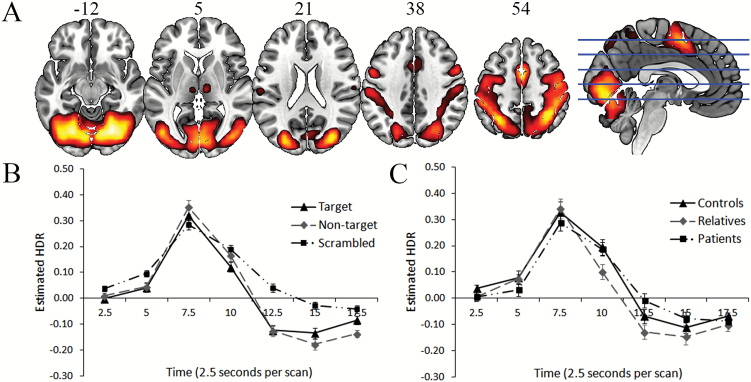
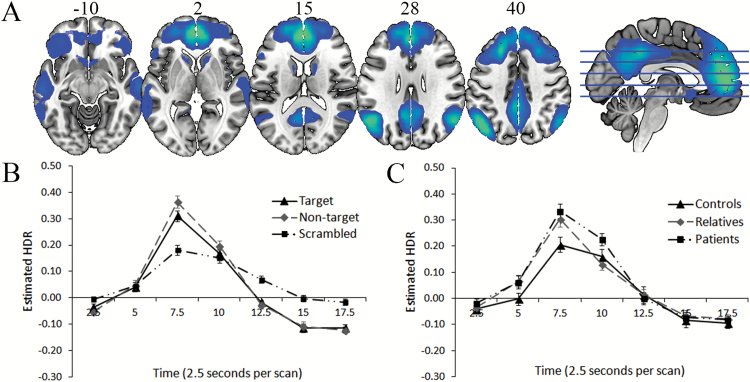
Poor emotion recognition is a core deficit in schizophrenia and is associated with poor functional outcome. Functional magnetic resonance imaging (fMRI) multivariate analysis methods were used to elucidate the neural underpinnings of face and emotion processing associated with both genetic liability and disease-specific effects. Schizophrenia patients, relatives, and controls completed a task that included 4 facial emotion discrimination conditions and an age discrimination condition during fMRI. Three functional networks were derived from the data: the first involved in visual attention and response generation, the second a default mode network (DMN), and a third involved in face and emotion processing. No differences in activation were found between groups for the visual attention and response generation network, suggesting that basic processes were intact. Both schizophrenia patients and relatives showed evidence for hyperdeactivation in the DMN compared to controls, with relatives being intermediate, suggesting a genetic liability effect. Both disease-specific and genetic liability effects were found for the face processing network, which included the amygdala. Patients exhibited lower coordinated network activity compared to controls and relatives across all facial discrimination conditions. Additionally, in relation to the other emotion discrimination conditions, a heightened coordinated response during fear and anger discrimination was observed in schizophrenia compared to other conditions, whereas relatives demonstrated heightened coordinated activity for anger discrimination only relative to other emotion conditions. With regards to brain functioning, this study found that schizophrenia is associated with abnormal processing of threat-related information, and that in part may be associated with the genetic risk for the disorder, suggesting that the facial and emotion processing network could be targeted for intervention.
Keywords: emotion processing; endophenotype; facial perception; functional magnetic resonance imaging (fMRI); genetic risk; psychosis.
© The Author 2017. Published by Oxford University Press on behalf of the Maryland Psychiatric Research Center. All rights reserved. For permissions, please email: journals.permissions@oup.com.
Figures

References
-
- Chan RC, Li H, Cheung EF, Gong QY. Impaired facial emotion perception in schizophrenia: a meta-analysis. Psychiatry Res. 2010;178:381–390. - PubMed
-
- Fett AK, Viechtbauer W, Dominguez MD, Penn DL, van Os J, Krabbendam L. The relationship between neurocognition and social cognition with functional outcomes in schizophrenia: a meta-analysis. Neurosci Biobehav Rev. 2011;35:573–588. - PubMed
-
- Habel U, Klein M, Shah NJ, et al. Genetic load on amygdala hypofunction during sadness in nonaffected brothers of schizophrenia patients. Am J Psychiatry. 2004;161:1806–1813. - PubMed
Publication types
MeSH terms
Grants and funding
LinkOut - more resources
Full Text Sources
Other Literature Sources
Medical
