


Effects of Augmenting N-Methyl-D-Aspartate Receptor Signaling on Working Memory and Experience-Dependent Plasticity in Schizophrenia: An Exploratory Study Using Acute d-cycloserine
- PMID: 28338977
- PMCID: PMC5581900
- DOI: 10.1093/schbul/sbw193
Effects of Augmenting N-Methyl-D-Aspartate Receptor Signaling on Working Memory and Experience-Dependent Plasticity in Schizophrenia: An Exploratory Study Using Acute d-cycloserine
Abstract
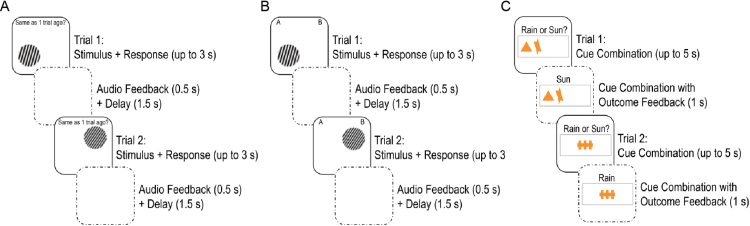
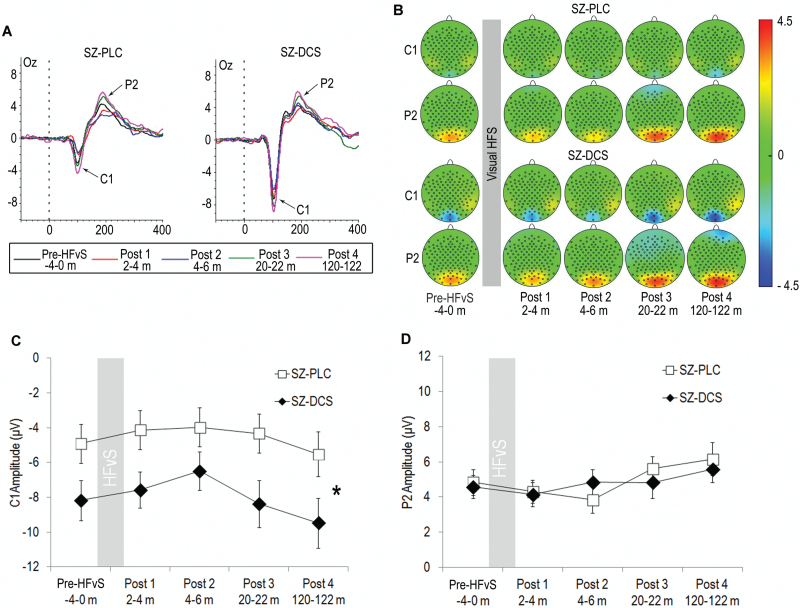
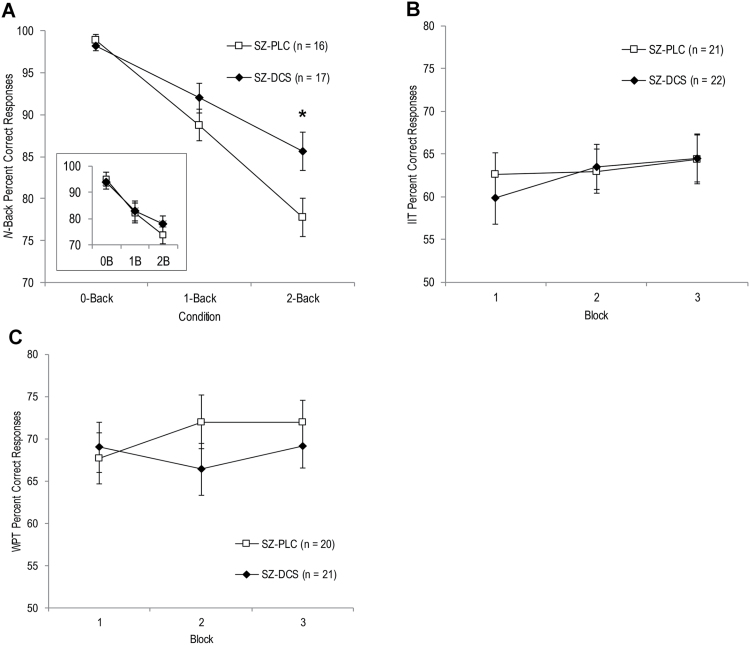
Cognitive deficits in schizophrenia have been hypothesized to reflect N-methyl-D-aspartate receptor (NMDAR) dysfunction. However, the mechanisms through which the NMDAR contributes to individual cognitive functions differ. To explore how NMDAR signaling relates to specific cognitive deficits in schizophrenia, we tested the effects of enhancing NMDAR signaling on working memory and experience-dependent plasticity using d-cycloserine (DCS). Plasticity was assessed using an EEG paradigm that utilizes high-frequency visual stimulation (HFvS) to induce neural potentiation, and 2 learning tasks, the information integration (IIT) and weather prediction (WPT) tasks. Working memory was assessed using an N-back task. Forty-five schizophrenia patients were randomized to receive a single 100 mg DCS dose (SZ-DCS; n = 24) or placebo (SZ-PLC; n = 21) in a double-blind, between-groups design. Testing occurred on a single day after placebo or DCS administration; baseline values were not obtained. DCS did not affect plasticity, as indicated by similar neural potentiation, and similar IIT and WPT learning between groups. However, among patients who successfully engaged in the working memory task (ie, performed above chance), SZ-DCS (n = 17) showed superior 2-back performance compared to SZ-PLC (n = 16). Interestingly, SZ-DCS also showed larger pre-HFvS neural responses during the LTP task. Notably, this pattern of DCS effects is the opposite of those found in our prior study of healthy adults. Results are consistent with target engagement of the NMDAR by DCS, but suggest that NMDAR signaling was not translated into synaptic plasticity changes in schizophrenia. Results highlight the importance of considering how distinct NMDAR-associated processes contribute to individual cognitive deficits in schizophrenia.
Keywords: NMDA receptor; cognition; learning; long-term potentiation; memory; psychosis.
© The Author 2017. Published by Oxford University Press on behalf of the Maryland Psychiatric Research Center. All rights reserved. For permissions, please email: journals.permissions@oup.com.
Figures

References
-
- Green MF, Nuechterlein KH. Should schizophrenia be treated as a neurocognitive disorder? Schizophr Bull. 1999;25:309–319. - PubMed
-
- Green MF, Kern RS, Heaton RK. Longitudinal studies of cognition and functional outcome in schizophrenia: implications for MATRICS. Schizophr Res. 2004;72:41–51. - PubMed
-
- Heaton RK, Gladsjo JA, Palmer BW, Kuck J, Marcotte TD, Jeste DV. Stability and course of neuropsychological deficits in schizophrenia. Arch Gen Psychiatry. 2001;58:24–32. - PubMed
Publication types
MeSH terms
Substances
Grants and funding
LinkOut - more resources
Full Text Sources
Other Literature Sources
Medical
Molecular Biology Databases
