


Safety of a topical insect repellent (picaridin) during community mass use for malaria control in rural Cambodia
- PMID: 28339462
- PMCID: PMC5365103
- DOI: 10.1371/journal.pone.0172566
Safety of a topical insect repellent (picaridin) during community mass use for malaria control in rural Cambodia
Abstract
Background: While community distribution of topical repellents has been proposed as an additional malaria control intervention, the safety of this intervention at the population level remains poorly evaluated. We describe the safety of mass distribution of the picaridin repellent during a cluster-randomised trial in rural Cambodia in 2012-2013.
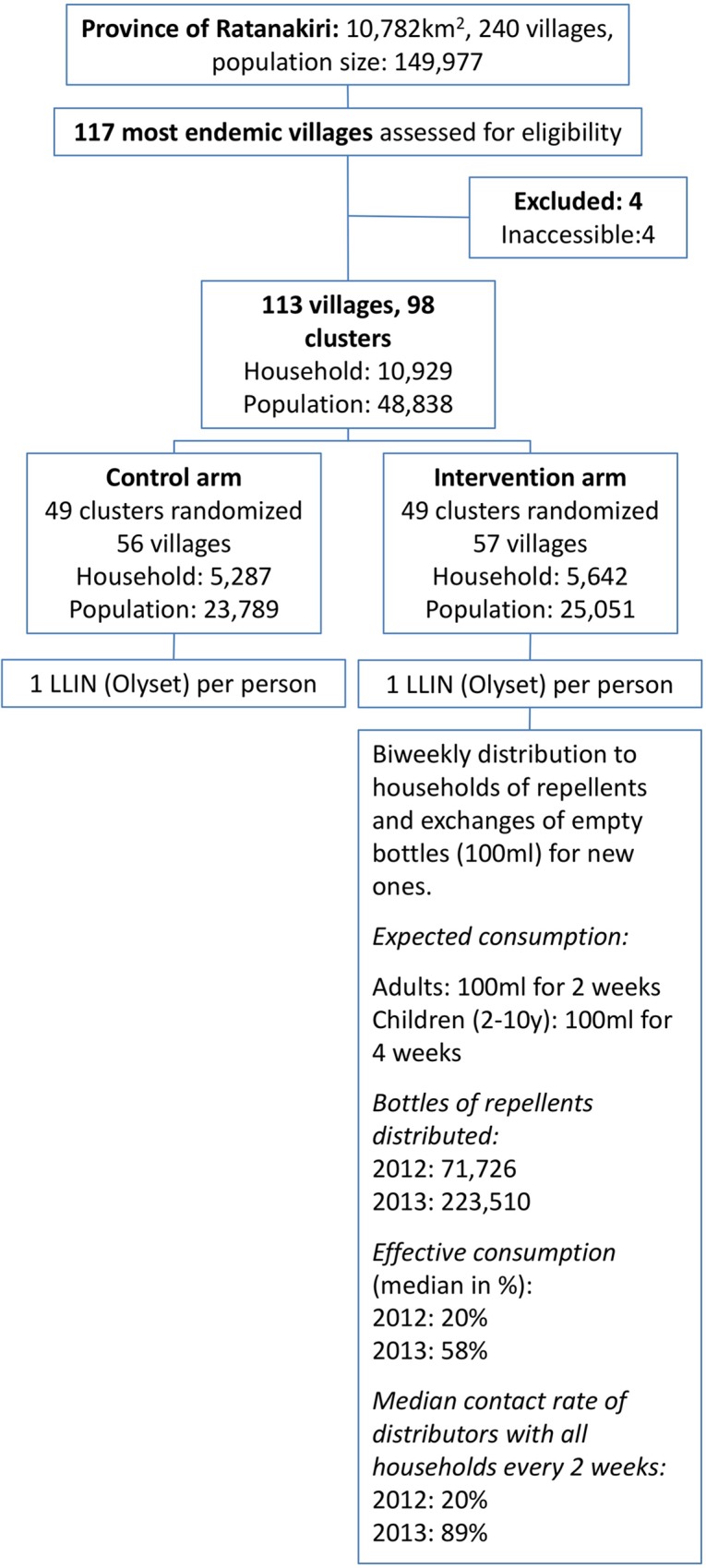
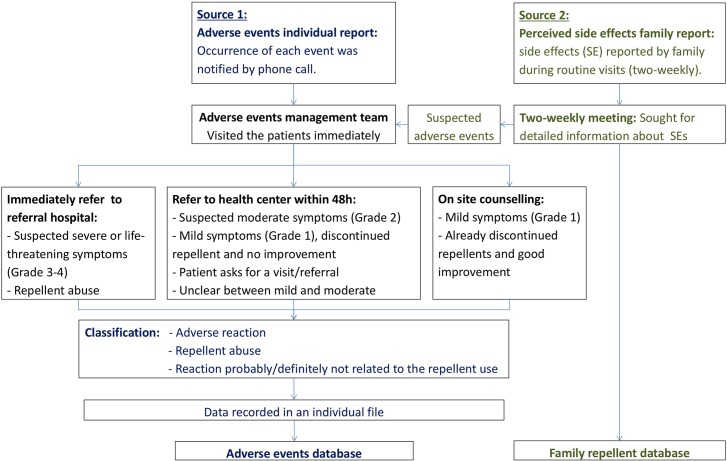
Methods: The repellent was distributed among 57 intervention villages with around 25,000 inhabitants by a team of village distributors. Information on individual adverse events, reported by phone by the village distributors, was obtained through home visits. Information on perceived side effects, reported at the family level, was obtained during two-weekly bottle exchange. Adverse events were classified as adverse reactions (events likely linked to the repellent), cases of repellent abuse and events not related to the repellent use, and classified as per Common Terminology Criteria for Adverse Events.
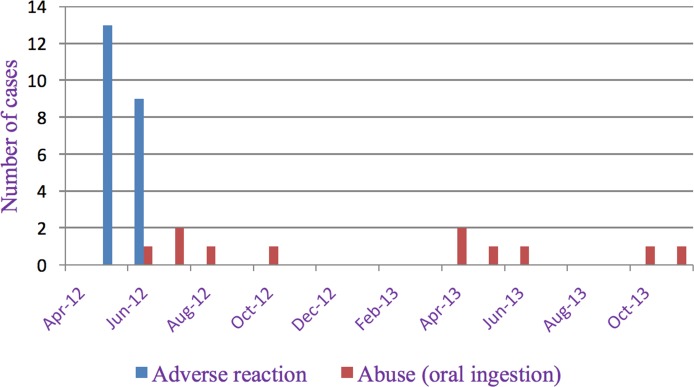
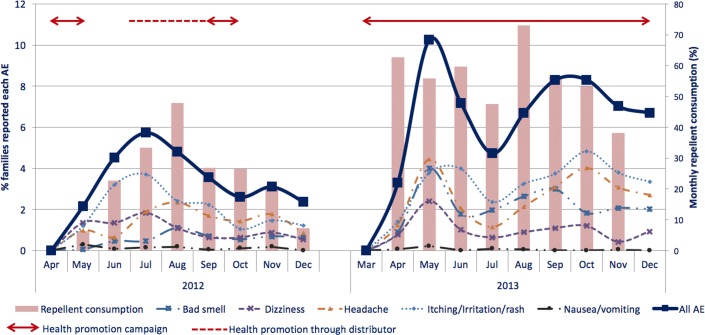
Findings: Of the 41 adverse events notified by phone by the village distributors, there were 22 adverse reactions, 11 cases of repellent abuse (6 accidental, 5 suicide attempts) and 8 non-related events. All adverse reactions were mild, occurred in the first few months of use, and mainly manifested as skin conditions. Of the 11 cases of abuse, 2 were moderate and 2 life-threatening. All cases with adverse reactions and repellent abuse recovered completely. 20% of families reported perceived side effects, mainly itching, headache, dizziness and bad smell, but few discontinued repellent use.
Conclusions: Adverse reactions and abuse during mass use of picaridin were uncommon and generally mild, supporting the safety of the picaridin repellent for malaria control.
Conflict of interest statement
Figures
References
-
- World malaria report 2014 [http://www.who.int/malaria/publications/world_malaria_report_2014/report...]
-
- Durnez L, Coosemans M: Residual Transmission of Malaria: An Old Issue for New Approaches. In InTech; 2013:671–704.
-
- WHO: Control of residual malaria parasite transmission. WHO Media Cent 2014, 11(September):1–5.
-
- Hill N, Lenglet a, Arnéz a M, Carneiro I: Plant based insect repellent and insecticide treated bed nets to protect against malaria in areas of early evening biting vectors: double blind randomised placebo controlled clinical trial in the Bolivian Amazon. BMJ 2007, 335:1023 10.1136/bmj.39356.574641.55 - DOI - PMC - PubMed
Publication types
MeSH terms
Substances
LinkOut - more resources
Full Text Sources
Other Literature Sources
Research Materials
