


Human Epistatic Interaction Controls IL7R Splicing and Increases Multiple Sclerosis Risk
- PMID: 28340352
- PMCID: PMC5456452
- DOI: 10.1016/j.cell.2017.03.007
Human Epistatic Interaction Controls IL7R Splicing and Increases Multiple Sclerosis Risk
Abstract
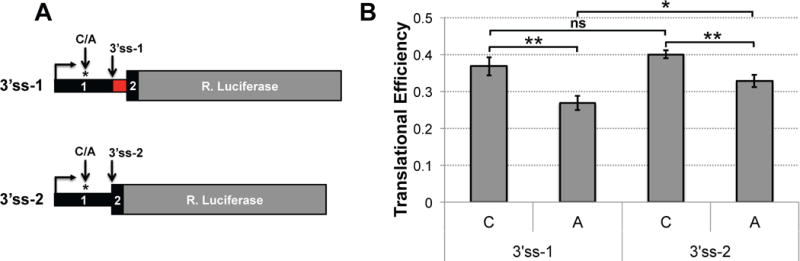
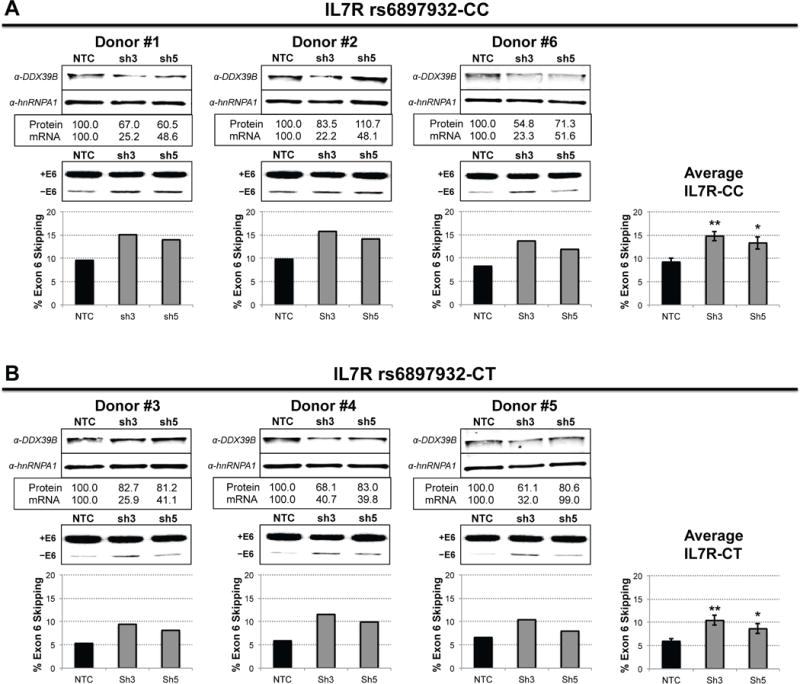
Multiple sclerosis (MS) is an autoimmune disorder where T cells attack neurons in the central nervous system (CNS) leading to demyelination and neurological deficits. A driver of increased MS risk is the soluble form of the interleukin-7 receptor alpha chain gene (sIL7R) produced by alternative splicing of IL7R exon 6. Here, we identified the RNA helicase DDX39B as a potent activator of this exon and consequently a repressor of sIL7R, and we found strong genetic association of DDX39B with MS risk. Indeed, we showed that a genetic variant in the 5' UTR of DDX39B reduces translation of DDX39B mRNAs and increases MS risk. Importantly, this DDX39B variant showed strong genetic and functional epistasis with allelic variants in IL7R exon 6. This study establishes the occurrence of biological epistasis in humans and provides mechanistic insight into the regulation of IL7R exon 6 splicing and its impact on MS risk.
Keywords: DDX39B; IL7R; alternative splicing; autoimmune disorders; epistasis; genetic association; multiple sclerosis.
Copyright © 2017 Elsevier Inc. All rights reserved.
Figures



References
-
- Allcock RJ, Williams JH, Price P. The central MHC gene, BAT1, may encode a protein that down-regulates cytokine production. Genes Cells. 2001;6:487–494. - PubMed
-
- Alves NL, van Leeuwen EM, Derks IA, van Lier RA. Differential regulation of human IL-7 receptor alpha expression by IL-7 and TCR signaling. Journal of immunology. 2008;180:5201–5210. - PubMed
Publication types
MeSH terms
Substances
Grants and funding
LinkOut - more resources
Full Text Sources
Other Literature Sources
Molecular Biology Databases
