


The impact of cumulative pain/stress on neurobehavioral development of preterm infants in the NICU
- PMID: 28343092
- PMCID: PMC5444300
- DOI: 10.1016/j.earlhumdev.2017.03.003
The impact of cumulative pain/stress on neurobehavioral development of preterm infants in the NICU
Abstract
Background: Vulnerable preterm infants experience repeated and prolonged pain/stress stimulation during a critical period in their development while in the neonatal intensive care unit (NICU). The contribution of cumulative pain/stressors to altered neurodevelopment remains unclear. The study purpose was to investigate the impact of early life painful/stressful experiences on neurobehavioral outcomes of preterm infants in the NICU.
Methods: A prospective exploratory study was conducted with fifty preterm infants (28 0/7-32 6/7weeks gestational age) recruited at birth and followed for four weeks. Cumulative pain/stressors (NICU Infant Stressor Scale) were measured daily and neurodevelopmental outcomes (NICU Network Neurobehavioral Scale) were examined at 36-37weeks post-menstrual age. Data analyses were conducted on the distribution of pain/stressors experienced over time and the linkages among pain/stressors and neurobehavioral outcomes.
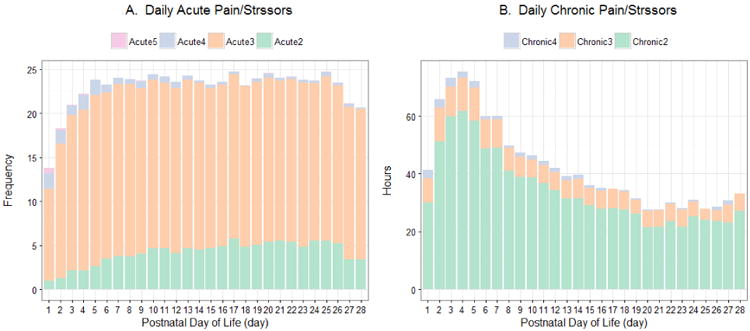
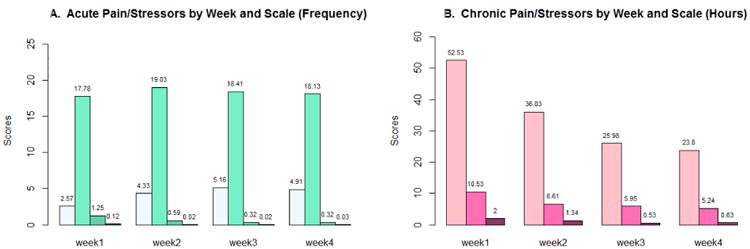
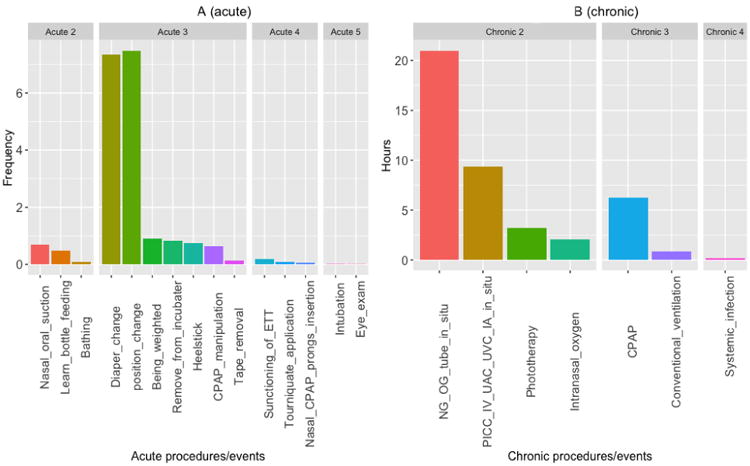
Results: Preterm infants experienced a high degree of pain/stressors in the NICU, both in numbers of daily acute events (22.97±2.30 procedures) and cumulative times of chronic/stressful exposure (42.59±15.02h). Both acute and chronic pain/stress experienced during early life significantly contributed to the neurobehavioral outcomes, particularly in stress/abstinence (p<0.05) and habituation responses (p<0.01), meanwhile, direct breastfeeding and skin-to-skin holding were also significantly associated with habituation (p<0.01-0.05).
Conclusion: Understanding mechanisms by which early life experience alters neurodevelopment will assist clinicians in developing targeted neuroprotective strategies and individualized interventions to improve infant developmental outcomes.
Keywords: Neonatal intensive care; Neurobehavioral outcomes; Pain; Preterm infants; Stress.
Copyright © 2017 Elsevier B.V. All rights reserved.
Figures
References
-
- Hamilton BEPD, Martin JA, Osterman MMHS, Curtain SMA, Mathews TJMS. Births: Final Data for 2014. Natl Vital Stat Rep. 2015;64:1–64. - PubMed
-
- Kugelman A, Colin AA. Late preterm infants: near term but still in a critical developmental time period. Pediatrics. 2013;132:741–51. - PubMed
-
- Spittle A, Treyvaud K. The role of early developmental intervention to influence neurobehavioral outcomes of children born preterm. Semin Perinatol. 2016;40:542–8. - PubMed
MeSH terms
Grants and funding
LinkOut - more resources
Full Text Sources
Other Literature Sources
Medical
