


Comparison of in-hospital glycemic variability and admission blood glucose in predicting short-term outcomes in non-diabetes patients with ST elevation myocardial infarction underwent percutaneous coronary intervention
- PMID: 28344659
- PMCID: PMC5359987
- DOI: 10.1186/s13098-017-0217-1
Comparison of in-hospital glycemic variability and admission blood glucose in predicting short-term outcomes in non-diabetes patients with ST elevation myocardial infarction underwent percutaneous coronary intervention
Abstract
Aims: Admission hyperglycemia is associated with increased mortality and major adverse cardiac events (MACE) in patients with or without diabetes mellitus after acute myocardial infarction (AMI). However, effects of glycemic variability (GV) on outcomes of non-diabetes patients with AMI still remains unclear. The aim of this study is to compare the prognostic value of in-hospital GV with admission blood glucose (ABG) for 3-month MACE in non-diabetes patients with ST elevation myocardial infarction (STEMI) who underwent percutaneous coronary intervention (PCI).
Methods: We analyzed 256 non-diabetes patients with STEMI in study. The GV accessed by mean amplitude of glycemic excursions (MAGE) was calculated from blood glucose profiles of continuous glucose monitoring system (CGMS) during hospitalization. ABG was measured on admission. Main endpoints were 3-month MACE; secondary endpoints were GRACE scores and enzymatic infarct size. Predictive effects of MAGE and ABG on the MACE in patients were analyzed.
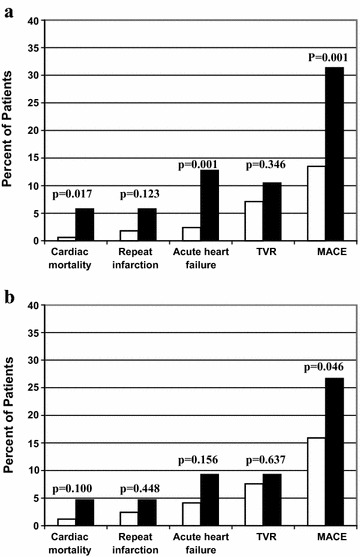
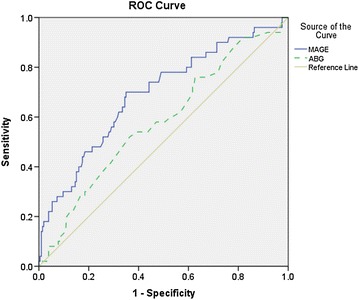
Results: In all participants, MAGE level was associated with ABG level (r = 0.242, p < 0.001). Both elevated MAGE levels (p = 0.001) and elevated ABG (p = 0.046) were associated with incidences of short-term MACE. Patients with a higher MAGE level had a significantly higher cardiac mortality (5.8 vs. 0.6%, p = 0.017) and incidence of acute heart failure (12.8 vs. 2.4%, p = 0.001) during 3 months follow-up. In multivariable analysis, high MAGE level (HR 2.165, p = 0.023) was significantly associated with incidence of short-term MACE, but ABG (HR 1.632, p = 0.184) was not. The area under the receiver-operating characteristic curve for MAGE (0.690, p < 0.001) was superior to that for ABG (0.581, p = 0.076).
Conclusions: To compare with ABG, in-hospital GV may be a more important predictor of short-term MACE and mortality in non-diabetes patients with STEMI treated with PCI.
Keywords: Acute myocardial infarction; Admission blood glucose; Glycemic variability; Major adverse cardiac events.
Figures
References
-
- Timmer JR, Hoekstra M, Nijsten MW, van der Horst IC, Ottervanger JP, Slingerland RJ, Dambrink JH, Bilo HJ, Zijlstra F, van ‘t Hof AW. Prognostic value of admission glycosylated hemoglobin and glucose in non-diabetic patients with ST-segment-elevation myocardial infarction treated with percutaneous coronary intervention. Circulation. 2011;124(6):704–711. doi: 10.1161/CIRCULATIONAHA.110.985911. - DOI - PubMed
-
- Giraldez RR, Clare RM, Lopes RD, Dalby AJ, Prabhakaran D, Brogan GX, Jr, Giugliano RP, James SK, Tanguay JF, Pollack CV, Jr, et al. Prevalence and clinical outcomes of undiagnosed diabetes mellitus and prediabetes among patients with high-risk non-ST-segment elevation acute coronary syndrome. Am Heart J. 2013;165(6):918–925. doi: 10.1016/j.ahj.2013.01.005. - DOI - PubMed
-
- Gholap NN, Mehta RL, Ng L, Davies MJ, Khunti K, Squire IB. Is admission blood glucose concentration a more powerful predictor of mortality after myocardial infarction than diabetes diagnosis? A retrospective cohort study. BMJ Open. 2012;2(5):e001596. doi: 10.1136/bmjopen-2012-001596. - DOI - PMC - PubMed
LinkOut - more resources
Full Text Sources
Other Literature Sources
Medical
Miscellaneous
