


A PPAR-gamma agonist protects from radiation-induced intestinal toxicity
- PMID: 28344789
- PMCID: PMC5349355
- DOI: 10.1177/2050640616640443
A PPAR-gamma agonist protects from radiation-induced intestinal toxicity
Abstract
Objective: Because of its anti-inflammatory, anti-fibrotic, anti-apoptotic and anti-neoplastic properties, the PPAR-γ agonist rosiglitazone is an interesting drug for investigating for use in the prevention and treatment of radiation-induced intestinal damage. We aimed to evaluate the radioprotective effect of rosiglitazone in a murine model of acute intestinal damage, assessing whether radioprotection is selective for normal tissues or also occurs in tumour cells.
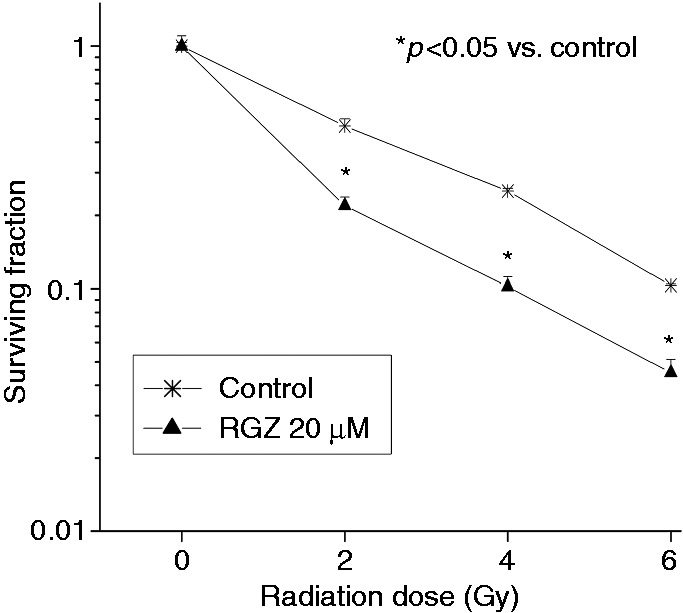
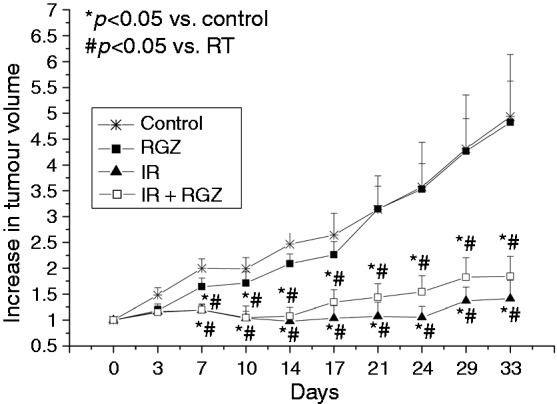
Methods: Mice were total-body irradiated (12 Gy), with or without rosiglitazone (5 mg/kg/day). After 24 and 72 hours, mice were sacrificed and the jejunum was collected. HT-29 human colon cancer cells were irradiated with a single dose of 2 (1000 cells), 4 (1500 cells) or 6 (2000 cells) Gy, with or without adding rosiglitazone (20 µM) 1 hour before irradiation. HT-29-xenografted CD1 mice were irradiated (16 Gy) with or without rosiglitazone; tumour volumes were measured for 33 days.
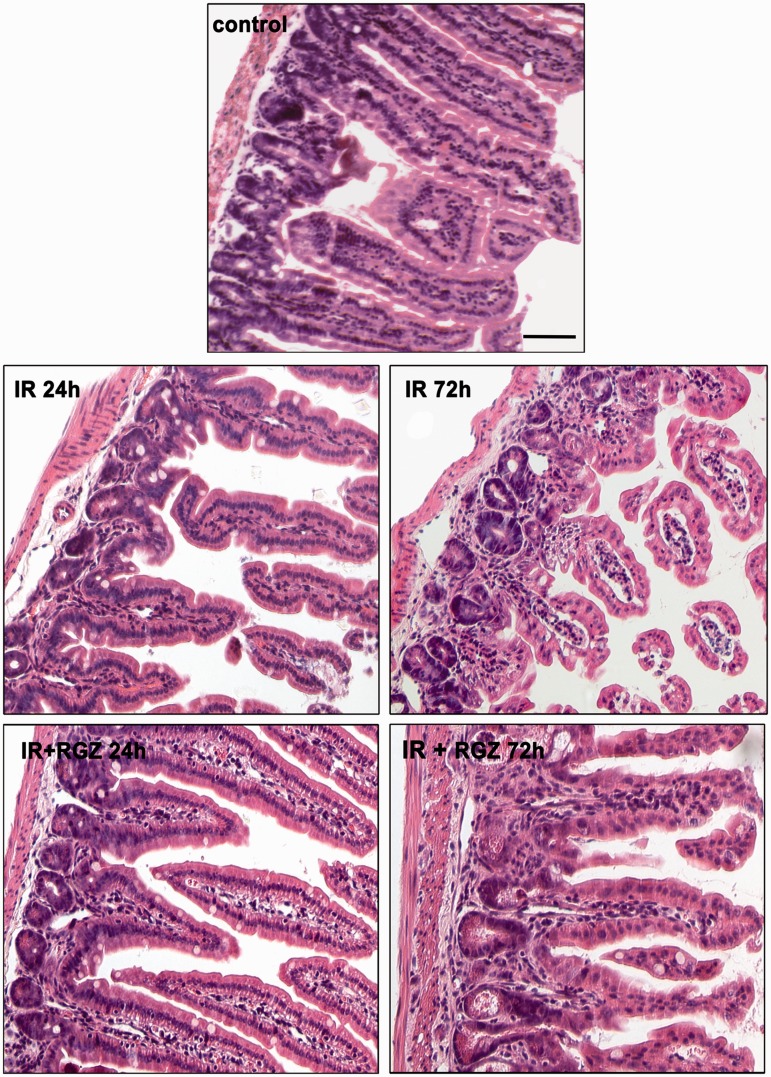
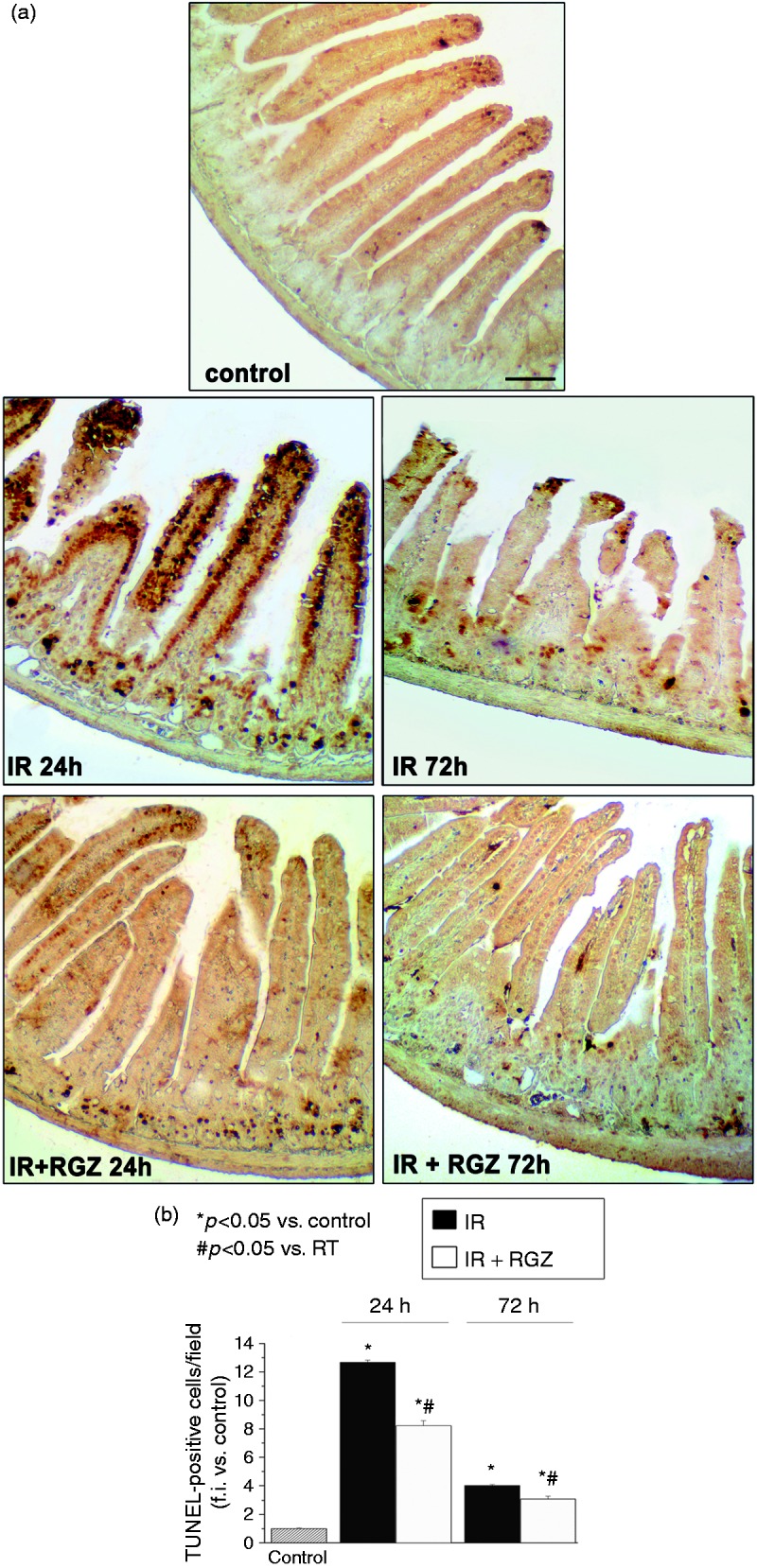
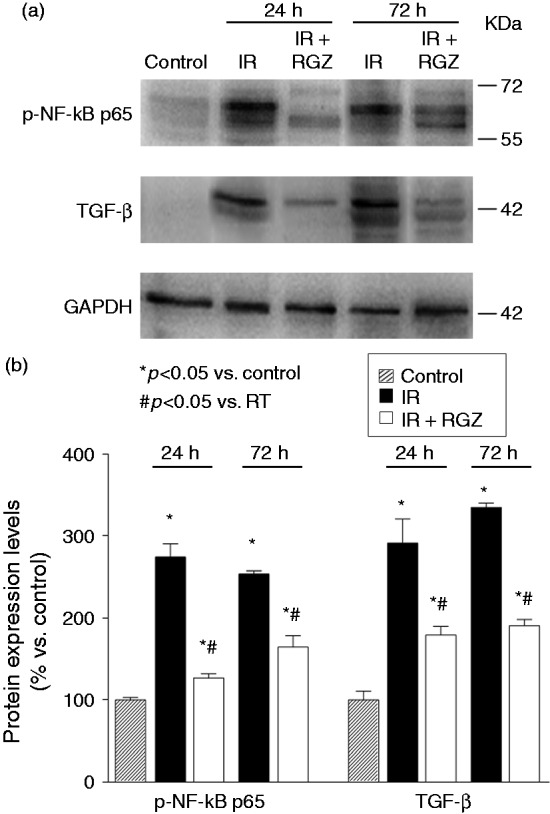
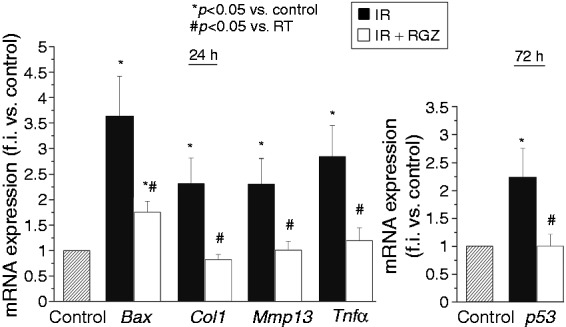
Results: Rosiglitazone markedly reduced histological signs of altered bowel structures, that is, villi shortening, submucosal thickening, necrotic changes in crypts, oedema, apoptosis, and inflammatory infiltrate induced by irradiation. Rosiglitazone significantly decreased p-NF-kB p65 phosphorylation and TGFβ protein expression at 24 and 72 hours post-irradiation and significantly decreased gene expression of Collagen1, Mmp13, Tnfα and Bax at 24 hours and p53 at 72 hours post-irradiation. Rosiglitazone reduced HT-29 clonogenic survival, but only produced a slight reduction of xenograft tumour growth.
Conclusion: Rosiglitazone exerts a protective effect on normal tissues and reduces alterations in bowel structures and inflammation in a radiation-induced bowel toxicity model, without interfering with the radiation effect on HT-29 cancer cells. PPAR-γ agonists should be further investigated for their application in abdominal and pelvic irradiation.
Keywords: PPAR-gamma agonists; Rosiglitazone; bowel; radiation-induced toxicity; radioprotection.
Figures
References
-
- Weiss JF, Landauer MR. History and development of radiation-protective agents. Int J Radiat Biol 2009; 85: 539–573. - PubMed
-
- Xiao M, Whitnall MH. Pharmacological countermeasures for the acute radiation syndrome. Curr Mol Pharmacol 2009; 2: 122–133. - PubMed
-
- Potten CS. A comprehensive study of the radiobiological response of the murine (BDF1) small intestine. Int J Radiat Biol 1990; 58: 925–973. - PubMed
-
- Wang J, Zhemg H, Kulkarni A, et al. Regulation of early and delayed radiation responses in rat small intestine by capsaicin-sensitive nerves. Int J Radiat Oncol Biol Phys 2006; 64: 1528–1536. - PubMed
-
- Kunwar A, Bag PP, Chattopadhyay S, et al. Anti-apoptotic, anti-inflammatory, and immunomodulatory activities of 3,3'-diselenodipropionic acid in mice exposed to whole body γ-radiation. Arch Toxicol 2011; 85: 1395–1405. - PubMed
LinkOut - more resources
Full Text Sources
Other Literature Sources
Research Materials
Miscellaneous
