


Prognostic factors of hepatocellular carcinoma survival after radiofrequency ablation: A US population-based study
- PMID: 28344790
- PMCID: PMC5349365
- DOI: 10.1177/2050640616659024
Prognostic factors of hepatocellular carcinoma survival after radiofrequency ablation: A US population-based study
Abstract
Objective: To determine the survival outcome and prognostic factors of hepatocellular carcinoma (HCC) survival in patients who underwent radiofrequency ablation (RFA).
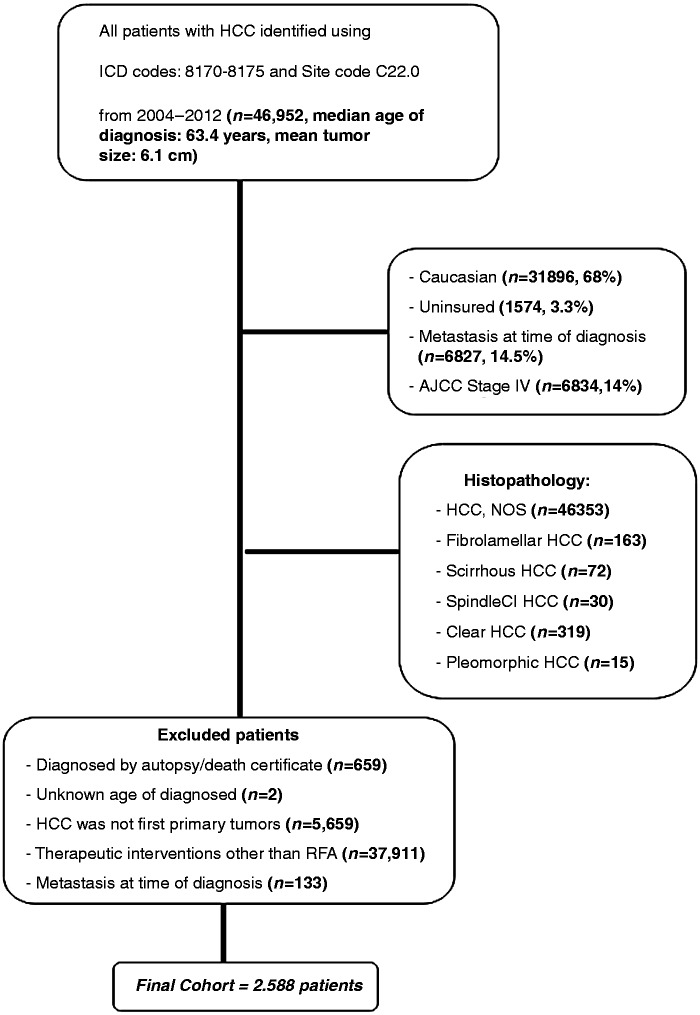
Methods: The Surveillance, Epidemiology and End Results (SEER) database was queried: There were 2588 HCC patients from 2004 to 2012 who underwent RFA. The Kaplan-Meier curves and the multivariate Cox regression analysis were used to assess the prognostic factors.
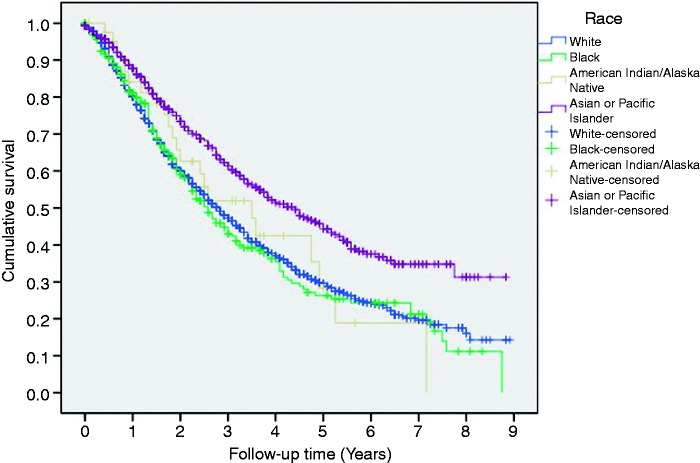
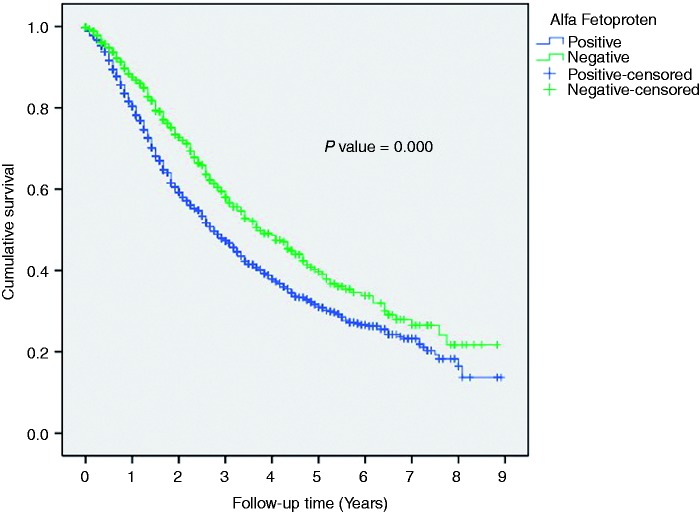
Results: With a median follow-up of 20 months, the 1-, 3- and 5-year overall survival (OS) rates were: 83%, 51% and 33%. Patients with a tumor size ≤5 cm in diameter had a better 5-year OS, as compared to patients with a tumor size >5 cm. The 5-year OS was significantly higher among patients with a normal level of alpha-fetoprotein (AFP), compared with those having elevated AFP. In an adjusted multivariate Cox regression analysis, those with ≥60 years of age (HR: 1.19; 95% CI 1.05-1.36), non-Asian race (HR: 1.53; 95% CI 1.30-1.81), tumor size >5 cm (HR: 1.43; 95% CI 1.24-1.65), elevated AFP (HR: 1.42; 95% CI 1.22-1.64), American Joint Committee on Cancer (AJCC) stages II-III (HR: 1.30; 95% CI 1.14-1.48) and the year of diagnosis from 2004-2007 (HR: 1.22; 95% CI 1.07-1.40) were significantly associated with a poor prognosis.
Conclusions: Age, race, tumor size, AFP level, AJCC stage and year of diagnosis were prognostic factors for OS in HCC patients who underwent RFA.
Keywords: Alpha fetoprotein; SEER database; database analysis; hepatocellular carcinoma; liver cancer; prognostic factors; radiofrequency ablation; survival.
Figures
References
LinkOut - more resources
Full Text Sources
Other Literature Sources
