


Mechanotransduction in cancer
- PMID: 28344926
- PMCID: PMC5362117
- DOI: 10.1016/j.coche.2016.01.011
Mechanotransduction in cancer
Abstract
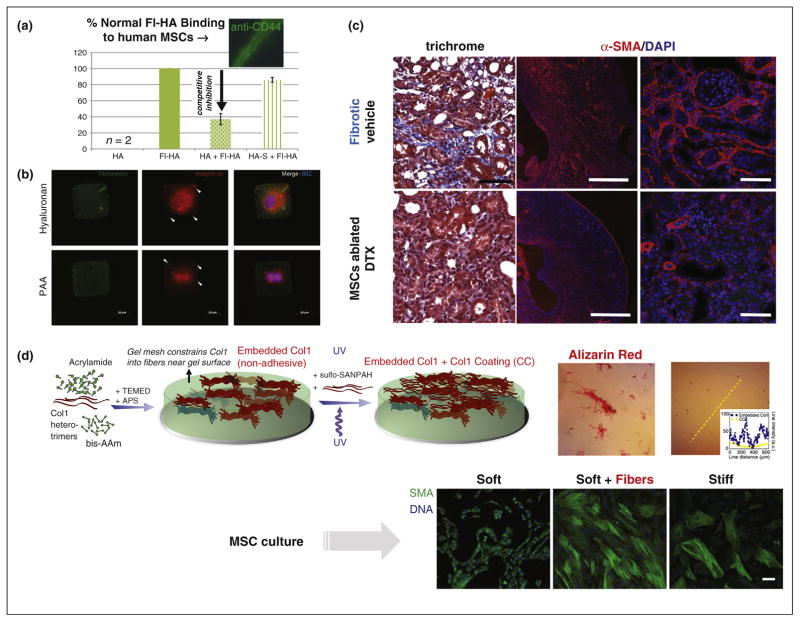
Tissue stiffness is tightly controlled under normal conditions, but changes with disease. In cancer, tumors often tend to be stiffer than the surrounding uninvolved tissue, yet the cells themselves soften. Within the past decade, and particularly in the last few years, there is increasing evidence that the stiffness of the extracellular matrix modulates cancer and stromal cell mechanics and function, influencing such disease hallmarks as angiogenesis, migration, and metastasis. This review briefly summarizes recent studies that investigate how cancer cells and fibrosis-relevant stromal cells respond to ECM stiffness, the possible sensing appendages and signaling mechanisms involved, and the emergence of novel substrates - including substrates with scar-like fractal heterogeneity - that mimic the in vivo mechanical environment of the cancer cell.
Figures
References
-
- Streitberger KJ, Reiss-Zimmermann M, Freimann FB, Bayerl S, Guo J, Arlt F, Wuerfel J, Braun J, Hoffmann KT, Sack I. High-resolution mechanical imaging of glioblastoma by multifrequency magnetic resonance elastography. PLOS ONE. 2014;9:e110588. This article along with Refs. [2•,3•,4•] displays the emerging precision in both length scale and elastic modulus differences that can be detected in vivo. These developing methods show how mechanobiology can lead to diagnostic and therapeutic applications. - PMC - PubMed
-
- Poterucha JT, Johnson JN, Qureshi MY, O’Leary PW, Kamath PS, Lennon RJ, Bonnichsen CR, Young PM, Venkatesh SK, Ehman RL, et al. Magnetic resonance elastography: a novel technique for the detection of hepatic fibrosis and hepatocellular carcinoma after the Fontan operation. Mayo Clin Proc. 2015;90:882–894. See annotation to Ref. [1•] - PMC - PubMed
-
- Zaleska-Dorobisz U, Kaczorowski K, Pawlus A, Puchalska A, Inglot M. Ultrasound elastography — review of techniques and its clinical applications. Adv Clin Exp Med. 2014;23:645–655. See annotation to Ref. [1•] - PubMed
-
- Wang HB, Dembo M, Wang YL. Substrate flexibility regulates growth and apoptosis of normal but not transformed cells. Am J Physiol Cell Physiol. 2000;279:C1345–C1350. - PubMed
Grants and funding
LinkOut - more resources
Full Text Sources
Other Literature Sources
Miscellaneous