The physiology of blood loss and shock: New insights from a human laboratory model of hemorrhage
- PMID: 28346013
- PMCID: PMC5407541
- DOI: 10.1177/1535370217694099
The physiology of blood loss and shock: New insights from a human laboratory model of hemorrhage
Abstract
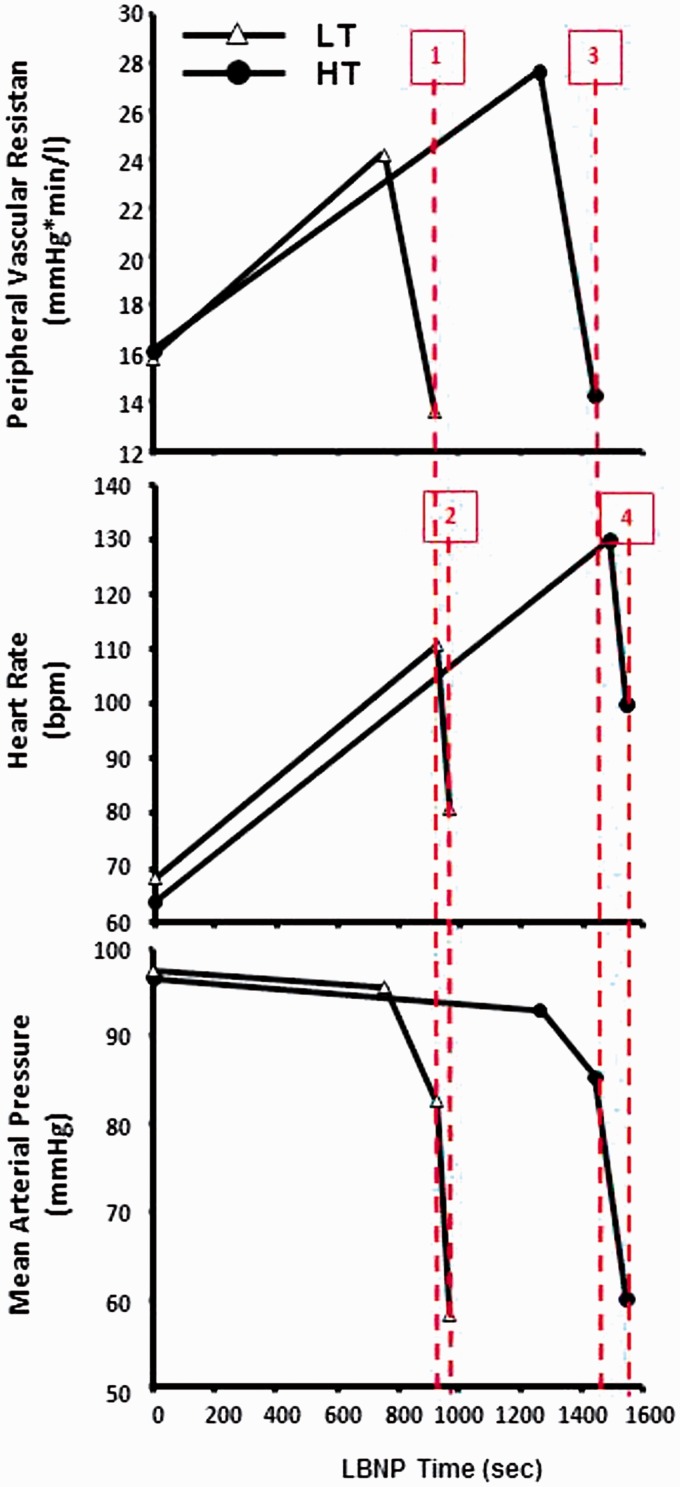
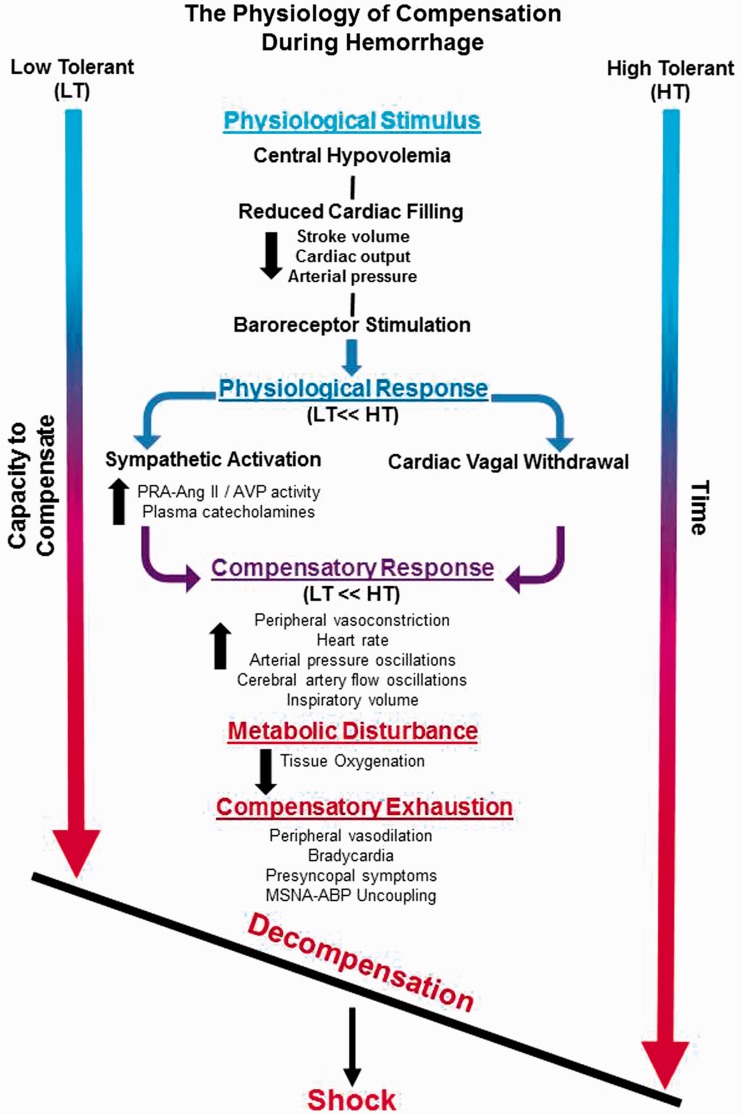
The ability to quickly diagnose hemorrhagic shock is critical for favorable patient outcomes. Therefore, it is important to understand the time course and involvement of the various physiological mechanisms that are active during volume loss and that have the ability to stave off hemodynamic collapse. This review provides new insights about the physiology that underlies blood loss and shock in humans through the development of a simulated model of hemorrhage using lower body negative pressure. In this review, we present controlled experimental results through utilization of the lower body negative pressure human hemorrhage model that provide novel insights on the integration of physiological mechanisms critical to the compensation for volume loss. We provide data obtained from more than 250 human experiments to classify human subjects into two distinct groups: those who have a high tolerance and can compensate well for reduced central blood volume (e.g. hemorrhage) and those with low tolerance with poor capacity to compensate.We include the conceptual introduction of arterial pressure and cerebral blood flow oscillations, reflex-mediated autonomic and neuroendocrine responses, and respiration that function to protect adequate tissue oxygenation through adjustments in cardiac output and peripheral vascular resistance. Finally, unique time course data are presented that describe mechanistic events associated with the rapid onset of hemodynamic failure (i.e. decompensatory shock). Impact Statement Hemorrhage is the leading cause of death in both civilian and military trauma. The work submitted in this review is important because it advances the understanding of mechanisms that contribute to the total integrated physiological compensations for inadequate tissue oxygenation (i.e. shock) that arise from hemorrhage. Unlike an animal model, we introduce the utilization of lower body negative pressure as a noninvasive model that allows for the study of progressive reductions in central blood volume similar to those reported during actual hemorrhage in conscious humans to the onset of hemodynamic decompensation (i.e. early phase of decompensatory shock), and is repeatable in the same subject. Understanding the fundamental underlying physiology of human hemorrhage helps to test paradigms of critical care medicine, and identify and develop novel clinical practices and technologies for advanced diagnostics and therapeutics in patients with life-threatening blood loss.
Keywords: Tissue oxygenation; lower body negative pressure; resuscitation; trauma; vital signs.
Figures
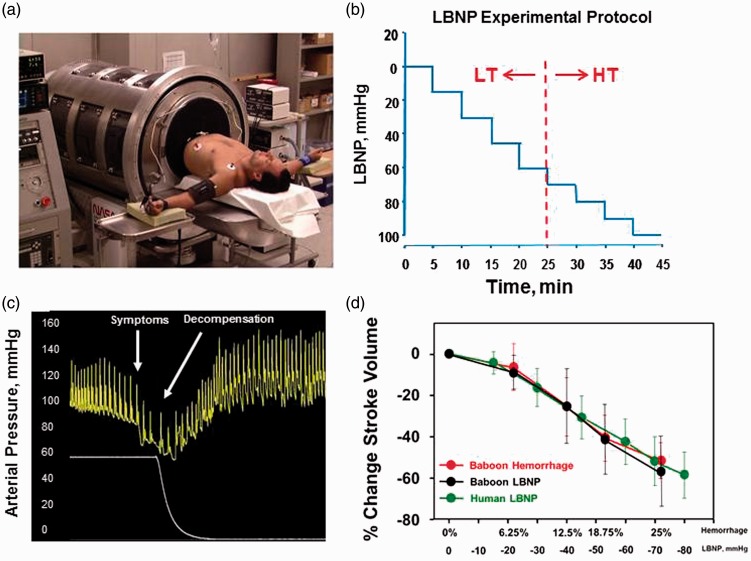
 ) and LBNP (•) in baboons corresponding to 6.25% (n = 14), 12.5% (n = 14), 18.75% (n = 14) and 25% (n = 12) total blood volume loss. Human responses to six levels of LBNP are superimposed (
 ). Data are expressed as mean ± SD. Modified from Convertino et al. and Hinojosa-Laborde et al.
References
-
- Burgess FW, Sborov MJ, Calcagni DR. Hemorrhage, shock, and fluid resuscitation. In: Zajtchuk R, Bellamy RF (eds) Anesthesia and perioperative care of the combat casualty. Washington, DC: Office of The Surgeon General at TMM Publications, 1995, pp. 95–7.
-
- Wilson RF (ed.). Handbook of trauma: pitfalls and pearls. Philadelphia, PA: Lippincott Williams & Wilkins, 1999.
-
- Soller BR, Sliwa J, Yang Y, Zou F, Ryan KL, Rickards CA, Convertinob VA. Simultaneous spectroscopic determination of forearm muscle pH and oxygen saturation during simulated haemorrhage. Mortality 2012; 3: 4–4.
-
- Howard JT, Janak JC, Hinojosa-Laborde C, Convertino VA. Specificity of compensatory reserve and tissue oxygenation as early predictors of tolerance to progressive reductions in central blood volume. Shock 2016; 46: 68–73. - PubMed
Publication types
MeSH terms
Substances
LinkOut - more resources
Full Text Sources
Other Literature Sources
Medical