Intestinal absorption and renal reabsorption of calcium throughout postnatal development
- PMID: 28346014
- PMCID: PMC5407544
- DOI: 10.1177/1535370217699536
Intestinal absorption and renal reabsorption of calcium throughout postnatal development
Abstract
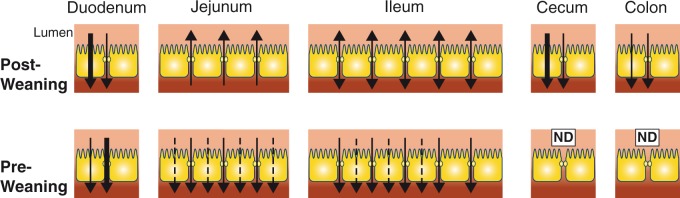
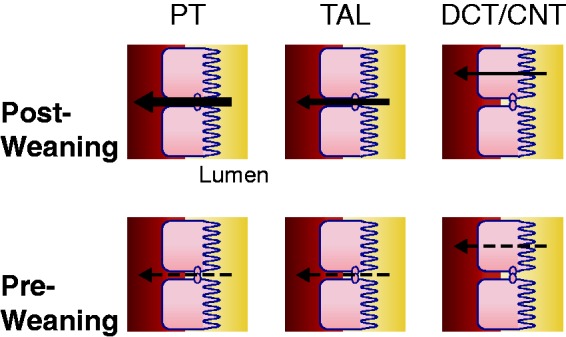
Calcium is vital for many physiological functions including bone mineralization. Postnatal deposition of calcium into bone is greatest in infancy and continues through childhood and adolescence until peek mineral density is reached in early adulthood. Thereafter, bone mineral density remains static until it eventually declines in later life. A positive calcium balance, i.e. more calcium absorbed than excreted, is crucial to bone deposition during growth and thus to peek bone mineral density. Dietary calcium is absorbed from the intestine into the blood. It is then filtered by the renal glomerulus and either reabsorbed by the tubule or excreted in the urine. Calcium can be (re)absorbed across intestinal and renal epithelia via both transcellular and paracellular pathways. Current evidence suggests that significant intestinal and renal calcium transport changes occur throughout development. However, the molecular details of these alterations are incompletely delineated. Here we first briefly review the current model of calcium transport in the intestine and renal tubule in the adult. Then, we describe what is known with regard to calcium handling through postnatal development, and how alterations may aid in mediating a positive calcium balance. The role of transcellular and paracellular calcium transport pathways and the contribution of specific intestinal and tubular segments vary with age. However, the current literature highlights knowledge gaps in how specifically intestinal and renal calcium (re)absorption occurs early in postnatal development. Future research should clarify the specific changes in calcium transport throughout early postnatal development including mediators of these alterations enabling appropriate bone mineralization. Impact statement This mini review outlines the current state of knowledge pertaining to the molecules and mechanisms maintaining a positive calcium balance throughout postnatal development. This process is essential to achieving optimal bone mineral density in early adulthood, thereby lowering the lifetime risk of osteoporosis.
Keywords: Calcium transport; bone and development; calcium homeostasis; intestine; kidney.
Figures
References
-
- Hoenderop JGJ, Nilius B, Bindels RJM. Calcium absorption across epithelia. Physiol Rev 2005; 85: 373–422. - PubMed
-
- Kopic S, Geibel JP. Gastric acid, calcium absorption, and their impact on bone health. Physiol Rev 2013; 93: 189–268. - PubMed
-
- Kovacs CS. Bone development and mineral homeostasis in the fetus and neonate: roles of the calciotropic and phosphotropic hormones. Physiol Rev 2014; 94: 1143–218. - PubMed
-
- Bronner F, Pansu D. Nutritional aspects of calcium absorption. J Nutr 1999; 129: 9–12. - PubMed
-
- Golden NH, Abrams SA. Optimizing bone health in children and adolescents. Pediatrics 2014; 134: e1229–e43. - PubMed
Publication types
MeSH terms
Substances
LinkOut - more resources
Full Text Sources
Other Literature Sources
Medical