


Venom Profiling of a Population of the Theraphosid Spider Phlogius crassipes Reveals Continuous Ontogenetic Changes from Juveniles through Adulthood
- PMID: 28346332
- PMCID: PMC5408190
- DOI: 10.3390/toxins9040116
Venom Profiling of a Population of the Theraphosid Spider Phlogius crassipes Reveals Continuous Ontogenetic Changes from Juveniles through Adulthood
Abstract
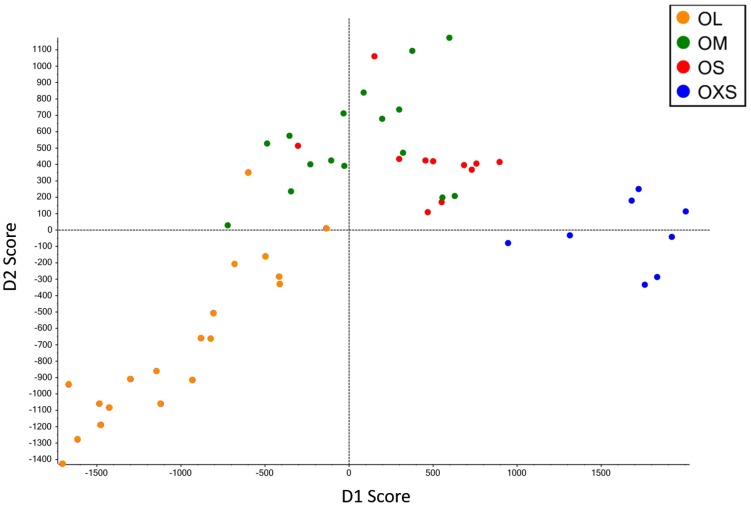
Theraphosid spiders (tarantulas) are venomous arthropods found in most tropical and subtropical regions of the world. Tarantula venoms are a complex cocktail of toxins with potential use as pharmacological tools, drugs and bioinsecticides. Although numerous toxins have been isolated from tarantula venoms, little research has been carried out on the venom of Australian tarantulas. We therefore investigated the venom profile of the Australian theraphosid spider Phlogius crassipes and examined whether there are ontogenetic changes in venom composition. Spiders were divided into four ontogenic groups according to cephalothorax length, then the venom composition of each group was examined using gel electrophoresis and mass spectrometry. We found that the venom of P. crassipes changes continuously during development and throughout adulthood. Our data highlight the need to investigate the venom of organisms over the course of their lives to uncover and understand the changing functions of venom and the full range of toxins expressed. This in turn should lead to a deeper understanding of the organism's ecology and enhance the potential for biodiscovery.
Keywords: LC/MS-MS; age; mass spectrometry; proteomic; tarantula; toxins.
Conflict of interest statement
The author declare no conflict of interest. The founding sponsors had no role in the design of the study; in the collection, analyses, or interpretation of data; in the writing of the manuscript, and in the decision to publish the results.
Figures
References
-
- Roth M. Investigations on lead in the soil invertebrates of a forest ecosystem. Pedobiologia. 1993;37:270–279.
-
- Raizer J., Japyassú H.F., Indicatti R.P., Brescovit A.D. Comunidade de aranhas (Arachnida, Araneae) do pantanal norte (Mato Grosso, Brasil) e sua similaridade com a araneofauna amazônica. Biota Neotrop. 2005;5:125–140.
-
- World Spider Catalog. [(accessed on 10 January 2017)]; Available online: http://wsc.nmbe.ch.
-
- Framenau V.W., Baehr B.C., Zborowski P. A Guide to the Spiders of Australia. New Holland Publishers; London, UK: 2014.
-
- Coddington J.A., Levi H.W. Systematics and evolution of spiders (Araneae) Annu. Rev. Ecol. Syst. 1991;22:565–592.
Publication types
MeSH terms
Substances
LinkOut - more resources
Full Text Sources
Other Literature Sources
Medical
