


Identification and discrimination of Toxoplasma gondii, Sarcocystis spp., Neospora spp., and Cryptosporidium spp. by righ-resolution melting analysis
- PMID: 28346485
- PMCID: PMC5367704
- DOI: 10.1371/journal.pone.0174168
Identification and discrimination of Toxoplasma gondii, Sarcocystis spp., Neospora spp., and Cryptosporidium spp. by righ-resolution melting analysis
Abstract
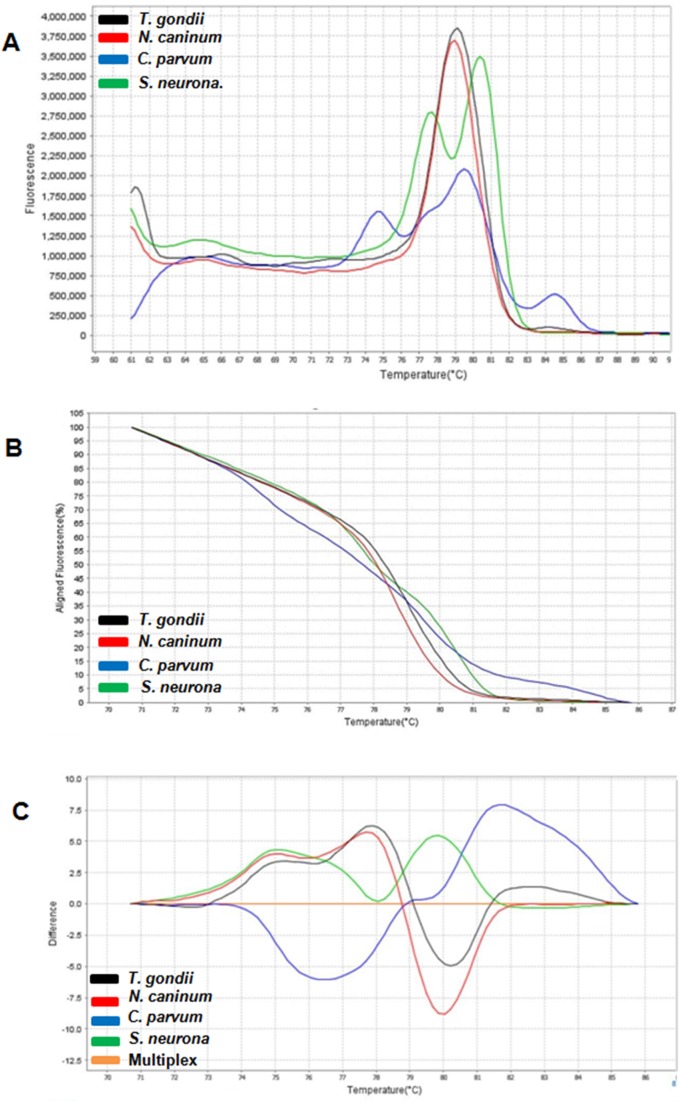
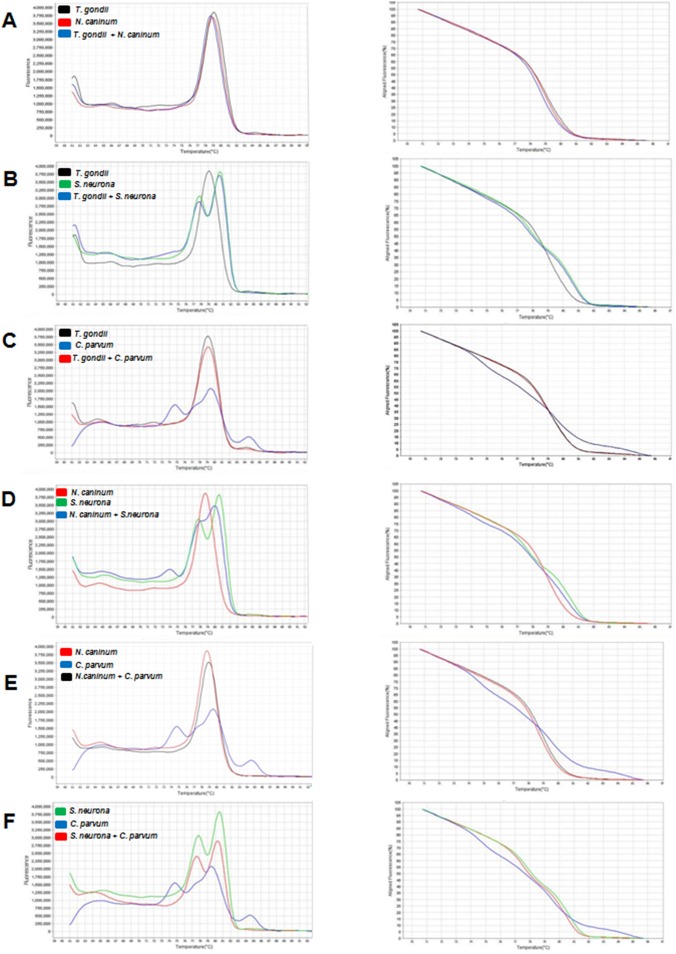
The objective of this study was to standardize the high-resolution melting method for identification and discrimination of Toxoplasma gondii, Sarcocystis spp., Neospora spp., and Cryptosporidium spp. by amplification of 18S ribosomal DNA (rDNA) using a single primer pair. The analyses were performed on individual reactions (containing DNA from a single species of a protozoan), on duplex reactions (containing DNA from two species of protozoa in each reaction), and on a multiplex reaction (containing DNA of four parasites in a single reaction). The proposed method allowed us to identify and discriminate the four species by analyzing the derivative, normalized, and difference melting curves, with high reproducibility among and within the experiments, as demonstrated by low coefficients of variation (less than 2.2% and 2.0%, respectively). This is the first study where this method is used for discrimination of these four species of protozoa in a single reaction.
Conflict of interest statement
Figures
References
-
- Dubey JP, Rajedran C, Costa DGC, Ferreira LR, Kwok OCH, Qu D, et al. New Toxoplasma gondii genotypes isolated from free-range chickens from the Fernando de Noronha, Brazil: unexpected findings. J Parasitol. 2010. August. - PubMed
MeSH terms
Substances
LinkOut - more resources
Full Text Sources
Other Literature Sources
Miscellaneous
