


Aerococcus urinae, a cause of cystitis with malodorous urine in a child: clinical and microbiological challenges
- PMID: 28348806
- PMCID: PMC5361636
- DOI: 10.1099/jmmcr.0.005083
Aerococcus urinae, a cause of cystitis with malodorous urine in a child: clinical and microbiological challenges
Abstract
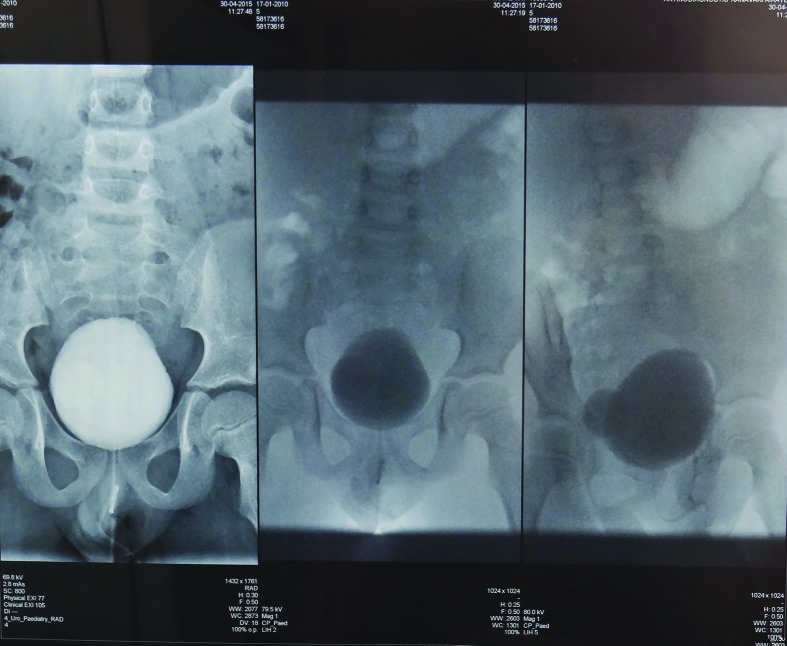
Introduction. An infection of the lower urinary tract associated with an extremely unpleasant odour due to Aerococcus urinae in an otherwise healthy 5-year-old boy is described herein. Case presentation. Interestingly, imaging examination revealed the presence of a bladder diverticulum. Routine microbiological examination based on Gram staining, colony morphology and catalase reactivity suggested that the responsible pathogen could belong either to staphylococci, α-haemolytic streptococci or enterococci, which are more common urine isolates. Of note is that the VITEK 2 automated system could not identify the micro-organism. Susceptibility testing showed full sensitivity to β-lactam antibiotics and resistance to trimethoprim/sulfamethoxazole. The isolate was subjected to 16S rRNA gene sequence analysis because of its unusual characteristics. It was identified as A. urinae and the sequence was deposited in GenBank under the accession number KU207150. Conclusion.A. urinae should be considered as a causative agent of urinary-tract infection associated with malodorous urine.
Keywords: Aerococcus urinae; bladder diverticulum; cystitis; malodorous urine.
References
-
- Papaparaskevas J, Stathi A, Alexandrou-Athanassoulis H, Charisiadou A, Petropoulou N, et al. Pitted keratolysis in an adolescent, diagnosed using conventional and molecular microbiology and successfully treated with fusidic acid. Eur J Dermatol. 2014;24:499–500. doi: 10.1684/ejd.2014.2376. - DOI - PubMed
-
- CLSI . Performance Standards for Antimicrobial Susceptibility Testing; 25th Supplement. Wayne, PA:: Clinical and Laboratory Standards Institute; 2015.
-
- Lupo A, Guilarte YN, Droz S, Hirzel C, Furrer H, et al. In vitro activity of clinically implemented β-lactams against Aerococcus urinae: presence of non-susceptible isolates in Switzerland. New Microbiol. 2014;37:563–566. - PubMed
Publication types
LinkOut - more resources
Full Text Sources
Other Literature Sources