


Timing of activities of daily life is jaggy: How episodic ultradian changes in body and brain temperature are integrated into this process
- PMID: 28349079
- PMCID: PMC5079224
- DOI: 10.1080/23328940.2016.1177159
Timing of activities of daily life is jaggy: How episodic ultradian changes in body and brain temperature are integrated into this process
Abstract
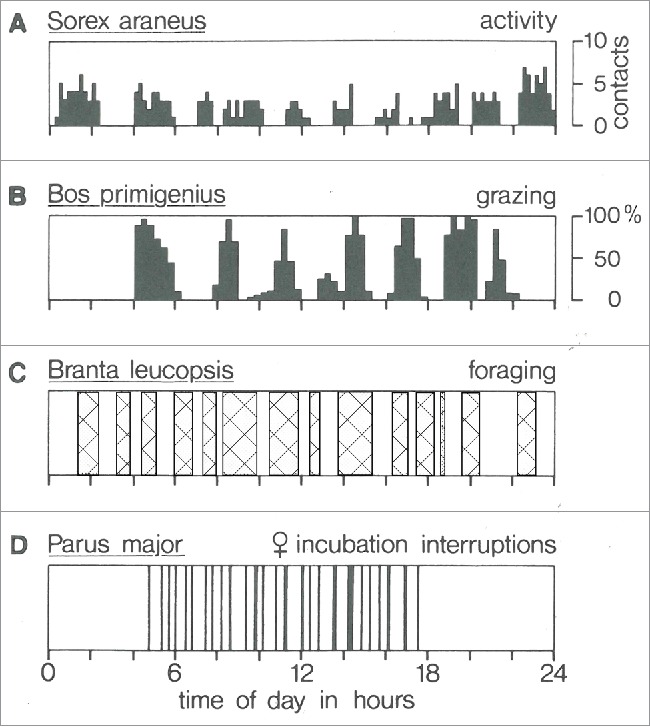
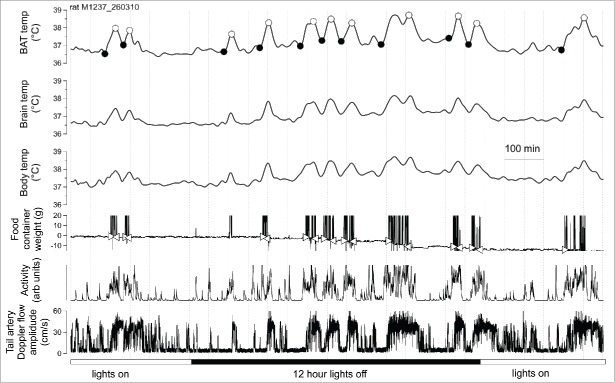
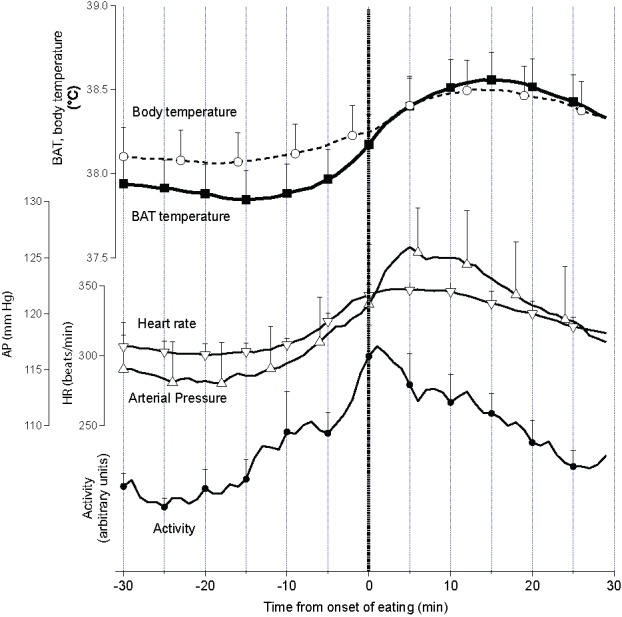
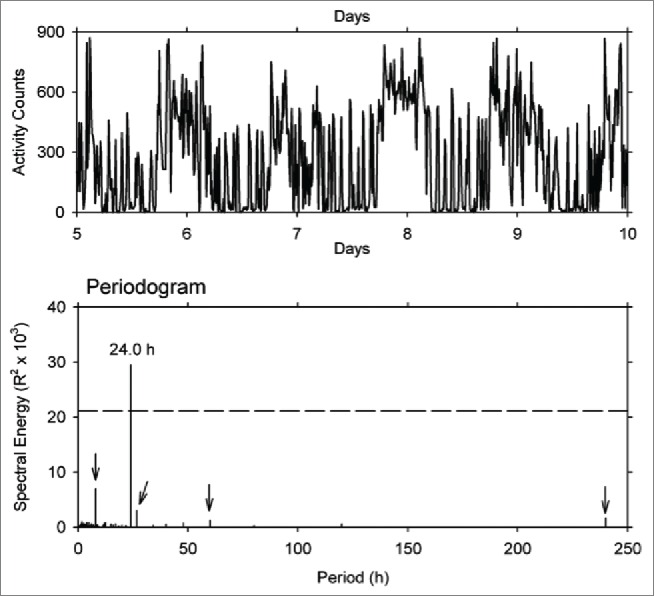
Charles Darwin noted that natural selection applies even to the hourly organization of daily life. Indeed, in many species, the day is segmented into active periods when the animal searches for food, and inactive periods when the animal digests and rests. This episodic temporal patterning is conventionally referred to as ultradian (<24 hours) rhythmicity. The average time between ultradian events is approximately 1-2 hours, but the interval is highly variable. The ultradian pattern is stochastic, jaggy rather than smooth, so that although the next event is likely to occur within 1-2 hours, it is not possible to predict the precise timing. When models of circadian timing are applied to the ultradian temporal pattern, the underlying assumption of true periodicity (stationarity) has distorted the analyses, so that the ultradian pattern is frequently averaged away and ignored. Each active ultradian episode commences with an increase in hippocampal theta rhythm, indicating the switch of attention to the external environment. During each active episode, behavioral and physiological processes, including changes in body and brain temperature, occur in an integrated temporal order, confirming organization by programs endogenous to the central nervous system. We describe methods for analyzing episodic ultradian events, including the use of wavelet mathematics to determine their timing and amplitude, and the use of fractal-based procedures to determine their complexity.
Keywords: basic rest-activity cycle; brown adipose tissue; chronobiology; circadian rhythms; eating; fractals; homeostasis; natural selection; thermogenesis; ultradian rhythms; wavelets.
Figures
Comment in
-
Brain control of body temperature: Central command vs feedback.Temperature (Austin). 2016 Jul 19;3(3):362-363. doi: 10.1080/23328940.2016.1211503. eCollection 2016. Temperature (Austin). 2016. PMID: 28352141 Free PMC article. No abstract available.
-
Fractal analysis of thermoregulatory complexity.Temperature (Austin). 2016 Jul 19;3(3):364-365. doi: 10.1080/23328940.2016.1213349. eCollection 2016. Temperature (Austin). 2016. PMID: 28352142 Free PMC article. No abstract available.
References
-
- Pittendrigh CS. Temporal organization: Reflections of a Darwinian clock-watcher. Ann Rev Physiol 1993; 55:17-54; PMID:8466172; http://dx.doi.org/ 10.1146/annurev.ph.55.030193.000313 - DOI - PubMed
-
- Darwin C. On the Origin of Species by Means of Natural Selection. The Floating Press, ISBN: 9781775415374 (ebook) 2009 p151. Originally published in 1859.
-
- Szymanski JS. Aktivität und ruhe bei tieren und menschen. Zeitschrift Fjur Allgerneine Physiol 1920; 18:105-62.
-
- Richter CP. A behavioristic study of the activity of the rat. Comp Psychol Monogra 1922; 1:1-55.
-
- Kleitman N. Basic rest-activity cycle–22 years later. Sleep 1982; 5:311-7; PMID:6819628 - PubMed
Publication types
LinkOut - more resources
Full Text Sources
Other Literature Sources
