


Improved long-term survival with subdural drains following evacuation of chronic subdural haematoma
- PMID: 28349381
- PMCID: PMC5385189
- DOI: 10.1007/s00701-017-3095-2
Improved long-term survival with subdural drains following evacuation of chronic subdural haematoma
Abstract
Background: Chronic subdural haematoma (CSDH) is a common condition that is effectively managed by burrhole drainage but requires repeat surgery in a significant minority of patients. The Cambridge Chronic Subdural Haematoma Trial (CCSHT) was a randomised controlled study that showed placement of subdural drains for 48 h following burrhole evacuation significantly reduces the incidence of reoperation and improves survival at 6 months. The present study examined the long-term survival of the patients in the trial.
Methods: In the original trial patients at a single neurosurgical centre from 2004-2007 were randomly assigned to receive a drain (n = 108) or no drain (n = 107) following burrhole drainage of CSDH. We ascertained whether the trial patients were alive in February 2016-a minimum of 8 years following enrollment-via the UK NHS tracing service. Survival was compared between the trial groups and against expected survival for the UK general population matched for age and sex.
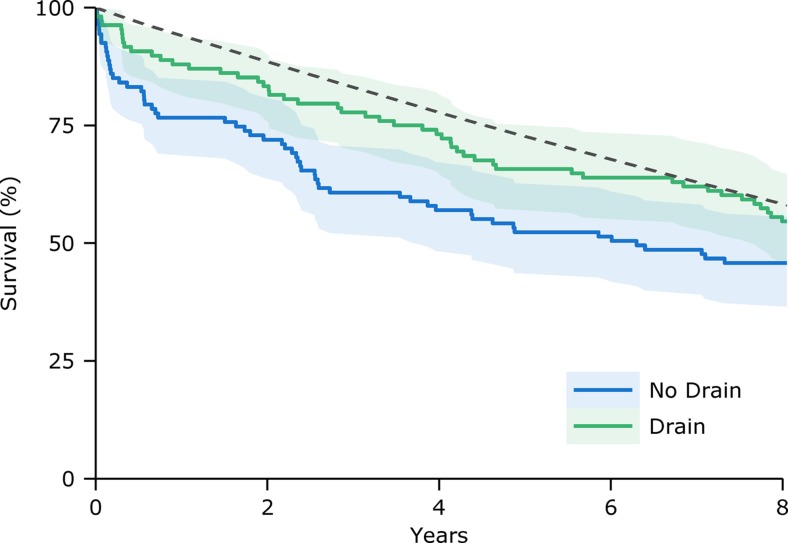
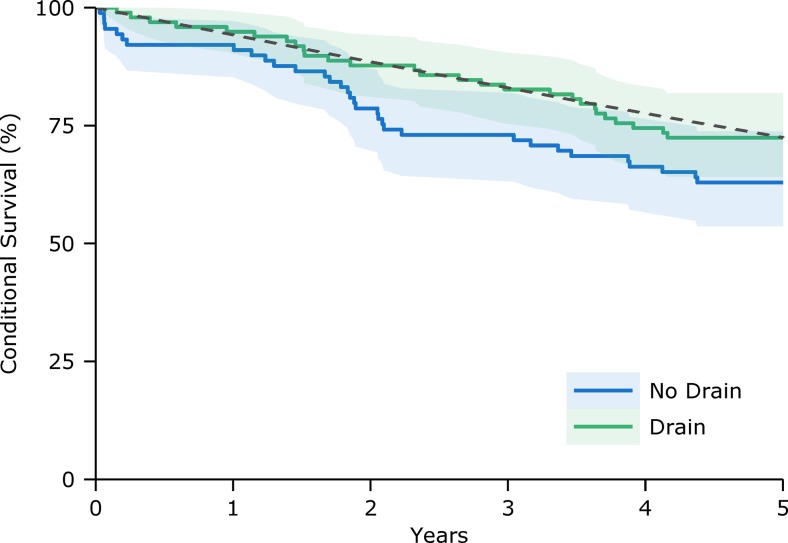
Results: At 5 years following surgery the drain group continued to have significantly better survival than the no drain patients (p = 0.027), but this was no longer apparent at 10 years. Survival of patients in the drain group did not differ significantly from that of the general population whereas patients who did not receive a drain had significantly lower survival than expected (p = 0.0006).
Conclusion: Subdural drains following CSDH evacuation are associated with improved long-term survival, which appears similar to that expected for the general population of the same age and sex. All patients having burrhole CSDH evacuation should receive a drain as standard practice unless specifically contraindicated.
Keywords: Chronic subdural haematoma; Drain; Randomised controlled trial; Survival.
Conflict of interest statement
Funding
No funding was received for this research
Conflicts of Interest
All authors certify that they have no affiliations with or involvement in any organization or entity with any financial or non-financial interest in the subject matter or materials discussed in this manuscript.
Ethical approval
All procedures performed in studies involving human participants were in accordance with the ethical standards of the institutional and/or national research committee and with the 1964 Helsinki Declaration and its later amendments or comparable ethical standards. The study was approved by the NHS Research Ethics Committee.
Informed consent
Informed consent was obtained from all individual participants included in the study.
Figures
References
Publication types
MeSH terms
Grants and funding
LinkOut - more resources
Full Text Sources
Other Literature Sources
Medical
