


Pharmacokinetics of a single 1g dose of azithromycin in rectal tissue in men
- PMID: 28350806
- PMCID: PMC5370104
- DOI: 10.1371/journal.pone.0174372
Pharmacokinetics of a single 1g dose of azithromycin in rectal tissue in men
Abstract
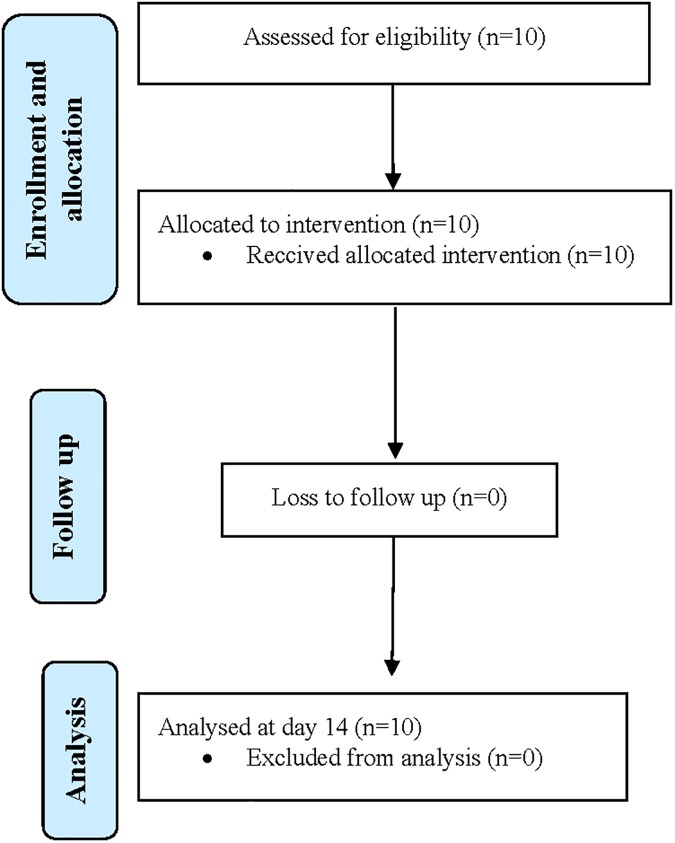
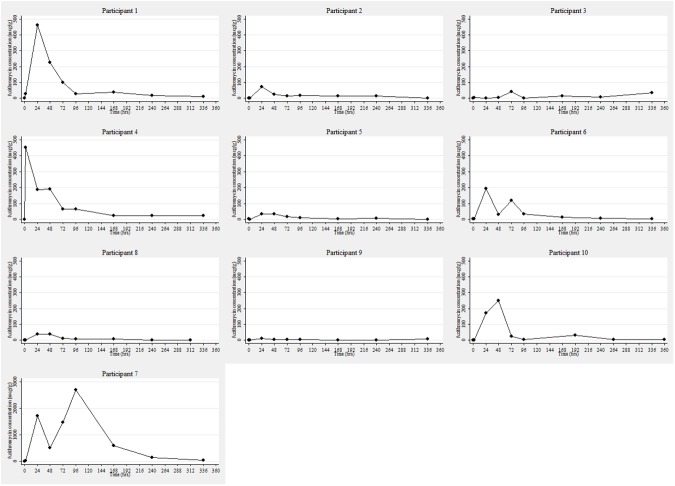
Chlamydia is the most common bacterial sexually transmitted infection among men who have sex with men. Repeat infection following treatment with 1g azithromycin is common and treatment failure of up to 22% has been reported. This study measured the pharmacokinetics of azithromycin in rectal tissue in men following a single 1g dose to assess whether azithromycin reaches the rectal site in adequate concentrations to kill chlamydia. Ten healthy men took a single oral dose of 1g azithromycin and provided nine self-collected swabs and one blood sample over 14 days. Participant demographics, medications, sexual behaviour, treatment side effects, lubricant use and douching practices were recorded with each swab. Drug concentration over time was determined using liquid chromatography-mass spectrometry and total exposure (AUC0-∞) was estimated from the concentration-time profiles. Following 1g of azithromycin, rectal concentrations peaked after a median of 24 hours (median 133mcg/g) and remained above the minimum inhibitory concentration for chlamydia (0.125mcg/mL) for at least 14 days in all men. AUC0-∞ was the highest ever reported in human tissue (13103((mcg/g).hr)). Tissue concentrations were not associated with weight (mg/kg), but data suggest that increased gastric pH could increase azithromycin levels and diarrhoea or use of water-based lubricants could decrease concentrations. High and sustained concentrations of azithromycin were found in rectal tissue following a single 1g dose suggesting that inadequate concentrations are unlikely to cause treatment failure. Factors effecting absorption (pH and diarrhoea) or drug depletion (douching and water-based lubricants) may be more important determinants of concentrations in situ.
Conflict of interest statement
Figures
References
-
- World Health Organisation. Global incidence and prevalence of selected curable sexually transmitted infections. 2008.
-
- National Notifiable Diseases Surveillance System. Number of notifications of Chlamydial infections, Australia, by age group and sex. 2015; http://www9.health.gov.au/cda/source/cda-index.cfm. accessed May 2016.
-
- Centers for Disease Control and Prevention. Sexually Transmitted Diseases Treatment Guidelines, 2015. Morb Mortal Wkly Rep. 2015;64(No.RR-3):1–138.
Publication types
MeSH terms
Substances
LinkOut - more resources
Full Text Sources
Other Literature Sources
Medical
