. 2017 Mar 14:8:356.
doi: 10.3389/fpls.2017.00356. eCollection 2017.

An Insight into microRNA156 Role in Salinity Stress Responses of Alfalfa

Affiliations

An Insight into microRNA156 Role in Salinity Stress Responses of Alfalfa

Muhammad Arshad et al. Front Plant Sci. .

Abstract

Salinity is one of the major abiotic stresses affecting alfalfa productivity. Developing salinity tolerant alfalfa genotypes could contribute to sustainable crop production. The functions of microRNA156 (miR156) have been investigated in several plant species, but so far, no studies have been published that explore the role of miR156 in alfalfa response to salinity stress. In this work, we studied the role of miR156 in modulating commercially important traits of alfalfa under salinity stress. Our results revealed that overexpression of miR156 increased biomass, number of branches and time to complete growth stages, while it reduced plant height under control and salinity stress conditions. We observed a miR156-related reduction in neutral detergent fiber under non-stress, and acid detergent fiber under mild salinity stress conditions. In addition, enhanced total Kjeldahl nitrogen content was recorded in miR156 overexpressing genotypes under severe salinity stress. Furthermore, alfalfa genotypes overexpressing miR156 exhibited an altered ion homeostasis under salinity conditions. Under severe salinity stress, miR156 downregulated SPL transcription factor family genes, modified expression of other important transcription factors, and downstream salt stress responsive genes. Taken together, our results reveal that miR156 plays a role in mediating physiological and transcriptional responses of alfalfa to salinity stress.

Keywords: alfalfa; biomass; ions; miR156; salt stress.


Figures
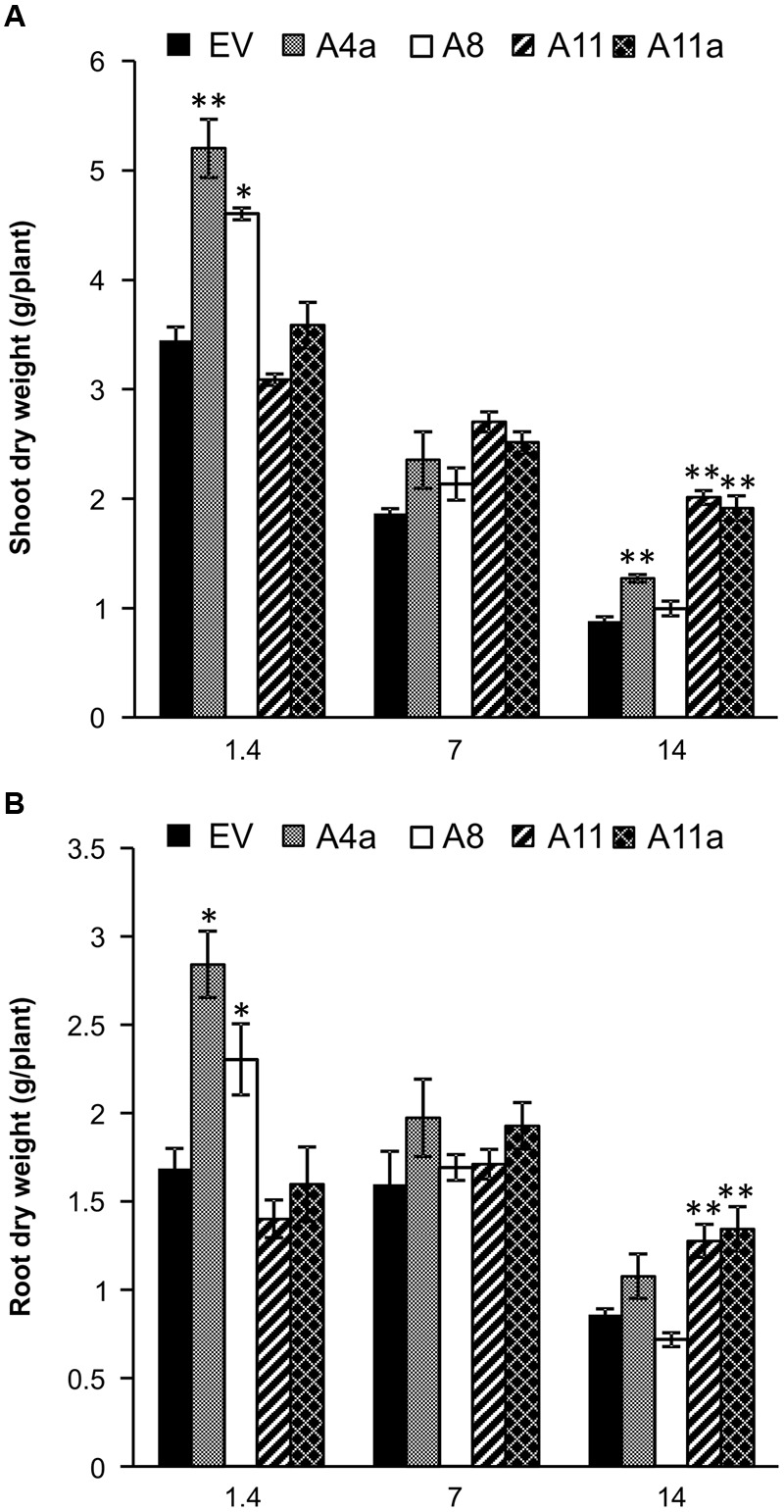
FIGURE 1
FIGURE 1
Dry biomass accumulation in (A) shoot and (B) root of empty vector (EV) and miR156OE genotypes under control, mild and severe salinity stress conditions. Data are average of 6–12 biological replications from each genotype at each stress level. Single asterisk () shows significance at P < 0.05 and double asterisk (∗∗) indicates P < 0.01 (ANOVA) between EV and miR156OE genotypes within each stress level (control; EC = 1.4 dSm-1, mild; EC = 7 dSm-1, severe; EC = 14 dSm-1).
FIGURE 2
FIGURE 2
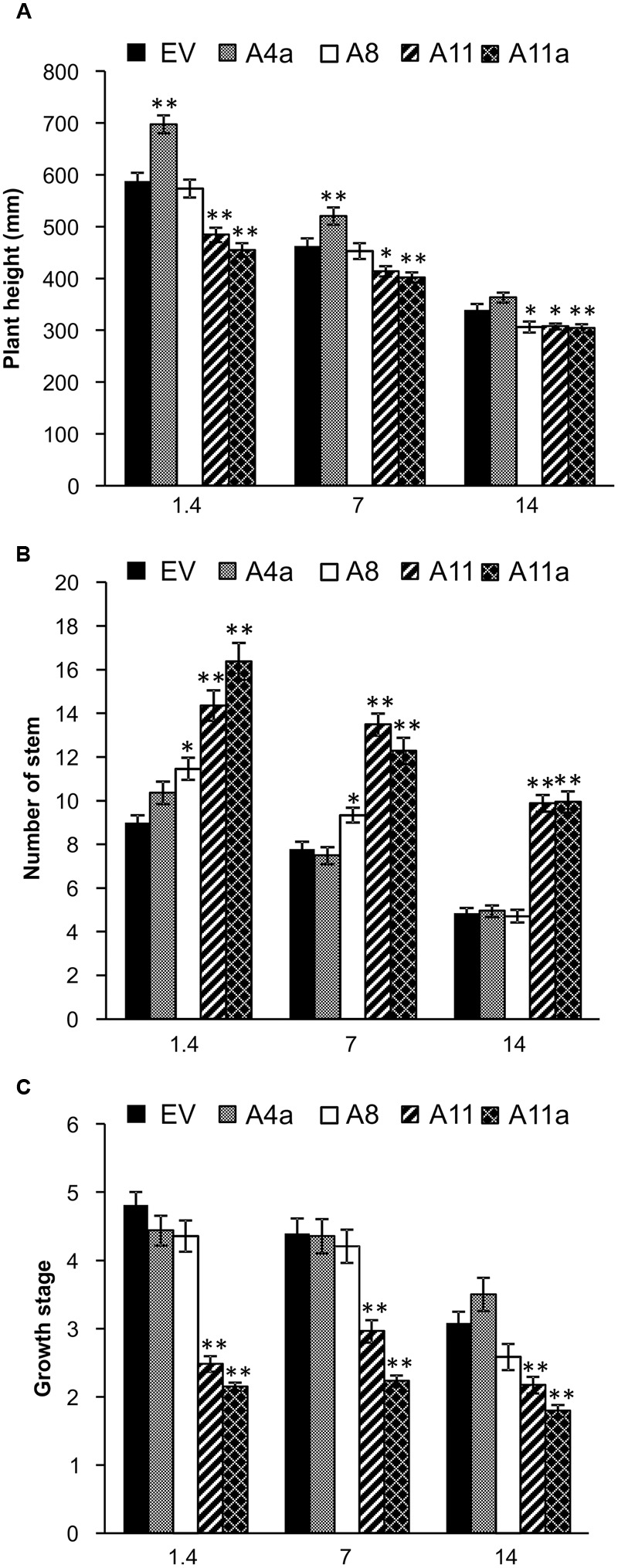
Physiological traits affected by miR156 overexpression under salinity stress. (A) Plant height, (B) stem number, and (C) growth stages. Data are average of four harvests where n = 12 for each harvest at each stress level (total 48 biological replications for each genotype at each stress level). Single asterisk () shows significance at P < 0.05 and double asterisk (∗∗) indicates P < 0.01 (ANOVA) between EV and miR156OE genotypes within each stress level (control; EC = 1.4 dSm-1, mild; EC = 7 dSm-1, severe; EC = 14 dSm-1).
FIGURE 3
FIGURE 3
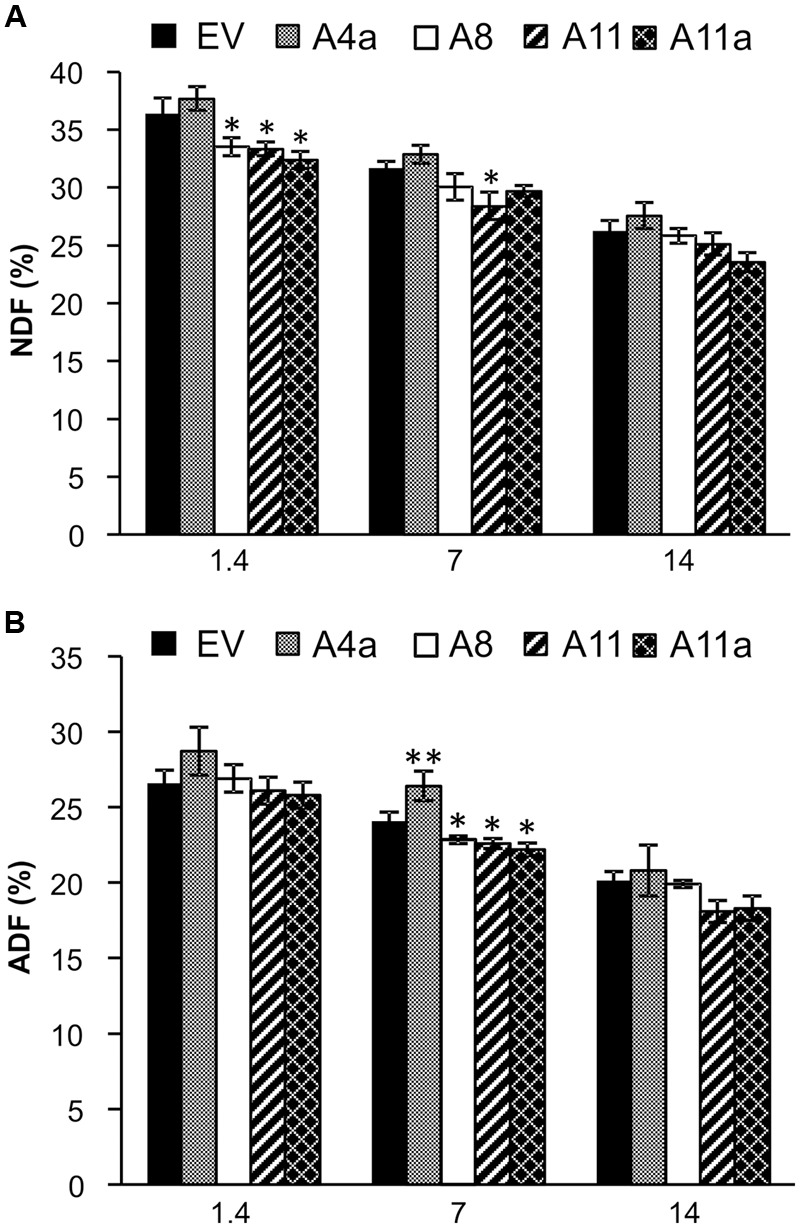
Effects of miR156 on fiber levels under salinity stress. (A) Neutral detergent fiber (NDF) and (B) acid detergent fiber (ADF) content. Data are average of three harvests where n = 3–4 for each harvest at each stress level (total at least nine biological replications for each genotype at each stress level). Single asterisk () shows significance at P < 0.05 and double asterisk (∗∗) indicates P < 0.01 (ANOVA) between EV and miR156OE genotypes within each stress level (control; EC = 1.4 dSm-1, mild; EC = 7 dSm-1, severe; EC = 14 dSm-1).
FIGURE 4
FIGURE 4
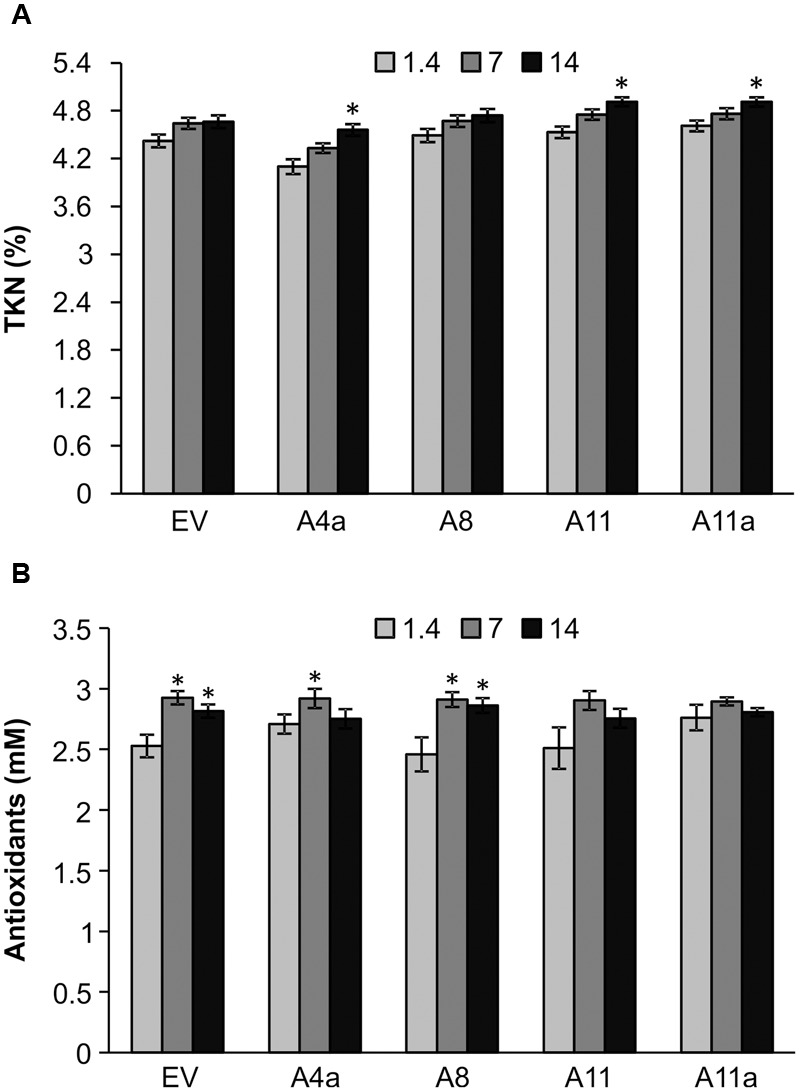
Nitrogen (A) and antioxidant (B) accumulation in EV and miR156OE plants under salinity stress conditions. Data are average of three harvests where n = 4 for each harvest at each stress level for nitrogen (total 12 biological replications for each genotype at each stress level), and one harvest for antioxidants where n = 4 for each harvest at each stress level. An asterisk () shows significance of mild (EC = 7 dSm-1) and severe (EC = 14 dSm-1) stress from control (EC = 1.4 dSm-1) for each genotype at P < 0.05 (ANOVA).
FIGURE 5
FIGURE 5
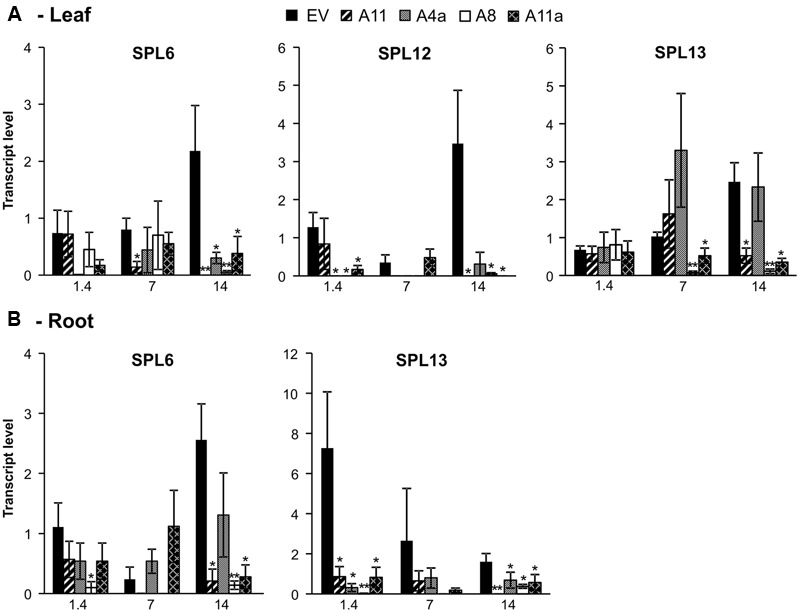
Relative transcript levels of miR156-target SPL genes in leaves (A) and roots (B). Data are average of 3–4 biological replicates for each genotype at each stress level. Single asterisk () shows significance at P < 0.05 and double asterisk (∗∗) indicates P < 0.01 (t-test) between EV and miR156OE genotypes within each stress level (control; EC = 1.4 dSm-1, mild; EC = 7 dSm-1, severe; EC = 14 dSm-1).
FIGURE 6
FIGURE 6
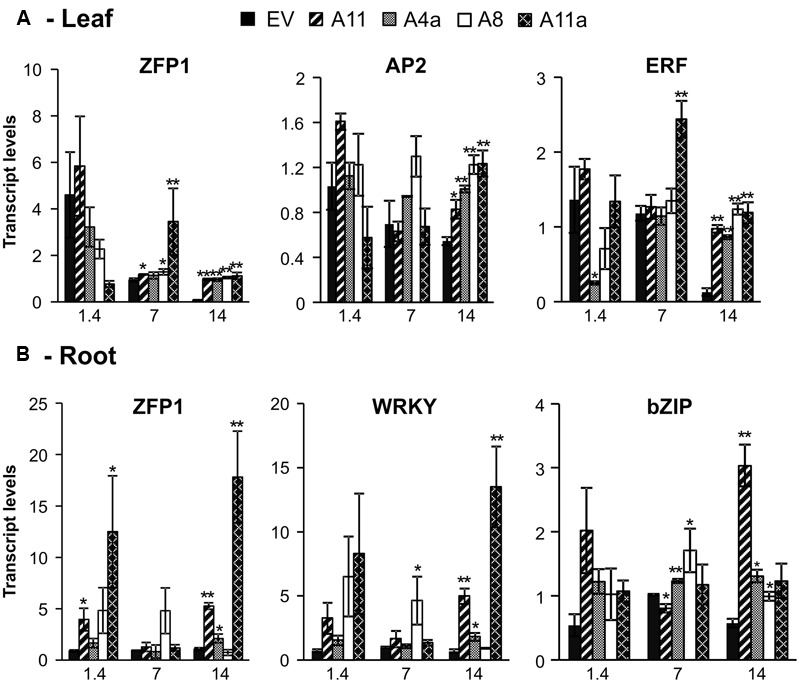
Relative transcript levels of abiotic stress responsive transcription factors in leaves (A) and roots (B). Data are average of 3–4 biological replicates for each genotype at each stress level. Single asterisk () shows significance at P < 0.05 and double asterisk (∗∗) indicates P < 0.01 (t-test) between EV and miR156OE genotypes within each stress level (control; EC = 1.4 dSm-1, mild; EC = 7 dSm-1, severe; EC = 14 dSm-1).
FIGURE 7
FIGURE 7
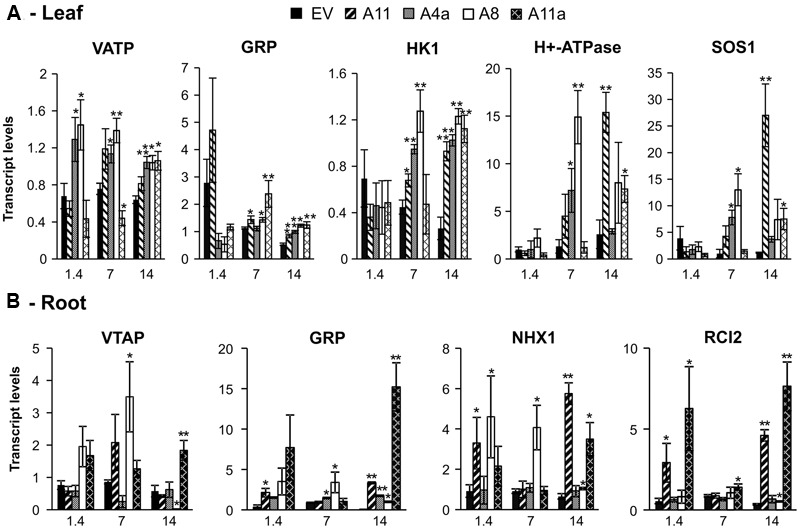
Relative transcript levels of salt stress responsive genes in leaves (A) and roots (B). Data are average of 3–4 biological replicates for each genotype at each stress level. Single asterisk () shows significance at P < 0.05 and double asterisk (∗∗) indicates P < 0.01 (t-test) between EV and miR156OE genotypes within each stress level (control; EC = 1.4 dSm-1, mild; EC = 7 dSm-1, severe; EC = 14 dSm-1).
FIGURE 8
FIGURE 8
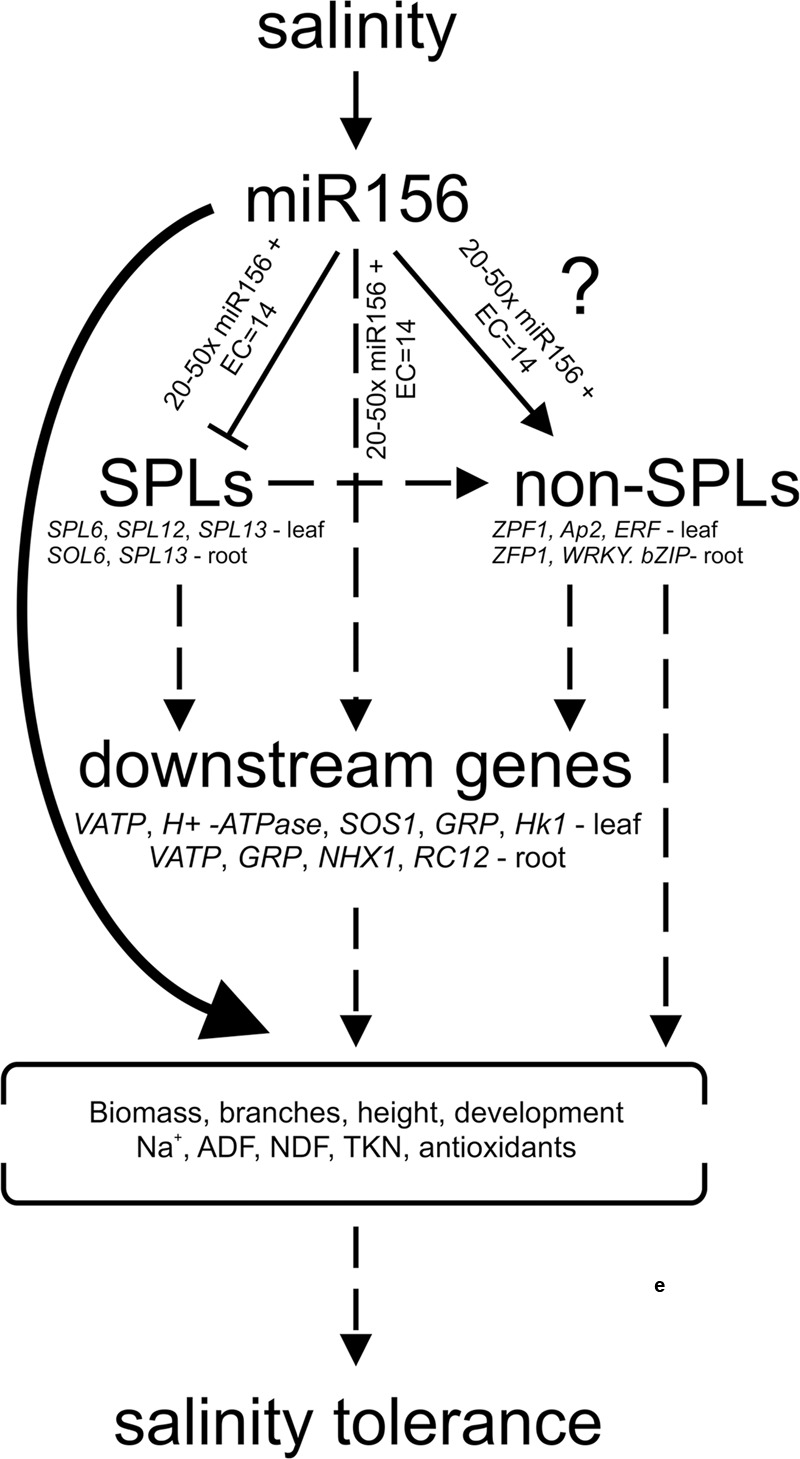
A model showing pathways for salinity tolerance in alfalfa. Solid lines or arrows indicate a pathway supported by experimental evidence or reports from literature. Dotted lines or arrows show a suggested pathway.

References

    1. Ahmed I. M., Dai H., Zheng W., Cao F., Zhang G., Sun D., et al. (2013). Genotypic differences in physiological characteristics in the tolerance to drought and salinity combined stress between Tibetan wild and cultivated barley. Plant. Physiol. Biochem. 63 49–60. 10.1016/j.plaphy.2012.11.004 - DOI - PubMed
    1. Allen E., Xie Z., Gustafson A. M., Carrington J. C. (2005). microRNA-directed phasing during trans-acting siRNA biogenesis in plants. Cell 121 207–221. 10.1016/j.cell.2005.04.004 - DOI - PubMed
    1. Apse M. P., Aharon G. S., Snedden W. A., Blumwald E. (1999). Salt tolerance conferred by overexpression of a vacuolar Na+/H+ antiport in Arabidopsis. Science 285 1256–1258. 10.1126/science.285.5431.1256 - DOI - PubMed
    1. Arshad M., Feyissa B. A., Amyot L., Aung B., Hannoufa A. (2017). MicroRNA156 improves drought stress tolerance in alfalfa (Medicago sativa) by silencing SPL13. Plant. Sci. 10.1016/j.plantsci.2017.01.018 - DOI - PubMed
    1. Aung B., Gruber M. Y., Amyot L., Omari K., Bertrand A., Hannoufa A. (2015a). MicroRNA156 as a promising tool for alfalfa improvement. Plant Biotechnol. J. 13 779–790. 10.1111/pbi.12308 - DOI - PubMed

LinkOut - more resources