


Ketamine in outpatient arthroscopic shoulder surgery: Effects on postoperative pain, hemodynamic stability and process times
- PMID: 28352709
- PMCID: PMC5152989
- DOI: 10.1515/med-2015-0043
Ketamine in outpatient arthroscopic shoulder surgery: Effects on postoperative pain, hemodynamic stability and process times
Abstract
Background: Pain after arthroscopic shoulder surgery is often severe, and establishing a pain treatment regimen that does not delay discharge can be challenging. The reported ability of ketamine to prevent opioid-induced hyperalgesia has not been investigated in this particular setting.
Methods: 300 adult patients scheduled for shoulder arthroscopy under general anesthesia were recruited for this observational clinical trial and were allotted to either receive 1mg/kg IV bolus of ketamine before surgery (ketamine group, KG) or to a control group (CG) without ketamine. NRS pain scores were obtained on the operative day and on postoperative days 1 and 2 and compared between groups. Secondary variables were blood pressure, heart rate, process times, satisfaction with the anesthetic and unwanted effects.
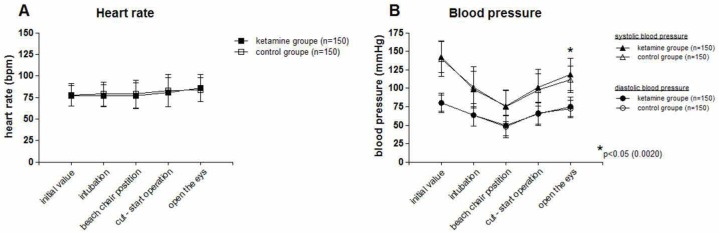
Results: Pain severity did not differ significantly between the groups at any time. Propofol injection rate and cumulative dose were higher in the KG. Heart rates and blood pressures were similar. Time to emergence and time in PACU were longer and vomiting was more frequent in patients given ketamine.
Conclusion: Preoperative low-dose ketamine added to a general anesthetic does not reduce perioperative pain after outpatient shoulder arthroscopy. It increases procedural times and the incidence of PONV.
Keywords: Ketamine; day surgery; general anaesthesia; outpatient; postoperative pain.
Figures
References
-
- Rawal N. Postdischarge complications and rehabilitation after ambulatory surgery. Curr Opin Anaesthesiol. 2008;21:736–742. - PubMed
-
- Angst MS, Clark JD. Opioid-induced hyperalgesia: A qualitative systematic review. Anesthesiology. 2006;104:570–587. - PubMed
-
- Chu LF, Angst MS, Clark D. Opioid-induced hyperalgesia in humans: Molecular mechanisms and clinical considerations. Clin J Pain. 2008;24:479–496. - PubMed
-
- Koppert W, Schmelz M. The impact of opioid-induced hyperalgesia for postoperative pain. Best Pract Res Clin Anaesthesiol. 2007;21:65–83. - PubMed
-
- Kohrs R, Durieux ME. Ketamine: Teaching an old drug new tricks. Anesth Analg. 1998;87:1186–1193. - PubMed
LinkOut - more resources
Full Text Sources
Other Literature Sources