Review
. 2017 Aug;74(16):2959-2977.
doi: 10.1007/s00018-017-2509-x. Epub 2017 Mar 28.

Mechanisms and consequences of intestinal dysbiosis

Affiliations
Review

Mechanisms and consequences of intestinal dysbiosis

G Adrienne Weiss et al. Cell Mol Life Sci. 2017 Aug.

Abstract

The composition of the gut microbiota is in constant flow under the influence of factors such as the diet, ingested drugs, the intestinal mucosa, the immune system, and the microbiota itself. Natural variations in the gut microbiota can deteriorate to a state of dysbiosis when stress conditions rapidly decrease microbial diversity and promote the expansion of specific bacterial taxa. The mechanisms underlying intestinal dysbiosis often remain unclear given that combinations of natural variations and stress factors mediate cascades of destabilizing events. Oxidative stress, bacteriophages induction and the secretion of bacterial toxins can trigger rapid shifts among intestinal microbial groups thereby yielding dysbiosis. A multitude of diseases including inflammatory bowel diseases but also metabolic disorders such as obesity and diabetes type II are associated with intestinal dysbiosis. The characterization of the changes leading to intestinal dysbiosis and the identification of the microbial taxa contributing to pathological effects are essential prerequisites to better understand the impact of the microbiota on health and disease.

Keywords: Bacteria; Bacteriocins; Bacteriophage; Cancer; Cytokine; Mucin; Necrotizing enterocolitis; Oxidative stress.


Figures
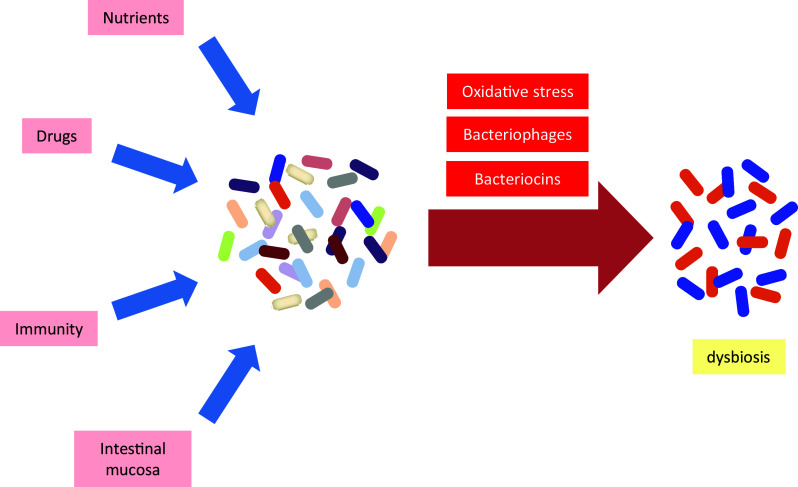
Fig. 1
Fig. 1
Factors contributing to intestinal dysbiosis. The gut microbiota is subject to natural variations induced by the changing supply of nutrients, drugs, the immune system, and the intestinal mucosa. The action of stress factors such as oxidative stress, the induction of bacteriophages, and secretion of bacteriocins amplify the changes in microbial composition leading to decreased diversity and outgrowth of specific bacterial taxa
Fig. 2
Fig. 2
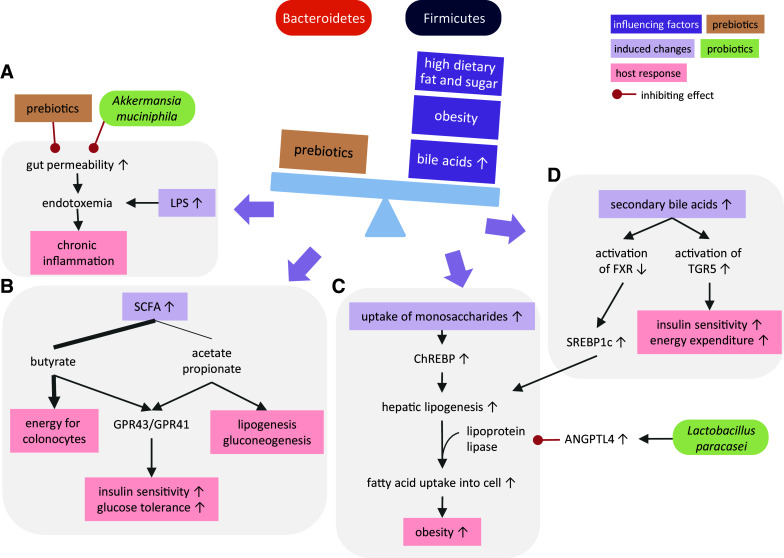
Consequences of nutritionally induced imbalance between Firmicutes and Bacteroidetes. Obesity, high dietary fat and sugar intake and an enlarged bile acid pool decrease the Bacteroidetes to Firmicutes ratio. Changes in this ratio affect chronic inflammation, and metabolic changes related to energy supply to colonocytes, lipogenesis, gluconeogenesis, insulin sensitivity and thereby glucose tolerance. Bacterial LPS (a), SCFA (b), increased monosaccharide uptake (c) and secondary bile metabolisms (d) are key mediators of such metabolic adaptations. ANGPTL4 angiopoietin-like factor IV, FXR farnesoid X receptor, TGR5 G-protein-coupled bile acid receptor, SCFA short chain fatty acid, GPR43/GPR41 G-protein-coupled receptors 43/41, LPS lipopolysaccharide, ChREBP carbohydrate response element-binding protein, SREBP1c sterol regulatory element-binding protein 1c
Fig. 3
Fig. 3
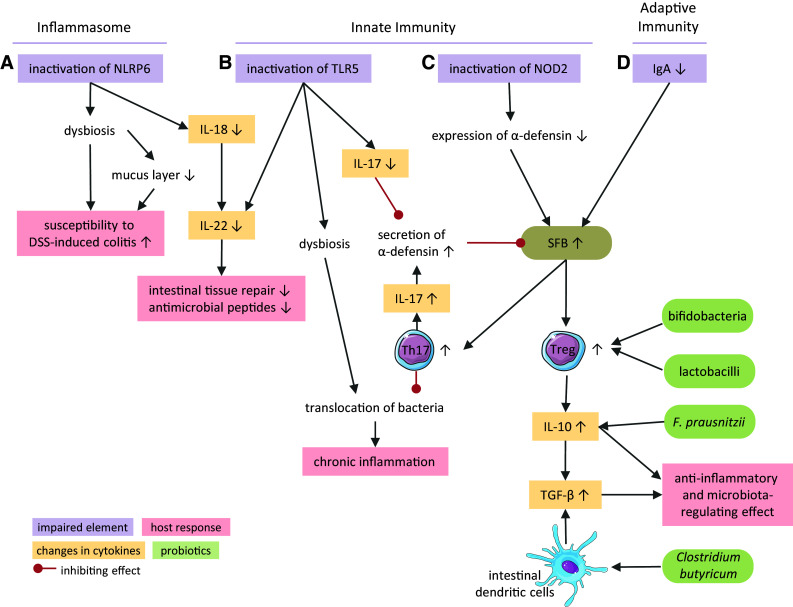
Mechanisms of immune regulation of the gut microbiota. Elements of the inflammasome (a), the innate (b, c) and adaptive immune systems (d) control the gut microbiota composition. Interplay between cytokines, immune cells, bacterial groups, and the intestinal environment affects inflammation, tissue repair, and secretion of antimicrobial peptides. TLR5 Toll-like receptor 5, NOD2 nucleotide oligomerization domain 2 receptor, NLRP6 NOD-like receptor family pyrin domain containing 6, IgA immunoglobulin A, IL interleukin, DSS dextran sulfate sodium, SFB segmented filamentous bacteria, Th17 cells T helper 17 cells, Treg cells regulatory T cells, TGF-β transforming growth factor beta

References

    1. Sonnenburg JL, Backhed F. Diet-microbiota interactions as moderators of human metabolism. Nature. 2016;535(7610):56–64. doi: 10.1038/nature18846. - DOI - PMC - PubMed
    1. LeBlanc JG, et al. Bacteria as vitamin suppliers to their host: a gut microbiota perspective. Curr Opin Biotechnol. 2013;24(2):160–168. doi: 10.1016/j.copbio.2012.08.005. - DOI - PubMed
    1. Honda K, Littman DR. The microbiota in adaptive immune homeostasis and disease. Nature. 2016;535(7610):75–84. doi: 10.1038/nature18848. - DOI - PubMed
    1. Thaiss CA, et al. The microbiome and innate immunity. Nature. 2016;535(7610):65–74. doi: 10.1038/nature18847. - DOI - PubMed
    1. Mayer EA, Tillisch K, Gupta A. Gut/brain axis and the microbiota. J Clin Invest. 2015;125(3):926–938. doi: 10.1172/JCI76304. - DOI - PMC - PubMed