


DOCA-Salt Hypertension: an Update
- PMID: 28353076
- PMCID: PMC6402842
- DOI: 10.1007/s11906-017-0731-4
DOCA-Salt Hypertension: an Update
Abstract
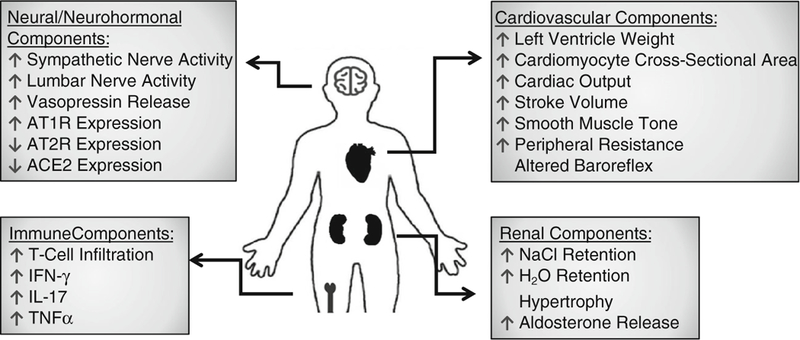
Hypertension is a multifaceted disease that is involved in ∼40% of cardiovascular mortalities and is the result of both genetic and environmental factors. Because of its complexity, hypertension has been studied by using various models and approaches, each of which tends to focus on individual organs or tissues to isolate the most critical and treatable causes of hypertension and the related damage to end-organs. Animal models of hypertension have ranged from Goldblatt's kidney clip models in which the origin of the disease is clearly renal to animals that spontaneously develop hypertension either through targeted genetic manipulations, such as the TGR(mRen2)27, or selective breeding resulting in more enigmatic origins, as exemplified by the spontaneously hypertensive rat (SHR). These two genetically derived models simulate the less-common human primary hypertension in which research has been able to define a Mendelian linkage. Several models are more neurogenic or endocrine in nature and illustrate that crosstalk between the nervous system and hormones can cause a significant rise in blood pressure (BP). This review will examine one of these neurogenic models of hypertension, i.e., the deoxycorticosterone acetate (DOCA), reduced renal mass, and high-salt diet (DOCA-salt) rodent model, one of the most common experimental models used today. Although the DOCA-salt model is mainly believed to be neurogenic and has been shown to impact the central and peripheral nervous systems, it also significantly involves many other body organs.
Keywords: Cardiovascular; DOCA-salt; Immune; Neurogenic hypertension; Neurohormonal; Renal.
Conflict of interest statement
Figures
References
-
- Carretero OA, Oparil S. Essential hypertension part I: definition and etiology. Circulation. 2000:329–35 - PubMed
-
- Guyenet PG. The sympathetic control of blood pressure. Nat Rev Neurosci. 2006;7(5):335–46. - PubMed
-
- Zicha J, Kunes J, Lebl M, Pohlova I, Slaninova J, Jelinek J. Antidiuretic and pressor actions of vasopressin in age-dependent DOCA-salt hypertension. Am J Phys. 1989;256(1 Pt 2):R138–45. - PubMed
-
- Anderson PG, Bishop SP, Digerness SB. Coronary vascular function and morphology in hydralazine treated DOCA salt rats. J Mol Cell Cardiol. 1988;20(10):955–67. - PubMed
Publication types
MeSH terms
Substances
Grants and funding
LinkOut - more resources
Full Text Sources
Other Literature Sources
Medical
