. 2017 Mar 28;18(13):3178-3191.
doi: 10.1016/j.celrep.2017.03.009.

Severity of Demyelinating and Axonal Neuropathy Mouse Models Is Modified by Genes Affecting Structure and Function of Peripheral Nodes

Affiliations

Severity of Demyelinating and Axonal Neuropathy Mouse Models Is Modified by Genes Affecting Structure and Function of Peripheral Nodes

Kathryn H Morelli et al. Cell Rep. .

Abstract

Charcot-Marie-Tooth (CMT) disease is a clinically and genetically heterogeneous group of inherited polyneuropathies. Mutations in 80 genetic loci can cause forms of CMT, resulting in demyelination and axonal dysfunction. The clinical presentation, including sensory deficits, distal muscle weakness, and atrophy, can vary greatly in severity and progression. Here, we used mouse models of CMT to demonstrate genetic interactions that result in a more severe neuropathy phenotype. The cell adhesion molecule Nrcam and the Na+ channel Scn8a (NaV1.6) are important components of nodes. Homozygous Nrcam and heterozygous Scn8a mutations synergized with both an Sh3tc2 mutation, modeling recessive demyelinating Charcot-Marie-Tooth type 4C, and mutations in Gars, modeling dominant axonal Charcot-Marie-Tooth type 2D. We conclude that genetic variants perturbing the structure and function of nodes interact with mutations affecting the cable properties of axons by thinning myelin or reducing axon diameter. Therefore, genes integral to peripheral nodes are candidate modifiers of peripheral neuropathy.

Keywords: Charcot-Marie-Tooth disease; axons; degeneration; genetic modifiers; hereditary sensory; length constant; motor neuropathy.


Figures

Figure 1
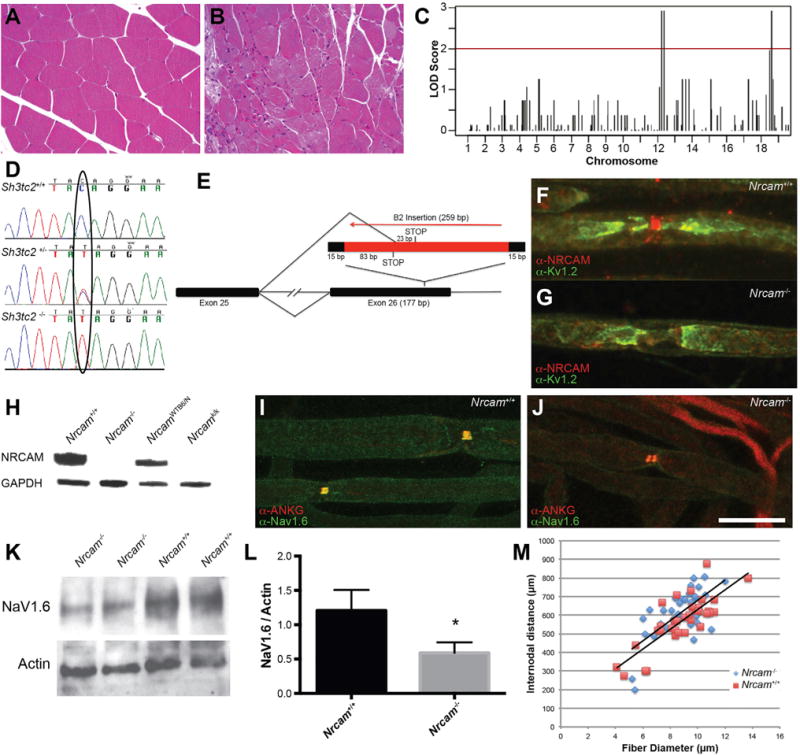
Figure 1. Nm4302 Mutations in Sh3tc2 and Nrcam
(A and B) Muscle histology from the gastrocnemius of control (A) and an affected Nm4302 mouse (B). (C) Genetic mapping associations on both Chr12 and Chr18. The logarithm of the odds score (LOD, y axis) of SNPs is plotted versus their chromosomal location (x axis). (D) Chromatograms of sequencing genomic DNA of a wild-type (top), Sh3tc2 heterozygote (middle), and Sh3tc2 homozygote (bottom) show the C to T conversion. (E) The B2 element insertion in exon 26 of Nrcam results in a 259-bp insertion with a duplication of the flanking 15 bp of the exon. Splicing from exon 25 to 26 results in a premature stop codon in the B2 element sequence, and splicing into the B2 element itself results in a premature stop codon 23 bp downstream of the new splice junction. (F and G) Immunolabeling of NRCAM (red) and KV1.2 (green) at nodes of Ranvier in teased sciatic nerve axons from wild-type mice (F) or Nrcam mutant mice (G) reveals an absence of signal in the mutant, confirmed in teased nerves from three mice per genotype. (H) Western blotting protein from brain extracts revealed an absence of signal in Nrcam mutant mice (Nrcam−/−). Mice from the KOMP2 program carrying an Nrcam mutation (Nrcamk/k) and a strain-matched littermate control (NrcamWTB6/N) were used as controls. Wild-type littermates from each Nrcam mutant strain contain protein at the predicted size, and anti-GAPDH was used as a loading control (below). Three independent blots were probed, and three mice per genotype were examined. (I) Wild-type nodes of Ranvier have a single, colocalized site of NaV1.6 and ankyrinG immunoreactivity. (J) In Nrcam mutant mice, nodes “split” with two sites of NaV1.6 and ankyrinG labeling. Four mice of each genotype were examined. (K) Western blot of sciatic nerve lysates probed with antibodies against NaV1.6 revealed reduced signal relative to beta-actin loading control. Proteins migrated at their anticipated molecular weights of ~225 and ~42 kDa for NaV1.6 and beta-actin, respectively. (L) Quantification of (K) revealed a 51% decrease in NaV1.6 intensity (three Nrcam−/− and three C57BL/6J control analyzed, p = 0.03), mean ± SD. (M) The relationship between internodal distance and fiber diameter was not changed in Nrcam−/− mice compared to C57BL/6 controls (n = 3 mice per genotype, 37 Nrcam−/− and 34 Nrcam+/+ axons measured). Scale bar in (J), 7 μm for (F) and (G) and 14 μm for (I) and (J).
Figure 2
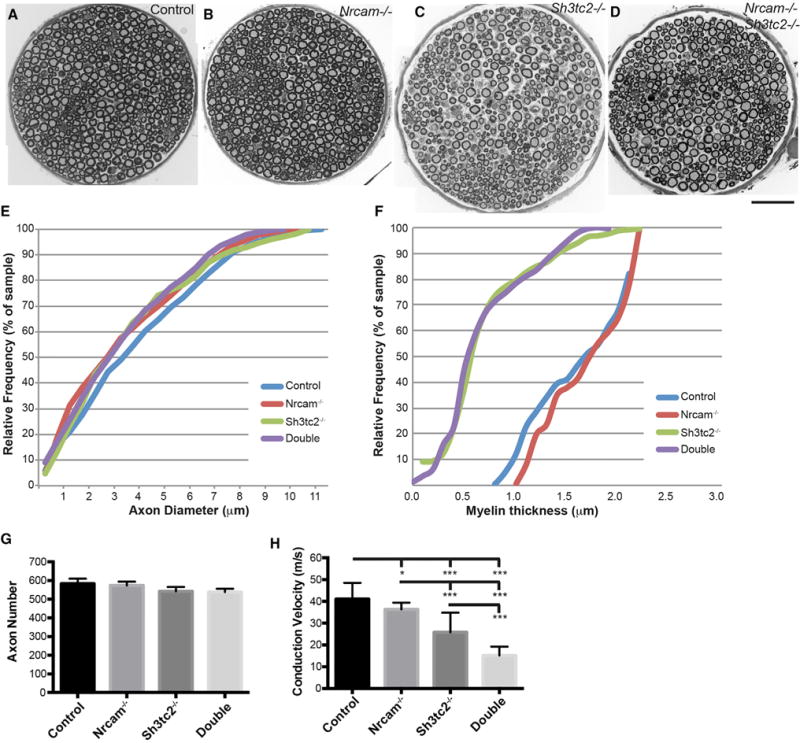
Figure 2. Peripheral Nerve Anatomy and Function in Sh3tc2 and Nrcam Mutations
(A–D) Montages of cross-sections of the motor branch of the femoral nerve from wild-type (A), Nrcam−/− (B), Sh3tc2−/− (C), and double-mutant (D) mice are shown. (E) A cumulative histogram of axon diameters indicates no change in the single or double mutants. (F) Cumulative histograms of myelin thickness reveal no change in Nrcam−/− nerves, a significant decrease in Sh3tc2−/− nerves, but no additional decrease in double-mutant nerves. (G) Axon number was not changed in any genotype. (H) NCV was reduced in Nrcam−/− mice, was reduced to a greater degree in Sh3tc2−/− mice, and was further reduced in double-mutant mice. Data from eight mice per genotype are presented in (E)–(G); (H) includes ten control, 14 Nrcam−/−, ten Sh3tc2−/−, and 14 double-mutant mice. Values in (G) and (H) are mean ± SD. Mice were from 73 to 145 days old (average 104 days) in (E)–(G) and 57–125 days old (average 103 days) in (H). *p < 0.05, **p < 0.01. Scale bar in (D), 50 μm for (A)–(D).
Figure 3
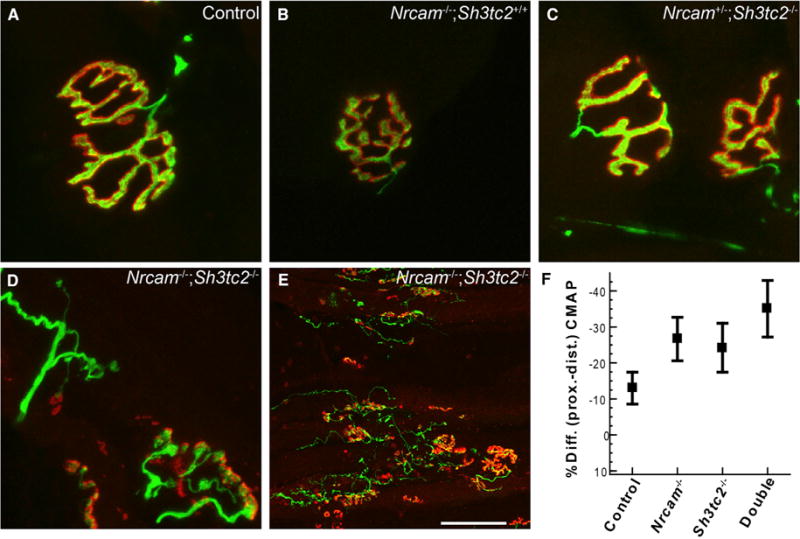
Figure 3. Neuromuscular Junction Sprouting and Fragmentation in Nrcam;Sh3tc2 Double-Mutant Mice
(A) Normally, the motor nerve terminal (green) completely overlays the postsynaptic acetylcholine receptors (red). (B and C) Mice with mutations in Nrcam (B) or Sh3tc2 (C) did not show abnormal NMJ morphology or nerve occupancy. (D and E) Double-mutant mice showed profound NMJ defects after 3.5 months of age, with sprouting nerve terminals, sites of partial and complete denervation, aneural puncta of AChRs, and fragmentation of NMJs. Few if any normal NMJs persist, as shown at a lower magnification (E). Sprouting and NMJ dysmorphology (D and E) were observed in all double-mutant mice >3 months of age (n = 5) and were never observed in control or single-mutant mice. (F) The iCMAP evoked from distal stimulation was larger than when evoked by proximal stimulation in double-mutant mice (mean ± SD). The mice in (F) are the same as those analyzed in Figure 2H. Scale bar in (E) represents 14 μm in (A)–(D) and 84 μm in (E).
Figure 4
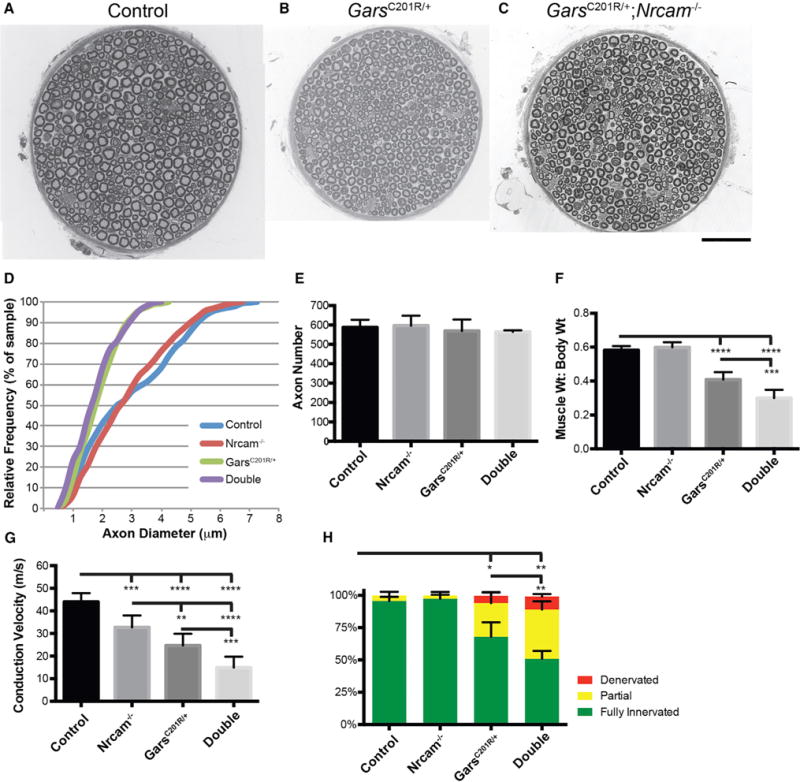
Figure 4. Axonal Neuropathy Is Exacerbated by Loss of Nrcam
(A–C) Cross-sections of the motor branch of the femoral nerve were examined for 3-month-old wild-type (A, shown as a montage), GarsC201R/+ (B), and GarsC201R/+; Nrcam−/− (C) mice. (D) Axon diameters were reduced in GarsC201R/+ compared to wild-type and Nrcam−/− mice, with no further reduction in double mutants. (E) Axon number was not reduced in any genotype. (F) Muscle size was assessed by the ratio of muscle weight (g) to total body weight (g) (MW/BW*100) for the triceps surae. No change was observed in Nrcam−/− mice, but GarsC201R/+ mice showed reduced MW:BW. Double-mutant mice showed the largest reduction in MW:BW ratio. (G) NCV was more severely reduced in double-mutant mice than in either single mutant. (H) The GarsC201R/+ mice have reduced NMJ occupancy, with more partial innervation of NMJs, and some instances of complete denervation. NMJ occupancy was more severely reduced in double-mutant mice, whereas Nrcam−/− mice had no change in NMJ occupancy compared to controls. (D) and (E) are based on eight mice per genotype, (F) on seven control, seven Nrcam−/−, nine GarsC201R/+, and eight double-mutant mice, (G) on eight control, seven Nrcam−/−, nine GarsC201R/+, and nine double-mutant mice, and (H) on eight control, six Nrcam−/−, seven GarsC201R/+, and four double-mutant mice. Values for (E)–(H) are mean ± SD. Animals were 3 months of age, and an approximately equal mix of male and females were used. *p < 0.05, **p < 0.01, ***p < 0.001. Scale bar in (C), 50 μm for (A)–(C).
Figure 5
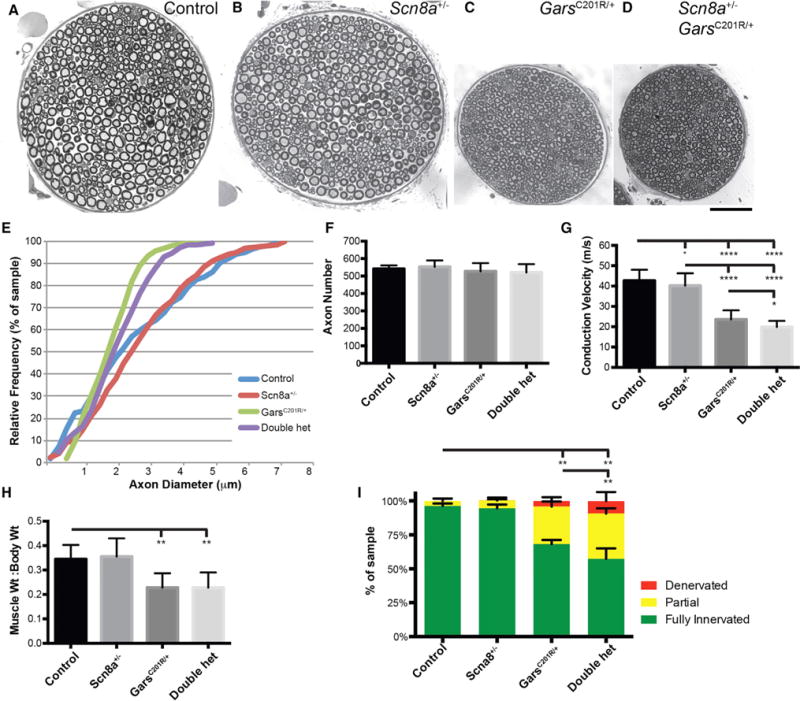
Figure 5. Axonal Neuropathy Is Exacerbated by Partial Impairment of NaV1.6/Scn8a+/−
(A–D) Cross-sections from the motor branch of the femoral nerve for control (A), Scn8a+/− (B), GarsC201R/+ (C), and double-heterozygous mice (D); note (A) and (B) are montages to capture the entire nerve. (E) Axon diameters were not changed in Scn8a+/−, and double-heterozygous mice did not show a greater reduction in axon diameters than GarsC201R/+ alone. (F) Axon number in the motor branch of the femoral nerve was unchanged in any genotype. (G) NCV was mildly reduced in Scn8a+/− mice, and double heterozygotes had conduction velocities reduced below either single mutant. (H) No muscle atrophy was observed in Scn8a+/− mice, and no additional muscle atrophy beyond the effects of GarsC201R/+ was observed in double heterozygotes. (I) Scn8a+/− mice did not show changes in innervation at the NMJ, but double-heterozygous mice had more partial innervation and denervation at NMJs than GarsC201R/+ mice. Values in (F)–(I) are mean ± SD. Analyses were performed on eight mice per genotype at 3 months of age with an approximately equal mix of males and females. *p < 0.05, **p < 0.01. Scale bar in (D), 50 μm for (A)–(D).
Figure 6
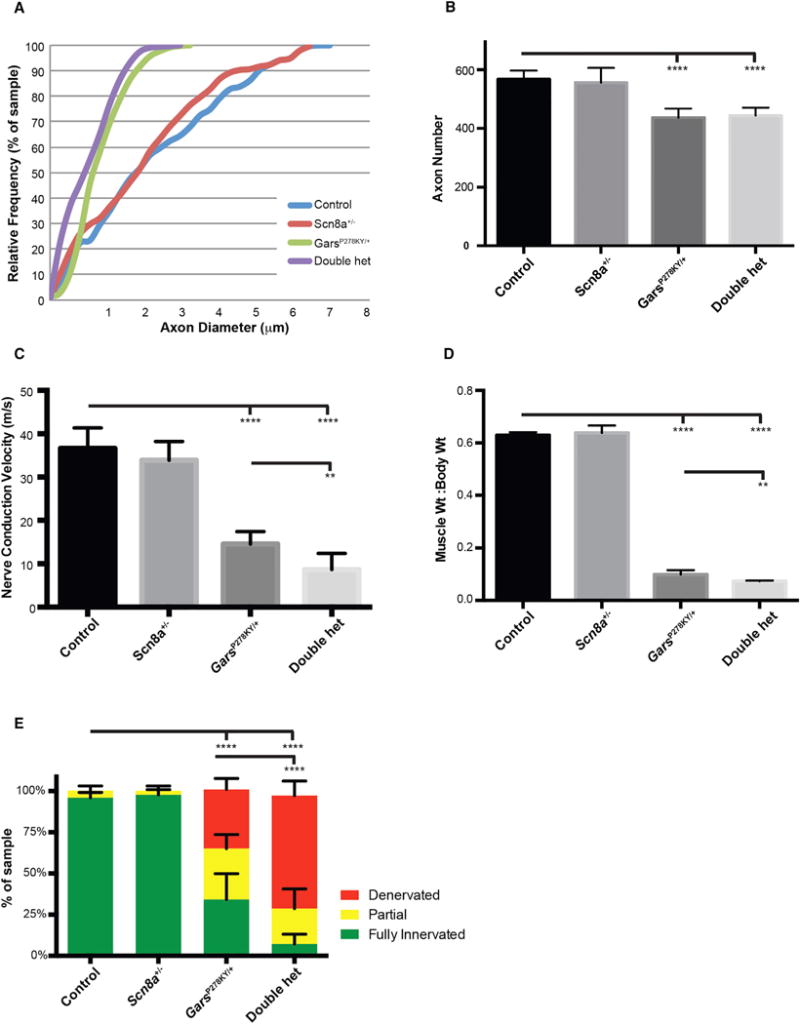
Figure 6. Scn8a Heterozygosity Enhances a More Severe Axonal Neuropathy Model, GarsP278KY/+
(A) There was no additional reduction in axon diameter in the motor branch of the femoral nerve over GarsP278KY/+ in mice also heterozygous for Scn8a. (B) The GarsP278KY/+ mice have fewer myelinated axons, but this reduction was not exacerbated by Scn8a heterozygosity. (C) NCV was further reduced in double heterozygotes, beyond the effects of GarsP278KY/+ alone. (D) Additional muscle atrophy was present in double-heterozygous mice. (E) Additional defects were present at NMJs, with increased denervation and partial innervation, and virtually no fully innervated junctions. Analyses were performed on eight mice of each genotype between 2.5 and 3.5 months of age, except (C), in which eight control and nine Scn8a+/− mice were used, and results from one GarsP278KY/+ and two double-heterozygous mice were not included because a reliable EMG signal and conduction velocity could not be ascertained. Values in (B)–(E) are mean ± SD. An approximately equal mix of male and female mice were used. *p < 0.05, **p < 0.01 ***p < 0.001, ****p < 0.0001.
Figure 7
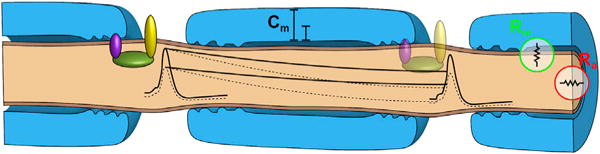
Figure 7. Compromised Axonal Length Constants Synergize with Compromised Depolarization at Nodes
Changes in either the length constant or the amplitude of depolarization (dotted lines) are tolerated, but, when both are changed, depolarization may be subthreshold and salatory conduction may fail.

References

    1. Achilli F, Bros-Facer V, Williams HP, Banks GT, AlQatari M, Chia R, Tucci V, Groves M, Nickols CD, Seburn KL, et al. An ENU-induced mutation in mouse glycyl-tRNA synthetase (GARS) causes peripheral sensory and motor phenotypes creating a model of Charcot-Marie-Tooth type 2D peripheral neuropathy. Dis Model Mech. 2009;2:359–373. - PMC - PubMed
    1. Amor V, Feinberg K, Eshed-Eisenbach Y, Vainshtein A, Frechter S, Grumet M, Rosenbluth J, Peles E. Long-term maintenance of Na+ channels at nodes of Ranvier depends on glial contact mediated by gliomedin and NrCAM. J Neurosci. 2014;34:5089–5098. - PMC - PubMed
    1. Antonellis A, Ellsworth RE, Sambuughin N, Puls I, Abel A, Lee-Lin SQ, Jordanova A, Kremensky I, Christodoulou K, Middleton LT, et al. Glycyl tRNA synthetase mutations in Charcot-Marie-Tooth disease type 2D and distal spinal muscular atrophy type V. Am J Hum Genet. 2003;72:1293–1299. - PMC - PubMed
    1. Arnaud E, Zenker J, de Preux Charles AS, Stendel C, Roos A, Médard JJ, Tricaud N, Kleine H, Luscher B, Weis J, et al. SH3TC2/KIAA1985 protein is required for proper myelination and the integrity of the node of Ranvier in the peripheral nervous system. Proc Natl Acad Sci USA. 2009;106:17528–17533. - PMC - PubMed
    1. Bonora E, Lamb JA, Barnby G, Sykes N, Moberly T, Beyer KS, Klauck SM, Poustka F, Bacchelli E, Blasi F, et al. Mutation screening and association analysis of six candidate genes for autism on chromosome 7q. Eur J Hum Genet. 2005;13:198–207. - PubMed

MeSH terms

Substances