


Towards Personalized Medicine in Melanoma: Implementation of a Clinical Next-Generation Sequencing Panel
- PMID: 28356599
- PMCID: PMC5428782
- DOI: 10.1038/s41598-017-00606-w
Towards Personalized Medicine in Melanoma: Implementation of a Clinical Next-Generation Sequencing Panel
Abstract
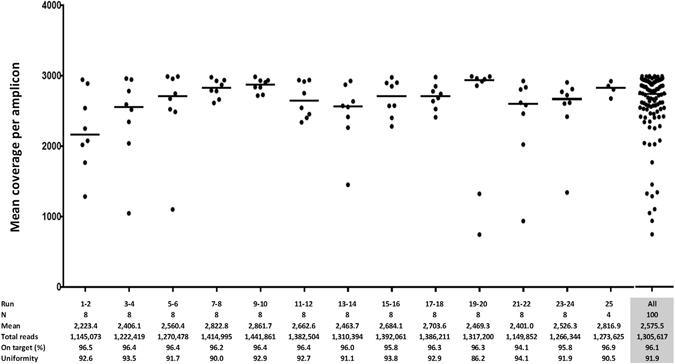
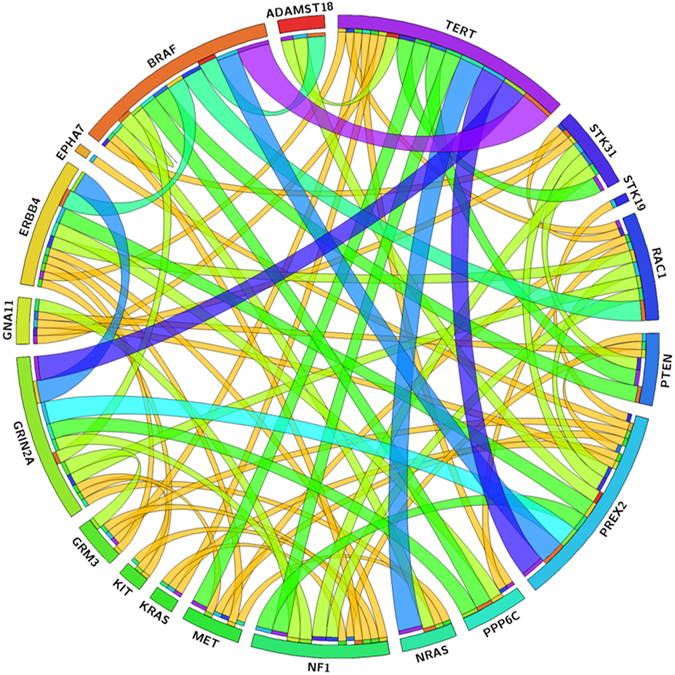
Molecular diagnostics are increasingly performed routinely in the diagnosis and management of patients with melanoma due to the development of novel therapies that target specific genetic mutations. The development of next-generation sequencing (NGS) technologies has enabled to sequence multiple cancer-driving genes in a single assay, with improved sensitivity in mutation detection. The main objective of this study was the design and implementation of a melanoma-specific sequencing panel, and the identification of the spectrum of somatic mutations in a series of primary melanoma samples. A custom panel was designed to cover the coding regions of 35 melanoma-related genes. Panel average coverage was 2,575.5 reads per amplicon, with 92,8% of targeted bases covered ≥500×. Deep coverage enabled sensitive discovery of mutations in as low as 0.5% mutant allele frequency. Eighty-five percent (85/100) of the melanomas had at least one somatic mutation. The most prevalent mutated genes were BRAF (50%;50/199), NRAS (15%;15/100), PREX2 (14%;14/100), GRIN2A (13%;13/100), and ERBB4 (12%;12/100). Turn-around-time and costs for NGS-based analysis was reduced in comparison to conventional molecular approaches. The results of this study demonstrate the cost-effectiveness and feasibility of a custom-designed targeted NGS panel, and suggest the implementation of targeted NGS into daily routine practice.
Conflict of interest statement
The authors declare that they have no competing interests.
Figures

References
-
- Niezgoda A, Niezgoda P, Czajkowski R. Novel Approaches to Treatment of Advanced Melanoma: A Review on Targeted Therapy and Immunotherapy. Biomed Res Int. 2015;2015:851387. Glenn TC. Field guide to next-generation DNA sequencers. Mol Ecol Resour. 2011;11:759–769. doi: 10.1111/j.1755-0998.2011.03024.x. - DOI - PMC - PubMed
Publication types
MeSH terms
Substances
LinkOut - more resources
Full Text Sources
Other Literature Sources
Medical
Research Materials
Miscellaneous
