


From inflammation to gastric cancer: Role of Helicobacter pylori
- PMID: 28356927
- PMCID: PMC5351277
- DOI: 10.3892/ol.2016.5506
From inflammation to gastric cancer: Role of Helicobacter pylori
Abstract
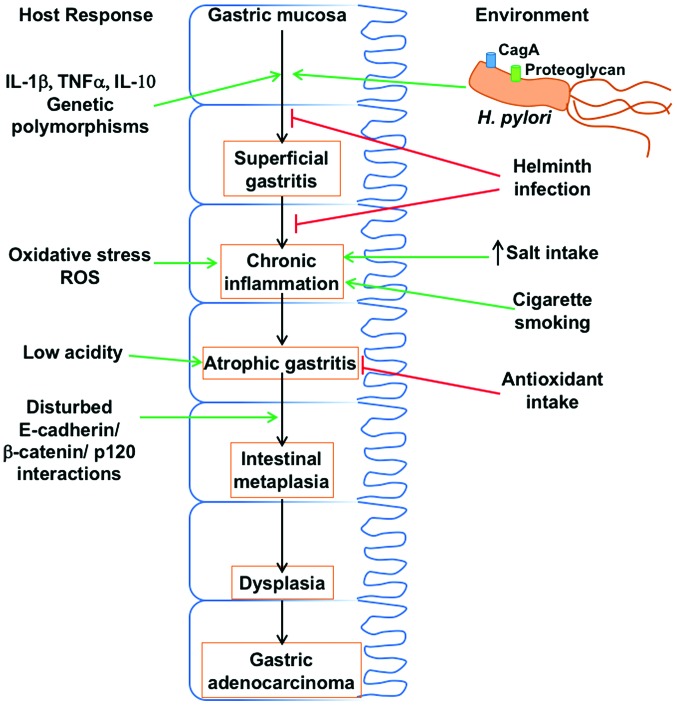
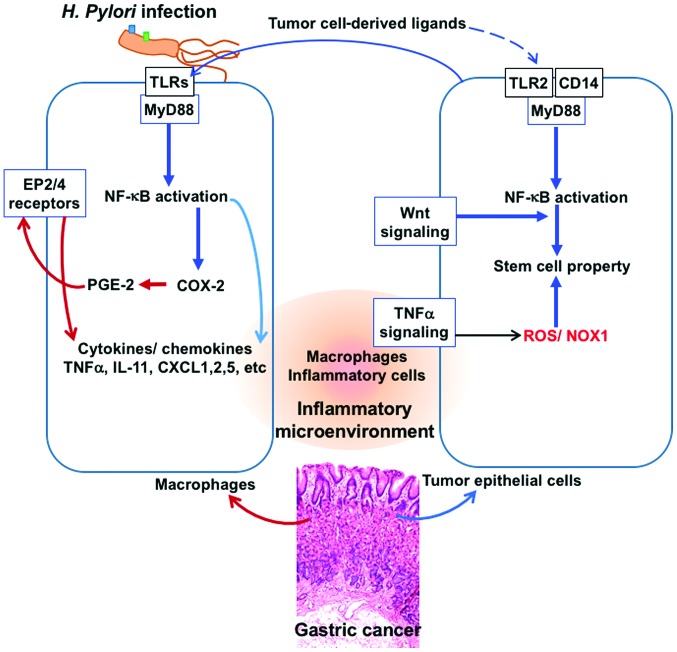
Gastric cancer is a multifactorial disease and a leading cause of mortality and the risk factors for this include environmental factors and factors that influence host-pathogen interaction and complex interplay between these factors. Gastric adenocarcinomas are of two types, namely intestinal and diffuse type, and Helicobacter pylori (H. pylori) infection has been suspected of being causally linked to the initiation of chronic active gastritis, which leads to adenocarcinoma of the intestinal type. Even though most individuals with H. pylori infection do not show any clinical symptoms, long-term infection leads to inflammation of gastric epithelium and approximately 10% of infected patients develop peptic ulcers and 1-3% of patients develop gastric adenocarcinoma. Among the several mechanisms involved in tumorigenesis, CagA and peptidoglycan of H. pylori, which enter the infected gastric epithelial cells play an important role by triggering oncogenic pathways. Inflammation induced by H. pylori in gastric epithelium, which involves the cyclooxygenase-2/prostaglandin E2 pathway and IL-1β, is also an important factor that triggers chronic active gastritis and adenocarcinoma. H. pylori infection induced oxidative stress and dysregulated E-cadherin/β-catenin/p120 interactions and function also play a critical role in tumorigenesis. Environmental and dietary factors, in particular salt intake, are known to modify the pathogenesis induced by H. pylori. Gastric cancer induced by H. pylori appears to involve several mechanisms, making this mode of tumorigenesis a highly complicated process. Nevertheless, there are many events in this tumorigenesis that remain to be clarified and investigated.
Keywords: Helicobater pylori; gastric cancer; inflammation.
Figures
References
-
- Correa P. Human gastric carcinogenesis: a multistep and multifactorial process - first American cancer society award lecture on cancer epidemiology and prevention. Cancer Res. 1992;52:6735–6740. - PubMed
LinkOut - more resources
Full Text Sources
Other Literature Sources
Research Materials