doi: 10.12688/f1000research.10936.2.
eCollection 2017.
Bibliometric analysis of Oropouche research: impact on the surveillance of emerging arboviruses in Latin America
Affiliations
- PMID: 28357048
- PMCID: PMC5357042
- DOI: 10.12688/f1000research.10936.2
Item in Clipboard
Bibliometric analysis of Oropouche research: impact on the surveillance of emerging arboviruses in Latin America
F1000Res.
.
Abstract
Given the emergence and reemergence of viral diseases, particularly in Latin America, we would like to provide an analysis of the patterns of research and publication on Oropouche virus (OROV). We also discuss the implications of recent epidemics in certain areas of South America, and how more clinical and epidemiological information regarding OROV is urgently needed.
Keywords: Latin America; Oropouche; arbovirus; epidemiology; public health; travelers.
Conflict of interest statement
Competing interests: No competing interests were disclosed.
Figures
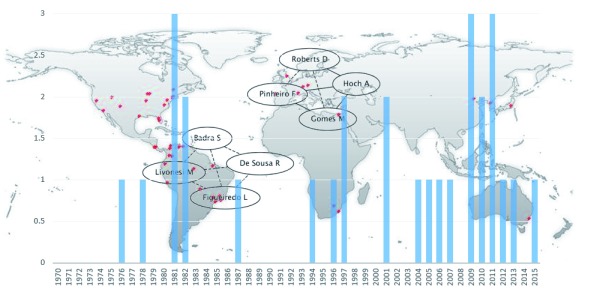
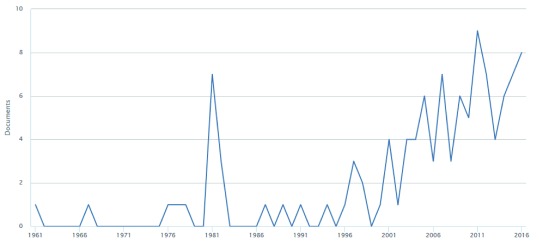
Data taken from Scopus.
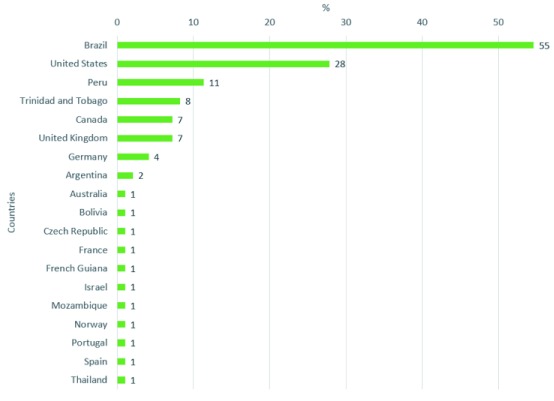
Data taken from Scopus.
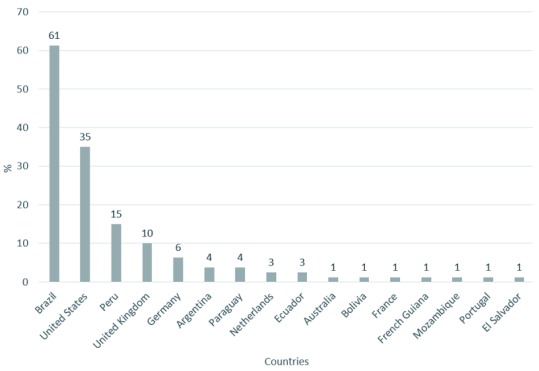
Data taken from SCI-E.
References
-
- Culquichicón C, Cardona-Ospina JA, Patiño-Barbosa AM, et al. : Dataset 1 in: Bibliometric analysis of Oropouche research: impact on the surveillance of emerging arboviruses in Latin America. F1000Research. 2017. Data Source - DOI - PMC - PubMed
Grants and funding
LinkOut - more resources
Full Text Sources
Other Literature Sources