


Editorial
doi: 10.15698/mic2014.04.142.
Metabolites in aging and autophagy
Affiliations
- PMID: 28357231
- PMCID: PMC5349198
- DOI: 10.15698/mic2014.04.142
Item in Clipboard
Editorial
Metabolites in aging and autophagy
Microb Cell.
.
No abstract available
Keywords: acetyl-CoA; aging; amino acids; autophagy; metabolism; polyamines.
Conflict of interest statement
Conflict of interest: The authors declare no conflict of interest.
Figures
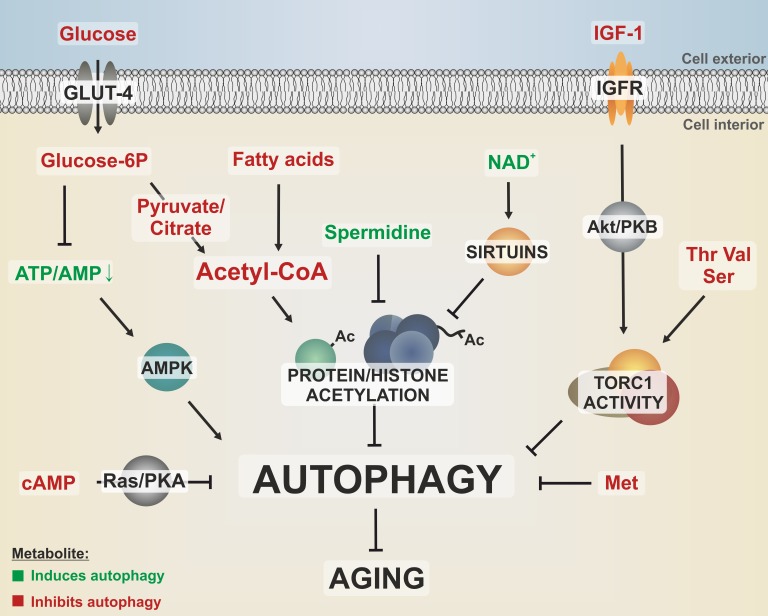
Dietary nutrients like glucose, amino acids and fatty acids as well as growth
signaling by IGF-1 activate nutrient-sensing kinases, like the target of
rapamycin complex 1 (TORC1), which stalls autophagy via phosphorylation of
downstream targets. Furthermore, autophagy is negatively regulated by the
Ras/PKA pathway, which responds to nutrient availability by sensing
intracellular cAMP levels. The cellular energy status is reflected by the
ATP/AMP ratio, which is sensed by the autophagy activator AMPK. Methionine
downregulates autophagy during aging in a yet to be elucidated fashion. The
central energy intermediate acetyl-CoA integrates metabolites from
glycolysis, β-oxidation or respiration and fuels acetylation of proteins
such as histones, resulting in decreased autophagic flux. All these
autophagy-limiting metabolic pathways have been linked to an accelerated
aging phenotype. In contrast, polyamines, like spermidine, reduce protein
acetylation, thereby promoting autophagy and longevity. Potential crosstalks
between protein acetylation and nutrient sensing kinase signaling are yet to
be elucidated. GLUT-4, glucose transporter 4; IGFR, IGF-1 receptor; Ac,
acetyl-group; amino acids are indicated by three-letter code.
References
-
- Simonsen A, Cumming RC, Brech A, Isakson P, Schubert DR, Finley KD. Promoting basal levels of autophagy in the nervous system enhances longevity and oxidant resistance in adult Drosophila. Trends Genet TIG. 2008;4(2):176–184. - PubMed
Publication types
Grants and funding
LinkOut - more resources
Full Text Sources
Other Literature Sources