


B cell-helping functions of gut microbial metabolites
- PMID: 28357321
- PMCID: PMC5348987
- DOI: 10.15698/mic2016.10.536
B cell-helping functions of gut microbial metabolites
Abstract
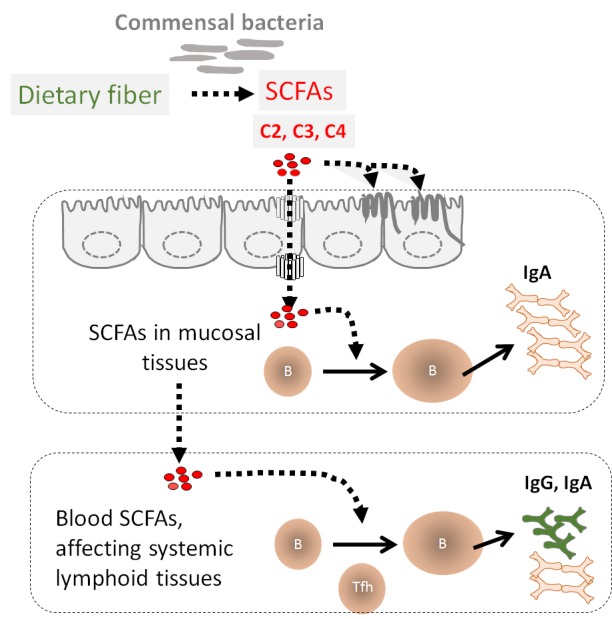
Commensal microflora profoundly affects the host immune system. It has long been observed that commensal bacteria enhance antibody production in the host by producing antigens for B cell receptors (BCR) and ligands for Toll-like receptors (TLR). We recently reported that the microbial metabolites short-chain fatty acids (SCFAs) regulate the metabolism and gene expression in B cells to promote antibody production (Kim et al. Gut Microbial Metabolites Fuel Host Antibody Responses. Cell Host & Microbe. 2016; 20(2):202-14). The B-cell helping function of SCFAs and its implication in the host immune system are discussed in this article.
Keywords: B cells; acetate; antibodies; butyrate; commensal bacteria; dietary fiber; immunity; propionate; short-chain fatty acids.
Conflict of interest statement
Conflict of interest: The author declares no conflict of interest.
Figures
Comment on
-
Gut Microbial Metabolites Fuel Host Antibody Responses.Cell Host Microbe. 2016 Aug 10;20(2):202-14. doi: 10.1016/j.chom.2016.07.001. Epub 2016 Jul 28. Cell Host Microbe. 2016. PMID: 27476413 Free PMC article.
Publication types
Grants and funding
LinkOut - more resources
Full Text Sources
Other Literature Sources