


Genital Herpes: Insights into Sexually Transmitted Infectious Disease
- PMID: 28357380
- PMCID: PMC5354570
- DOI: 10.15698/mic2016.09.528
Genital Herpes: Insights into Sexually Transmitted Infectious Disease
Abstract
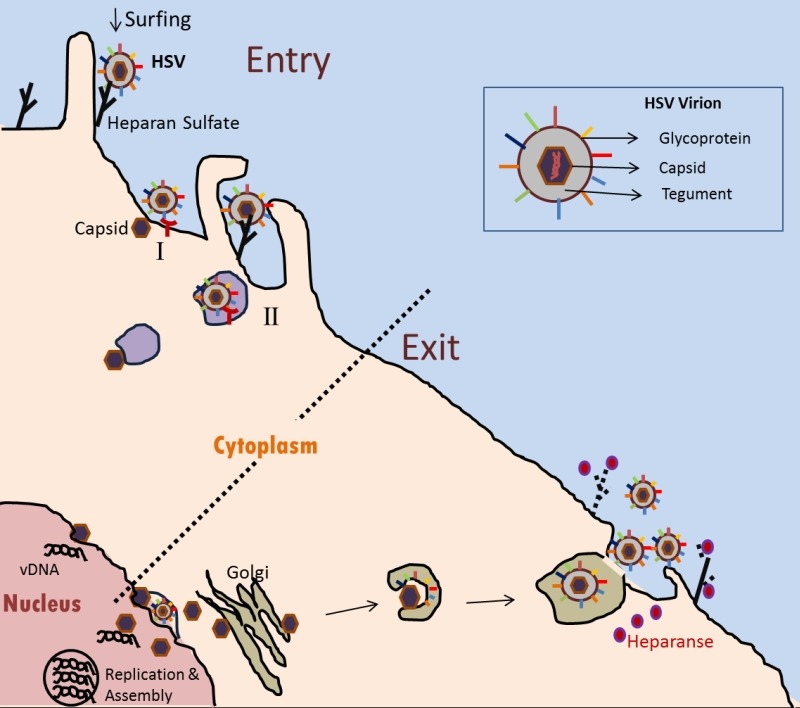
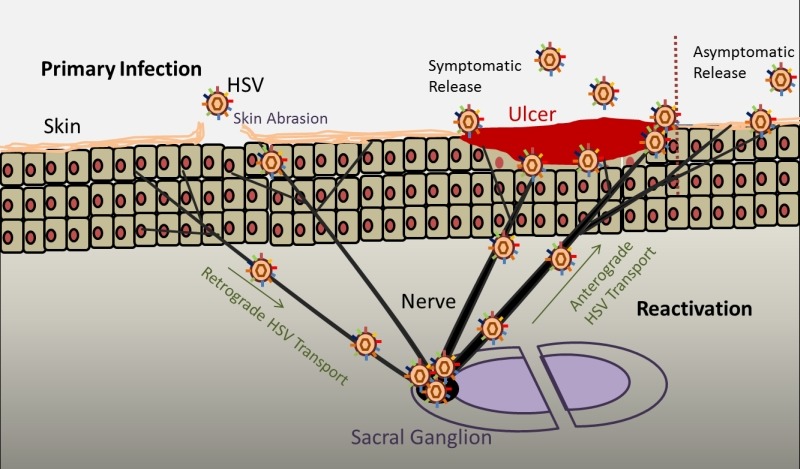
Etiology, transmission and protection: Herpes simplex virus-2 (HSV-2) is a leading cause of sexually transmitted infections with recurring manifestations throughout the lifetime of infected hosts. Currently no effective vaccines or prophylactics exist that provide complete protection or immunity from the virus, which is endemic throughout the world. Pathology/Symptomatology: Primary and recurrent infections result in lesions and inflammation around the genital area and the latter accounts for majority of genital herpes instances. Immunocompromised patients including neonates are susceptible to additional systemic infections including debilitating consequences of nervous system inflammation. Epidemiology, incidence and prevalence: More than 500 million people are infected worldwide and most reported cases involve the age groups between 16-40 years, which coincides with an increase in sexual activity among this age group. While these numbers are an estimate, the actual numbers may be underestimated as many people are asymptomatic or do not report the symptoms. Treatment and curability: Currently prescribed medications, mostly nucleoside analogs, only reduce the symptoms caused by an active infection, but do not eliminate the virus or reduce latency. Therefore, no cure exists against genital herpes and infected patients suffer from periodic recurrences of disease symptoms for their entire lives. Molecular mechanisms of infection: The last few decades have generated many new advances in our understanding of the mechanisms that drive HSV infection. The viral entry receptors such as nectin-1 and HVEM have been identified, cytoskeletal signaling and membrane structures such as filopodia have been directly implicated in viral entry, host motor proteins and their viral ligands have been shown to facilitate capsid transport and many host and HSV proteins have been identified that help with viral replication and pathogenesis. New understanding has emerged on the role of autophagy and other innate immune mechanisms that are subverted to enhance HSV pathogenesis. This review summarizes our current understanding of HSV-2 and associated diseases and available or upcoming new treatments.
Keywords: antivirals; herpes simplex virus; viral glycoproteins; viral latency; virus entry.
Conflict of interest statement
Conflict of interest: The authors declare no conflict of interest.
Figures
References
-
- Felman YM, Nikitas JA. Sexually transmitted diseases and child sexual abuse. Part II. . N Y State J Med. 1983;83(5):714–716. - PubMed
-
- Wald A, Corey L. In: Arvin A, Campadelli-Fiume G, Mocarski E, Moore PS, Roizman B, Whitley R, Yamanishi K, editors. Human Herpesviruses: Biology, Therapy, and Immunoprophylaxis. Cambridge: Cambridge University Press; 2007. Persistence in the population: epidemiology, transmission. - PubMed
Publication types
Grants and funding
LinkOut - more resources
Full Text Sources
Other Literature Sources
Research Materials
Miscellaneous